
Magnesium glycinate and magnesium bisglycinate are the same compound. Both names describe magnesium chelated to two glycine molecules, and the difference is purely one of labelling convention rather than chemistry. When you pick up a supplement in the UK, the name on the front matters far less than one number on the back: the elemental magnesium per capsule. Find that figure, confirm the manufacturer is reputable, and you have everything you need to make a sensible choice.
The naming split exists because “bisglycinate” is the precise scientific term (one magnesium ion bound to two glycine molecules), while “glycinate” is the shorthand that consumer brands adopted for simplicity. According to UK pharmacist guidance, the two terms are used interchangeably across the supplement market, and choosing between them on name alone is unnecessary.
Table of Contents
- Are magnesium glycinate and bisglycinate really the same thing?
- How chelated magnesium is absorbed and why it is gentler on your gut
- What bisglycinate is commonly used for and what the evidence actually says
- UK dosage guidance and safety limits you should know
- Contraindications, drug interactions and warning signs
- How to choose a bisglycinate supplement in the UK
- Practical guidance for runners: timing, dosing and realistic timelines
- Key takeaways
- The naming confusion is a distraction from what actually matters
- Runcomplete Ready: a bisglycinate option built for everyday runners
- Useful sources
Are magnesium glycinate and bisglycinate really the same thing?
Yes, and the chemistry is straightforward. One magnesium ion (Mg²⁺) bonds to two glycine molecules to form a chelate with the molecular formula C₄H₈MgN₂O₄. That compound is magnesium bisglycinate. “Bisglycinate” simply means two glycinates, which is why “diglycinate” is also used as a synonym in clinical literature.
Manufacturers choose their label wording for marketing or regulatory reasons, not because the product differs. You will see all of the following on UK supplement shelves, and they all refer to the same chelated form:
| Label term | Chemical identity | Notes |
|---|---|---|
| Magnesium bisglycinate | Mg²⁺ chelated to 2 glycine molecules | Most precise scientific name |
| Magnesium glycinate | Same compound | Common consumer shorthand |
| Magnesium diglycinate | Same compound | Used in clinical trial literature |
| Magnesium glycinate chelate | Same compound | Often seen on US-origin products sold in the UK |
| Magnesium bis-glycinate | Same compound | Hyphenated variant; identical chemistry |
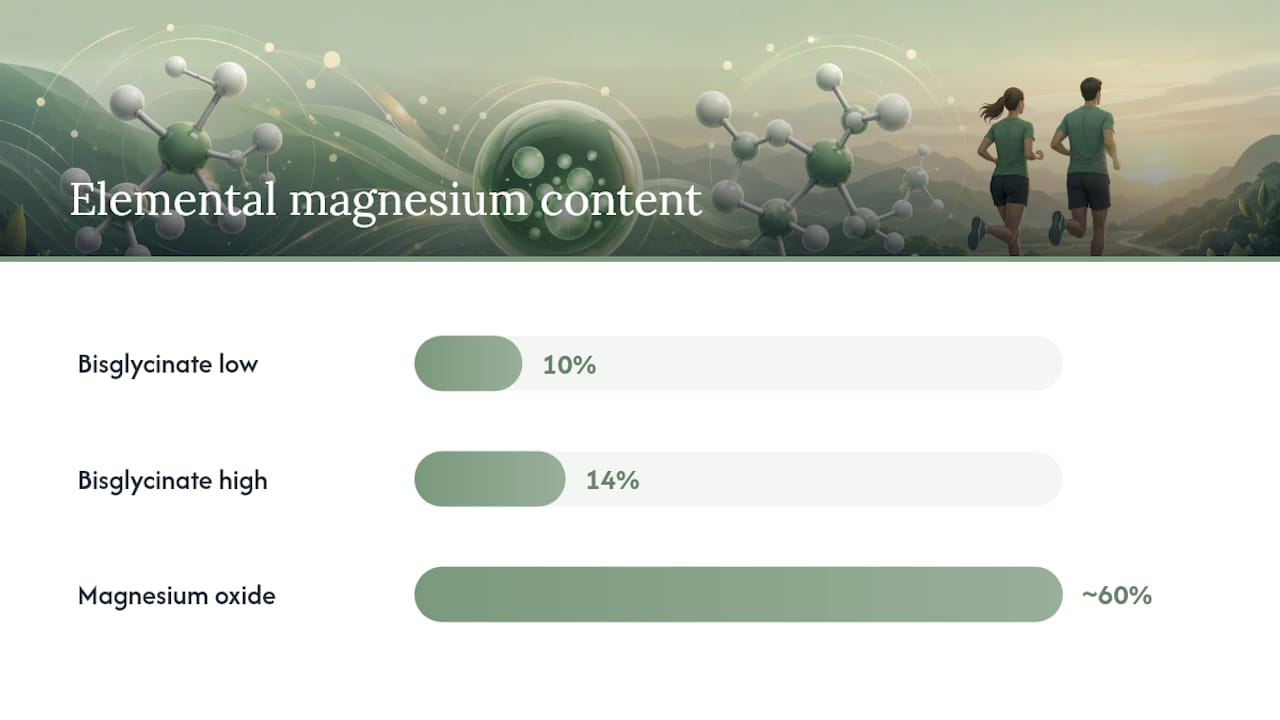
The elemental magnesium content of this chelate typically falls in the 10–14% range by weight, which is lower than inorganic forms such as magnesium oxide (around 60%). That lower percentage is not a flaw; it reflects the mass of the two glycine carrier molecules. What matters is how much elemental magnesium actually reaches your bloodstream, which is where chelated forms have a genuine advantage.
How chelated magnesium is absorbed and why it is gentler on your gut
The key difference between glycinate/bisglycinate and inorganic forms like magnesium oxide is not just absorption rate. It is how the molecule travels through the gut wall. Clinical evidence suggests chelated magnesium may be absorbed partly as an intact dipeptide via peptide transporters, a pathway that bypasses the saturable ion channels that inorganic magnesium competes for. This is why chelated forms tend to cause less osmotic load in the colon and, consequently, less diarrhoea.
In vitro and in vivo research shows that organic (chelated) magnesium formulations generally have higher solubility and improved bioavailability compared with many inorganic salts. A randomised crossover trial in patients with ileal resection found that magnesium diglycinate was both better tolerated and showed higher absorption than magnesium oxide in people with compromised intestinal absorption. That is a meaningful result: if chelated forms outperform inorganic ones even in patients with surgically altered guts, the advantage for people with intact but sensitive digestion is plausible and consistent with the mechanistic explanation.
For runners, this matters practically. A supplement that causes loose stools the morning before a long run is worse than useless. Chelated glycinate/bisglycinate is the form most often recommended precisely because it does not carry that risk at normal doses.
Pro Tip: If you have had bowel surgery, a Crohn’s diagnosis, or any condition affecting intestinal absorption, the trial data on magnesium diglycinate is encouraging, but absorption can still vary significantly. Speak to your GP or a registered dietitian before relying on any supplement to correct a deficiency.
What bisglycinate is commonly used for and what the evidence actually says
The chelated form is chosen for several overlapping reasons, and the evidence behind each use case varies.
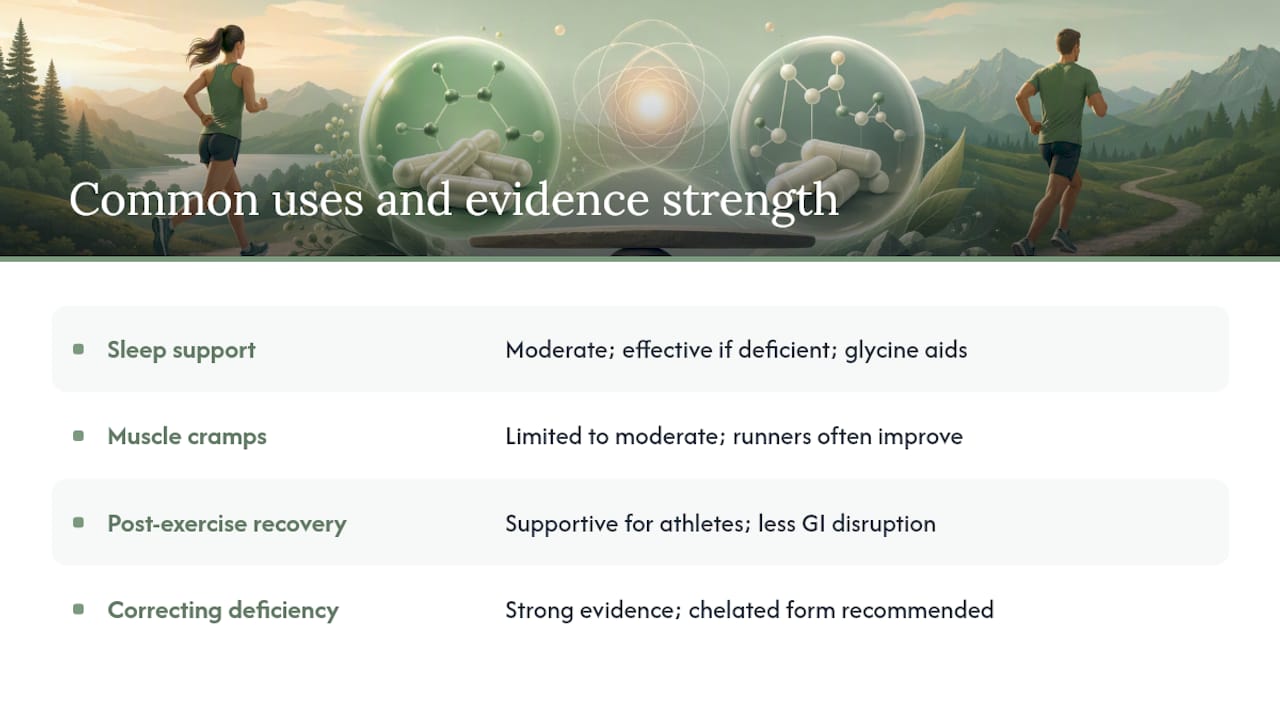
Sleep support is the most widely cited benefit. Magnesium plays a role in regulating GABA receptors and melatonin pathways, and glycine itself has calming neurotransmitter properties that may contribute to reduced sleep onset time. The science behind magnesium and sleep is reasonably well established for people who are deficient; the evidence is thinner for those already within normal magnesium ranges. Bisglycinate’s advantage here is partly the glycine co-passenger rather than the magnesium alone.
Muscle cramps and relaxation are the other headline use. Magnesium is a cofactor in muscle contraction and nerve signalling, and low magnesium is associated with increased cramping. Runners who experience night cramps or mid-run calf spasms often report improvement after several weeks of consistent supplementation, though individual responses vary.
Post-exercise recovery is where the chelated form earns its keep for active people. Magnesium is lost through sweat, and training increases demand. The muscle recovery process depends partly on adequate magnesium for protein synthesis and energy metabolism. Chelated forms support this without the GI disruption that could undermine training consistency.
Correcting deficiency is the most evidence-backed use of all. If a blood test or dietary assessment suggests low magnesium, a well-absorbed chelated form is a sensible choice. The bisglycinate/glycinate form is particularly suitable for people who have tried and not tolerated magnesium oxide or citrate.
For a detailed look at magnesium glycinate benefits for runners, the evidence base and practical applications are covered in more depth.
UK dosage guidance and safety limits you should know
NHS Reference Nutrient Intake (RNI): 300 mg/day for men aged 19–64; 270 mg/day for women aged 19–64. Supplemental doses up to 400 mg/day are considered unlikely to cause harm. Doses above 400 mg/day from supplements may cause diarrhoea.
The NHS guidance is clear: most people can get enough magnesium from a varied diet, and supplements are intended to fill genuine gaps rather than replace food sources. The 400 mg/day supplemental threshold is echoed in Department of Health advisory statements, which note that products providing higher amounts should carry appropriate labelling warnings.
In practice, most bisglycinate capsules deliver 50–150 mg of elemental magnesium per capsule, so reaching the NHS-advised maximum of 400 mg per day from supplements alone would require taking several capsules daily. Starting at the lower end and building up gradually is sensible, particularly if you have not taken magnesium before.
Who needs to take extra care:
- People with kidney impairment should not supplement without medical advice; the kidneys regulate magnesium excretion, and impaired function raises the risk of accumulation.
- Pregnant or breastfeeding women should confirm dosing with a midwife or GP before starting.
- Anyone taking prescription medicines should check for interactions (see the next section).
- If you experience unexpected symptoms after starting a supplement, the MHRA Yellow Card scheme is the official UK route for reporting suspected adverse reactions.
For a fuller breakdown of what happens when magnesium doses are too high, the magnesium side effects guide covers the common and less common reactions in detail.
Contraindications, drug interactions and warning signs
Most healthy adults tolerate bisglycinate well, but there are specific situations where caution is warranted.
Conditions requiring medical advice before supplementing:
- Severe renal (kidney) impairment or chronic kidney disease
- Myasthenia gravis (magnesium can affect neuromuscular transmission)
- Hypotension or cardiac conduction disorders, where magnesium’s vasodilatory effects may be relevant
Common drug interactions to be aware of:
- Tetracycline and quinolone antibiotics (e.g., doxycycline, ciprofloxacin): magnesium can bind to these in the gut and reduce their absorption. Take magnesium at least 2–4 hours before or after the antibiotic.
- Bisphosphonates (e.g., alendronate, used for osteoporosis): similar binding issue; separate doses by at least 2 hours.
- Certain heart medications, including some calcium channel blockers and digoxin: magnesium can potentiate effects; check with a pharmacist before combining.
- Proton pump inhibitors (e.g., omeprazole): long-term use can lower magnesium levels, so supplementation may be appropriate, but confirm the dose with a clinician.
A pharmacist can check your full medicines list against a magnesium supplement in minutes. If you are on any regular prescription, that conversation is worth having before you buy.
Red-flag symptoms requiring prompt medical attention:
- Severe or persistent diarrhoea after starting supplementation
- Muscle weakness, confusion, or irregular heartbeat
- Difficulty breathing or extreme fatigue
These are not typical reactions to a standard dose of bisglycinate, but they warrant stopping the supplement and seeking advice promptly.
How to choose a bisglycinate supplement in the UK
The naming debate is settled. What actually separates a good product from a poor one comes down to labelling transparency and manufacturing quality.
What to look for:
- Elemental magnesium stated clearly per capsule or serving
- Third-party testing or a certificate of analysis available on request
- Clear ingredient list with no undisclosed fillers or proprietary blends that obscure dosing
- Suitable for vegetarians or vegans if that matters to you (many capsule shells are gelatine-based)
- UK-made or manufactured to GMP (Good Manufacturing Practice) standards
- Realistic elemental magnesium per capsule, typically 50–150 mg (10–14% of compound weight)
Red flags:
- No elemental magnesium figure on the label
- Unusually high single-dose elemental magnesium (above 300 mg per capsule) with no advisory statement
- Marketing that emphasises “bisglycinate” as a premium differentiator without stating elemental content
- Vague excipient lists or “proprietary blend” language that prevents dose calculation
Questions worth asking a pharmacist or the manufacturer:
- What is the elemental magnesium per capsule?
- Has this product been third-party tested for heavy metals and contaminants?
- Does the product comply with UK food supplement labelling requirements?
The UK buying guide for bisglycinate supplements covers these criteria in more depth, including what to expect from reputable UK brands.
Practical guidance for runners: timing, dosing and realistic timelines
Runners have a specific reason to care about the form of magnesium they take: GI tolerance during training. A supplement that causes loose stools mid-run is not just uncomfortable; it can derail a training block. Chelated bisglycinate is the form most consistently recommended for active people precisely because it does not carry that risk at standard doses.
Timing and dosing for training days:
- Take magnesium in the evening, with or shortly after food, to support overnight muscle relaxation and sleep quality. The timing relative to meals can affect tolerability, and most people find an evening dose sits better than a morning one.
- On heavy training days, a consistent daily dose is more effective than a large single dose. Magnesium is not a fast-acting intervention; it works by maintaining adequate tissue levels over time.
- Avoid taking a new or higher dose the night before a race or long run. If your gut is unfamiliar with the supplement, that is not the moment to find out.
What to expect and when:
Sleep quality and muscle relaxation tend to be the first changes runners notice, often within two to four weeks of consistent daily use. Cramp frequency may take longer to shift, particularly if the underlying cause is a genuine deficiency that needs time to correct. If you have seen no change after six to eight weeks at a consistent dose, it is worth reassessing whether magnesium is the limiting factor.
For runners managing recovery across a training cycle, the half marathon recovery supplement guide places magnesium in the broader context of what actually moves the needle.
Key takeaways
Magnesium glycinate and bisglycinate are the same chelated compound; the only thing that should drive your choice is elemental magnesium per dose, product quality, and tolerability.
| Point | Details |
|---|---|
| Same compound, different names | Glycinate and bisglycinate both describe Mg²⁺ chelated to two glycine molecules; the prefix makes no practical difference. |
| Elemental magnesium is the metric that matters | Expect 10–14% elemental magnesium by weight; always find this figure on the label before buying. |
| UK supplemental guidance advises that moderate supplemental magnesium intake is unlikely to cause harm; above certain levels, diarrhoea is the most common side effect. | |
| Chelated forms are gentler on the gut | Research supports better tolerability and absorption versus inorganic salts like magnesium oxide, especially for those with sensitive digestion. |
| Runcomplete Ready for runners | Runcomplete’s Ready capsules are UK-made, state elemental magnesium clearly, contain no fillers, and are suitable for vegetarians and vegans, with a 30-day guarantee. |
The naming confusion is a distraction from what actually matters
The glycinate versus bisglycinate debate has generated a surprising amount of content online, most of it answering a question that does not need answering. The names are interchangeable. What the debate has done, perhaps unintentionally, is shift attention away from the questions that genuinely matter: how much elemental magnesium is in the capsule, who made it, and whether the labelling is honest.
The more interesting question for runners is not which name to trust but whether they are actually deficient. Magnesium is lost through sweat, and training volume increases demand. Many runners who report improved sleep and fewer cramps after starting bisglycinate were probably running low to begin with, not experiencing some special property of the chelated form. The chelate’s real advantage is that it corrects that deficit without the GI disruption that would otherwise make supplementation impractical during a training block.
There is also a tendency to overstate the glycine benefit. Glycine does have calming properties, and there is some evidence it supports sleep onset independently of magnesium. But the amounts delivered via a standard bisglycinate capsule are modest. The sleep improvement most runners notice is more likely a magnesium repletion effect than a glycine effect. Setting that expectation correctly matters, because it means the supplement works best as a consistent daily habit rather than a pre-sleep intervention you take only when you feel wired.
The practical upshot: buy a product that states elemental magnesium clearly, is made to GMP standards, and does not cost a fortune. The name on the front is the least important thing about it.
Runcomplete Ready: a bisglycinate option built for everyday runners
If the checklist above describes what you are looking for, Runcomplete’s Ready capsules tick every box. They are UK-made, clearly label elemental magnesium per capsule, contain no unnecessary fillers, and are suitable for both vegetarians and vegans. The formulation is designed specifically for everyday runners, not gym-goers or elite athletes, which means the dose and format are calibrated for the recovery demands of regular training rather than maximum loading.

The 30-day guarantee removes the risk of trying something new mid-training block. If it does not work for you, you are not out of pocket. For runners who want a straightforward, well-labelled bisglycinate supplement without the marketing noise, Ready is available directly from Runcomplete with one-time purchase or monthly subscription options.
Useful sources
| Source | What it covers |
|---|---|
| NHS: Vitamins and minerals — Others | UK RNI figures (300 mg men, 270 mg women) and the 400 mg/day supplemental guidance |
| GOV.UK: Food supplements guidance | UK labelling expectations, safety principles and diet-first approach |
| PMC: Magnesium supplement bioavailability | In vitro and in vivo evidence for chelated versus inorganic magnesium absorption |
| PubMed: Magnesium diglycinate vs oxide in ileal resection | Randomised crossover trial showing improved absorption and tolerability of diglycinate |
| Department of Health: Advisory statements on labelling (PDF) | UK advisory statements on high-dose magnesium labelling |
| MHRA Yellow Card | Official UK route for reporting suspected adverse reactions to supplements |
| Food Standards Agency: Food supplements | Business and labelling obligations for supplement manufacturers and retailers in the UK |
| Bolt Pharmacy: Magnesium bisglycinate vs glycinate UK guide | Pharmacist-sourced practical guidance on the naming difference and how to choose |
This article provides general information only and is not a substitute for professional medical advice. If you have a health condition, take prescription medicines, or are pregnant, confirm supplementation is appropriate with your GP or pharmacist before starting.

