
Magnesium bisglycinate is worth taking seriously if you run regularly and struggle with tight muscles, night cramps, or restless sleep. The clinical term is magnesium bisglycinate; you will also see it labelled magnesium glycinate, which refers to the same chelated compound. A 2025 randomised, double-blind, placebo-controlled trial found that 250 mg of elemental magnesium as bisglycinate produced a statistically significant reduction in insomnia severity after four weeks. That is not a dramatic overnight fix, but for a runner whose sleep is already disrupted by training load, even a modest improvement compounds quickly.
Key reasons everyday runners consider it:
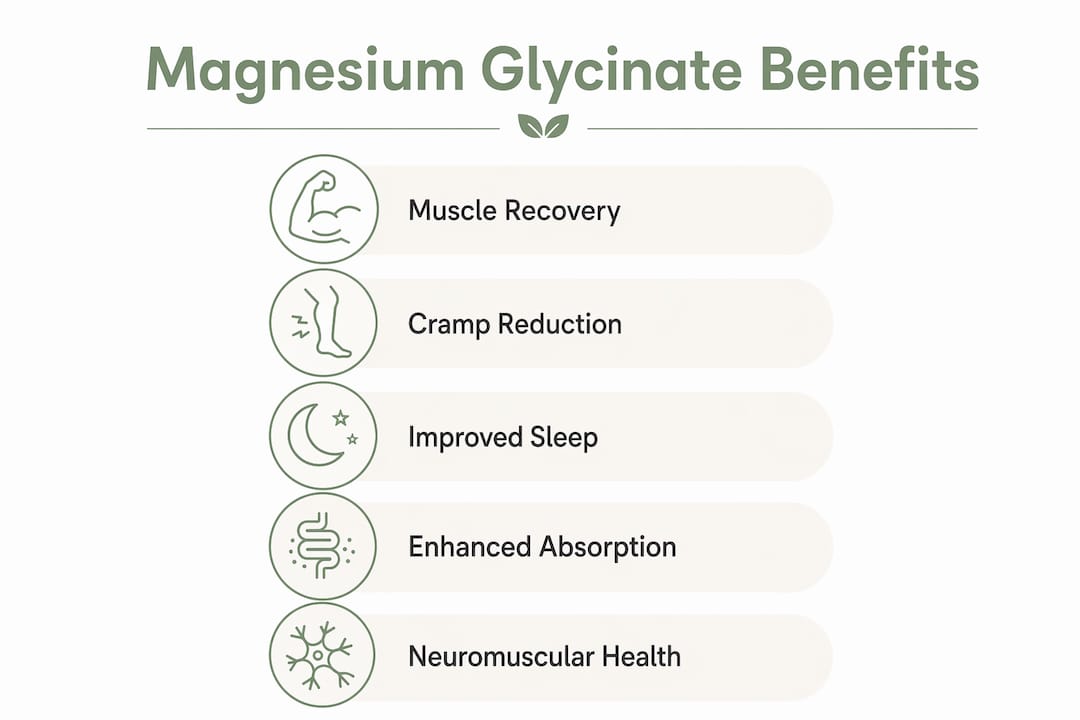
- Muscle relaxation and cramp reduction — magnesium supports the nerve signals that tell muscles to release after contraction
- Improved sleep quality — the 2025 trial showed an Insomnia Severity Index reduction of 3.9 points in the treatment group versus 2.3 in the placebo group over 28 days
- Gentle on the stomach — bisglycinate causes less digestive upset than oxide or citrate, so you can take it daily without worrying about pre-run bathroom emergencies
- Practical trialability — Runcomplete’s Ready is a UK-made, filler-free option with a 30-day guarantee if you want a runner-specific starting point
One caveat worth stating up front: if you have kidney disease or take prescription diuretics, speak to your GP before starting any magnesium supplement.
Table of Contents
- What is magnesium bisglycinate and why do runners prefer it?
- What are the evidence-backed benefits for runners?
- How much should you take, and when?
- Side effects and when to check with your GP
- How to choose a magnesium bisglycinate supplement in the UK
- Building a practical routine around magnesium
- Key takeaways
- Why Runcomplete built a runner-specific magnesium
- Ready to try it? Runcomplete’s magnesium for runners
- Useful sources
What is magnesium bisglycinate and why do runners prefer it?
Magnesium bisglycinate is magnesium chelated to two molecules of the amino acid glycine. That bond does two useful things: it increases the proportion of magnesium absorbed through the small intestine, and it substantially reduces the laxative effect that makes magnesium oxide so unpopular with anyone who trains in the morning.
Registered dietitian Julia Zumpano at the Cleveland Clinic notes that magnesium is involved in over 300 enzymatic reactions, including those governing muscle contractions and nerve function. For runners, that translates directly: every stride involves a rapid cycle of muscle contraction and release, and magnesium sits at the centre of that process.
Why bisglycinate specifically? Banner Health’s clinical guidance confirms that the glycinate form improves absorption and reduces digestive side effects compared with oxide. Citrate is better tolerated than oxide but still causes loose stools at higher doses in some people. Bisglycinate sits at the gentler end of the spectrum, which is why practitioners tend to recommend it for daily replenishment without stomach upset.
What are the evidence-backed benefits for runners?
Muscle recovery and cramp reduction
Magnesium regulates neuromuscular excitability. When levels are low, muscles become more irritable, which is one reason night cramps and post-run twitches are more common in people who sweat heavily. Supplementing to correct or prevent a shortfall can reduce that irritability and support faster recovery between sessions.

Medical News Today’s review also notes that magnesium supports blood pressure and glucose metabolism, situating it as a multi-system mineral rather than a single-purpose recovery aid. For runners, the muscle and nerve angle is the most directly relevant.
Sleep quality and the glycine effect
2025 RCT finding: In a randomised, double-blind, placebo-controlled trial, adults taking 250 mg elemental magnesium as bisglycinate daily showed an Insomnia Severity Index reduction of 3.9 points over 28 days, compared with 2.3 points in the placebo group.
The glycine component adds a separate calming effect on neurotransmitter systems, which plausibly augments the sleep benefit beyond what magnesium alone would produce. Magnesium does not act as a sedative; it supports nervous system regulation, which means you get restorative sleep without the grogginess that some sleep aids cause. For runners who need to be functional the next morning, that distinction matters. For a deeper look at overnight recovery, Runcomplete’s guide to magnesium and runners’ sleep covers the mechanisms in more detail.
Realistic timeline
- Days 1–7: Some runners notice slightly less muscle tension, particularly in the evenings
- Weeks 2–4: Sleep quality improvements become more consistent; cramp frequency may reduce
- Week 4 onwards: The 2025 RCT’s primary endpoint; most measurable changes visible by this point
Magnesium is not a performance drug. Think of it as correcting a gap that is quietly limiting your recovery.
How much should you take, and when?
Reading the label correctly
The number that matters is elemental magnesium per serving, not the total compound weight. A capsule labelled “500 mg magnesium bisglycinate” typically contains around 100 mg of elemental magnesium, because the glycine molecules make up the rest of the compound weight. Always check the label for the elemental figure.
| Label claim | Compound weight | Approximate elemental magnesium |
|---|---|---|
| Magnesium bisglycinate | 500 mg | ~100 mg elemental |
| Magnesium bisglycinate | — | ~200 mg elemental |
| Magnesium bisglycinate | — | ~250 mg elemental |
The trial used a daily dose of elemental magnesium as bisglycinate. Common supplement ranges in clinical practice run from 250 mg elemental magnesium per day, with the 2025 RCT showing significant improvements at this dose; higher doses may be used in some protocols but 250 mg is the most evidence-backed starting point.
Practical timing for runners
- Start at the lower end — 200–250 mg elemental magnesium daily for the first two weeks to assess tolerance
- Take with food — reduces the chance of any mild nausea, particularly at higher doses
- Evening dosing for sleep support — taking your dose 30–60 minutes before bed aligns with the sleep-focused rationale; consistency matters more than exact timing for correcting a shortfall
- Avoid immediately before a hard session — not because it impairs performance, but because any supplement taken on an empty stomach before intense effort can cause discomfort
For more detail on timing around your training schedule, Runcomplete’s timing guide for runners is worth reading alongside this.
Side effects and when to check with your GP
Magnesium bisglycinate is well tolerated by most people, but a few situations warrant caution.
- Loose stools — the most common side effect at high doses; bisglycinate is less likely to cause diarrhoea than oxide or citrate, but exceeding 500 mg elemental magnesium daily increases the risk
- Kidney disease — impaired renal function reduces the body’s ability to excrete excess magnesium; this is a firm contraindication without medical supervision
- Prescription medications — certain diuretics, proton pump inhibitors, and antibiotics interact with magnesium absorption or excretion; check with your GP or pharmacist before starting
- Pregnancy and breastfeeding — magnesium needs change during pregnancy; consult a clinician rather than self-supplementing
- Mood disorders — magnesium can support stress regulation, but Banner Health’s guidance is clear that it is not a treatment for clinical anxiety or depression
Pro Tip: If you are scheduled for surgery, pause magnesium supplementation at least two weeks beforehand and inform your anaesthetist — high magnesium levels can affect muscle relaxants used during procedures.
This article is general information, not medical advice. Confirm current guidance with your GP or a registered dietitian for your specific situation.
How to choose a magnesium bisglycinate supplement in the UK
The UK supplement market is largely unregulated for efficacy claims, so label literacy is your best protection.
-
Elemental magnesium per serving — the single most important figure; aim for 250 mg elemental as a starting point, reflecting the dose used in the 2025 trial
-
Form stated clearly — the label should say “magnesium bisglycinate” or “magnesium glycinate”, not just “magnesium”
-
No unnecessary fillers — talc, artificial colours, and bulking agents add nothing; a clean ingredient list is a reasonable quality signal
-
Third-party testing — independent lab certificates confirm what is on the label is in the capsule
-
UK-made labelling — domestic manufacture means the product falls under UK food supplement regulations and is easier to query or return
-
Vegan capsules — relevant if you follow a plant-based diet; many cheaper products use gelatin shells
-
Returns policy — a 30-day money-back guarantee lets you trial the product without financial risk
“Magnesium glycinate is one of the most absorbable forms and least likely to cause digestive or laxative effects.” — Brett Sorel, integrative registered dietitian nutritionist, via Forbes Health
Subscription options can reduce cost per capsule, but only commit once you have confirmed the dose suits you.
Building a practical routine around magnesium
Food sources first
No supplement replaces a varied diet. Magnesium-rich foods include dark leafy greens (spinach, kale), nuts (almonds, cashews), seeds (pumpkin, sunflower), legumes, and wholegrains. These provide magnesium alongside other micronutrients that support recovery. Use food as your baseline and supplement to fill the gap that training creates.
A simple week-by-week plan
- Week 1–2: Start at 250 mg elemental magnesium in the evening with food; note sleep quality and any muscle tightness
- Week 3–4: If well tolerated and sleep or cramps have not improved, discuss with your clinician before increasing above the studied dose
- Week 5–6: Assess against your starting point; the 2025 RCT’s four-week endpoint is a useful benchmark for sleep changes
Track three things: sleep quality (a simple 1–5 score each morning), cramp frequency, and perceived recovery after long runs. These are the outcomes most likely to shift with magnesium bisglycinate, and tracking them stops you guessing whether it is working. For runners dealing with heavy legs specifically, the Runcomplete bisglycinate and leg recovery guide offers targeted advice.
Key takeaways
Magnesium bisglycinate is one of the most practical daily supplements for everyday runners because it combines meaningful absorption with a tolerability profile that suits consistent use.
| Point | Details |
|---|---|
| Bioavailability advantage | Bisglycinate absorbs better and causes less digestive upset than oxide or citrate forms. |
| Evidence-backed sleep support | The trial showed a modest but statistically significant reduction in insomnia severity after 28 days of supplementation with elemental magnesium as bisglycinate. |
| Read elemental magnesium | Always check the elemental magnesium figure on the label, not the compound weight. |
| Safety check first | Kidney disease, certain medications, and pregnancy all require GP input before supplementing. |
| Runcomplete Ready | A UK-made, filler-free bisglycinate with a 30-day guarantee, formulated for everyday runners. |
Why Runcomplete built a runner-specific magnesium
Most magnesium supplements are designed for a general audience. Runcomplete’s Ready was formulated with the everyday runner in mind: the dose, the capsule format, and the absence of unnecessary fillers all reflect what a runner actually needs from a daily supplement rather than what looks impressive on a gym-floor label.
Ready is UK-made, third-party tested, and backed by a 30-day guarantee, so you can try it for a full training cycle without committing long-term. The formulation is vegan and free of common fillers, which matters if you are already careful about what goes into your body around training. For runners who want to read further, the Runcomplete blog covers the science behind bisglycinate and practical recovery strategies in plain language.
Ready to try it? Runcomplete’s magnesium for runners
Runners who train consistently and sleep poorly, cramp regularly, or feel their legs never quite recover between sessions are exactly who Runcomplete Ready was built for. Each serving delivers a clear elemental magnesium dose from bisglycinate, with no fillers, no gelatin, and no guesswork on the label.

You can order as a one-off or on a monthly subscription once you know the dose suits you. The 30-day guarantee means the financial risk sits with Runcomplete, not with you. If it does not make a noticeable difference to your recovery or sleep within a month, you can return it. See the full product details and order on the Ready product page, or if you are newer to running nutrition, the beginner runner nutrition guide is a useful starting point.
Useful sources
- 2025 randomised, double-blind, placebo-controlled trial — magnesium bisglycinate and sleep — the primary clinical trial cited in this article; a peer-reviewed RCT measuring ISI outcomes over 28 days
- Cleveland Clinic — from stress to sleep: the many benefits of magnesium — expert commentary from registered dietitian Julia Zumpano on magnesium’s physiological roles and preferred forms
- Banner Health — magnesium glycinate: benefits and safety — practical consumer health guidance on tolerability, safety cautions, and clinical use cases
- Medical News Today — magnesium glycinate: benefits, dosage, safety — accessible summary of broader magnesium research including cardiovascular and metabolic effects
- Mayo Clinic Press — magnesium glycinate benefits, side effects, and impact on sleep and anxiety — authoritative clinical overview of magnesium glycinate uses and safety considerations
- Forbes Health — magnesium glycinate: benefits, side effects and uses — consumer-facing summary with registered dietitian commentary on absorption and tolerability
Recommended
- Magnesium Bisglycinate for Runners: The Secret to Heavy Leg Recovery a – Run Complete
- Gentle Magnesium for Runners: Recovery Without the Stomach Upset – Run Complete
- When to Take Magnesium for Running: Timing Your Dose for Better Recove – Run Complete
- Magnesium for Runners’ Sleep: Unlocking Overnight Muscle Recovery – Run Complete

