
Magnesium glycinate, also sold as magnesium bisglycinate, can genuinely help many runners sleep better and recover overnight. The evidence is strongest for those who are actually low in magnesium, which is more common in runners than most people realise. If that sounds like you, a moderate dose taken 1–2 hours before bed is a reasonable, low-risk place to start.
Quick-start checklist:
- Take a moderate dose of elemental magnesium (as bisglycinate) roughly 1–2 hours before bed
- Stay at or below the 400 mg/day supplemental ceiling recommended by the NHS
- Track sleep quality for 2–4 weeks before deciding whether it is working
- Speak to your GP first if you take prescription medications or have kidney problems
The NHS sets adult daily magnesium needs at 300 mg for men and 270 mg for women (aged 19–64). Runners who sweat heavily or train at high mileage often fall short of those targets through diet alone.
Table of Contents
- What is magnesium glycinate and why do runners choose it for sleep?
- Does magnesium glycinate actually improve sleep quality?
- How to dose magnesium glycinate safely in the UK
- What should you look for when buying magnesium bisglycinate in the UK?
- Sample evening routines for everyday runners
- How these recommendations were put together
- Key takeaways
- Why tolerability beats potency for nightly supplements
- Runcomplete Ready: magnesium bisglycinate made for runners
- Useful sources and further reading
What is magnesium glycinate and why do runners choose it for sleep?
Magnesium glycinate is magnesium chelated to the amino acid glycine. “Bisglycinate” means two glycine molecules are attached per magnesium ion; the terms are used interchangeably on UK supplement labels and refer to the same compound.
The form matters because not all magnesium supplements behave the same way in the body. Magnesium oxide, for instance, is poorly absorbed and has a strong laxative effect. Magnesium citrate absorbs reasonably well but can still cause loose stools, which is a real problem if you are dosing at night. Magnesium glycinate is well absorbed and gentler on the gut than either of those alternatives, which is exactly why it suits nightly use.
The glycine component adds something extra. Glycine acts as an inhibitory neurotransmitter and may support peripheral vasodilation, helping lower core body temperature, which is one of the body’s natural cues for sleep onset. So the supplement carries two complementary mechanisms: magnesium’s role in nerve and muscle regulation, and glycine’s mild calming effect.

Why runners specifically? Heavy sweating during long runs or interval sessions depletes magnesium faster than most people account for. Late-evening training also raises cortisol, making it harder to wind down. Glycinate’s low laxative profile means you can dose consistently every night without worrying about a disruptive bathroom trip at 2 AM.
Pro Tip: If you train after 7 PM, magnesium bisglycinate is a particularly sensible choice over citrate. The tolerability difference is not trivial when you are already asking your gut to cope with a post-run meal.
Does magnesium glycinate actually improve sleep quality?
The honest answer: systematic reviews find modest, measurable improvements in subjective sleep measures with magnesium supplementation, but the overall certainty is not high and the benefits concentrate in people who are actually deficient. It is not a sedative. Think of it as removing a bottleneck rather than adding a sleep drug.
Who benefits most?
Runners most likely to notice a difference are those with:
- High weekly mileage (particularly above typical recreational runner levels)
- Heavy sweat loss in warm conditions or during intense sessions
- Poor dietary magnesium intake (low nut, seed, leafy green, and wholegrain consumption)
- Disrupted sleep that worsens after hard training blocks
Serum magnesium testing through your GP is the cleanest way to confirm deficiency. If testing is not practical, a structured 4-week empirical trial is a reasonable alternative. If you notice no change after a month, your baseline magnesium is probably adequate and the supplement is unlikely to help further.
What timeline should you expect?
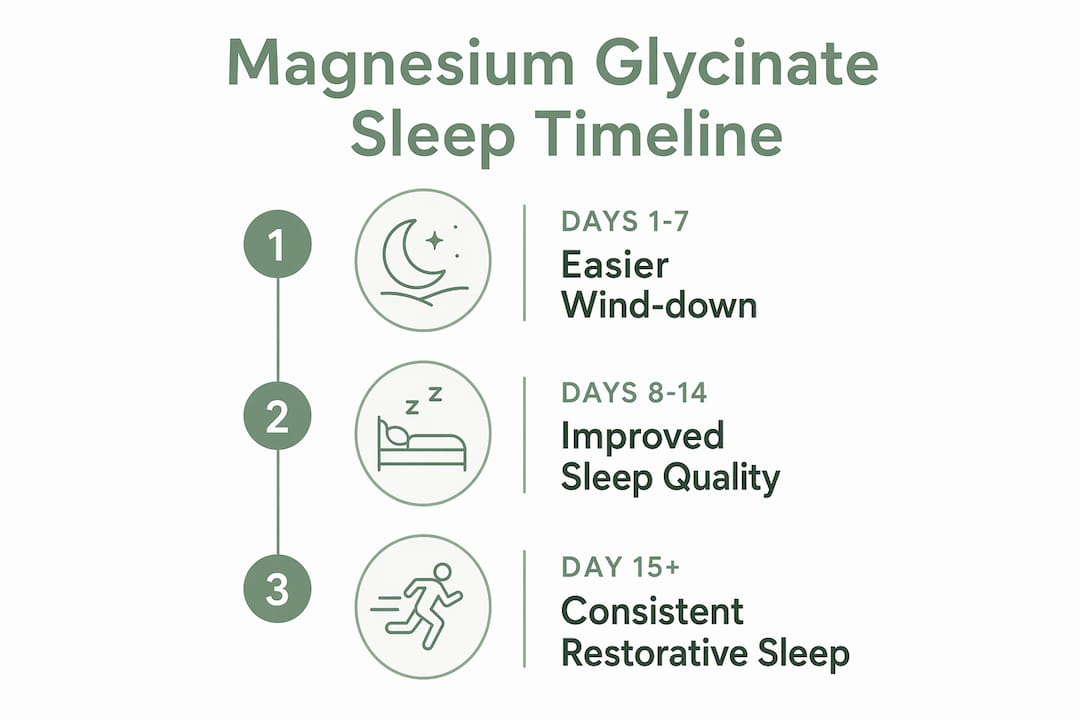
Coaching case observations suggest some runners notice improved sleep within around 10 days of switching to a glycinate formulation, with more stable serum changes appearing at around 6 weeks. Do not judge the supplement after three nights.
| Timeframe | What typically happens |
|---|---|
| Days 1–7 | Settling period; some notice slightly easier wind-down |
| Weeks 2–3 | Subjective sleep quality may begin to improve in deficient runners |
| Week 4 | Reasonable point to assess whether supplementation is helping |
| 6 weeks | Serum magnesium levels more likely to reflect consistent intake |
For runners who are already magnesium-replete, the effect may be minimal. That is not a failure of the supplement; it is the supplement doing exactly what the evidence predicts.
How to dose magnesium glycinate safely in the UK
Start at 200 mg of elemental magnesium per day and increase to a maximum of 400 mg if tolerated. That ceiling aligns with NHS guidance, which states that taking more than 400 mg from supplements can cause diarrhoea. Diarrhoea is the most common adverse effect of oral magnesium supplementation and is dose-dependent.
Reading the label: supplement labels often list the total compound weight, not the elemental magnesium content. A capsule described as “500 mg magnesium bisglycinate” may contain only around 100 mg of elemental magnesium. Always check the elemental figure, usually shown in smaller text or in a separate column on the nutrition panel.
Timing: take your dose 1–2 hours before bed, on a relatively empty stomach for best absorption. A heavy meal slows uptake. A light snack is fine; a three-course dinner is not ideal.
NHS safety limit: Taking more than 400 mg of magnesium from supplements per day can cause diarrhoea. The Department of Health and Social Care advises that 400 mg or less daily from supplements is unlikely to cause harm for most healthy adults.
Interactions and cautions to know:
- Kidney impairment: renal patients require dose adjustment and monitoring because the kidneys clear excess magnesium; do not supplement without GP guidance if your kidney function is reduced
- Digoxin: magnesium affects digoxin levels; consult your GP before combining
- Diuretics and proton pump inhibitors: these can deplete magnesium, making supplementation more relevant but also requiring monitoring
- Pregnancy: speak to a midwife or GP before starting any new supplement
What should you look for when buying magnesium bisglycinate in the UK?
The supplement market is crowded and labelling is inconsistent. A short checklist cuts through the noise.
Label checks:
- Form: the label must say “bisglycinate” or “glycinate” specifically, not just “magnesium”
- Elemental magnesium per serving: confirm this figure, not the compound weight
- Capsule format: generally preferable to tablets for runners (easier to swallow post-run, no binders needed)
- Fillers: look for a short, clean ingredient list; avoid unnecessary bulking agents
- Vegan/vegetarian status: check the capsule shell (many use bovine gelatine)
- Country of manufacture: UK-made products are subject to UK food supplement regulations
Quality markers:
- Third-party testing or batch certificates
- Transparent ingredient list with no proprietary blends obscuring the magnesium dose
- Single-ingredient formulations are easier to troubleshoot than multi-ingredient “night blends”
Multi-ingredient sleep blends often combine magnesium with melatonin, valerian, or L-theanine. They are harder to dose accurately and make it impossible to isolate which ingredient is helping or causing side effects. For most runners, a single-ingredient bisglycinate capsule is the cleaner starting point.
Budget expectations: a monthly supply of 200–400 mg elemental magnesium as bisglycinate typically costs £15–£30 in the UK. UK manufacture, independent batch testing, and a money-back guarantee justify the upper end of that range. For gentle magnesium options that prioritise tolerability, the bisglycinate form consistently stands out.
Sample evening routines for everyday runners
Consistency matters more than precision here. Pick a routine that fits your training schedule and stick to it.
Three runner profiles:
-
Easy-run day (maintenance): Take 200 mg elemental magnesium as bisglycinate 90 minutes before bed. No food for at least an hour beforehand. Pair with a wind-down routine: dim lights, no screens, and a calming herbal drink such as lemon balm tea, if you find it helpful.
-
Post-hard session (intervals or tempo): Take 300–400 mg elemental magnesium 1–2 hours after your post-run meal, roughly 90 minutes before bed. Hydration matters here: aim for at least 500 ml of water in the hour after training. For broader natural sleep strategies alongside supplementation, sleep hygiene adjustments compound the benefit.
-
High-mileage recovery day: Take 400 mg elemental magnesium before bed. Combine with a light protein snack (Greek yoghurt or cottage cheese works well) taken 30 minutes earlier. Cut caffeine by 2 PM on these days; late caffeine and magnesium depletion together are a reliable recipe for poor sleep.
Troubleshooting:
- Mild diarrhoea: reduce dose by 100 mg and build back up over two weeks
- Morning drowsiness: try taking the dose earlier in the evening (2–3 hours before bed)
- No perceptible change after 4 weeks: consider serum magnesium testing; the supplement may not be addressing a real deficiency
How these recommendations were put together
The guidance in this article draws on NHS magnesium intake and safety data, clinical hypomagnesaemia guidelines from NHS trusts, peer-reviewed systematic reviews on magnesium and sleep, and athlete-focused practical literature reviewed for UK relevance.
On source selection: NHS primary guidance was prioritised for all safety thresholds. Clinical evidence was assessed for relevance to healthy, non-clinical populations (everyday runners rather than hospital patients). Where trial evidence was modest, that uncertainty is stated plainly rather than overstated.
Tim has written extensively on magnesium for runners, including published work on magnesium for runners’ sleep and bisglycinate for heavy-leg recovery. Recommendations combine UK clinical guidance with runner-centred practical literature to produce advice that is both evidence-grounded and genuinely usable on a Tuesday night after a tempo run.
Primary sources used:
- NHS guidance on vitamins and minerals (magnesium section)
- NHS trust clinical guidelines on oral magnesium supplementation
- Systematic reviews and meta-analyses on magnesium and sleep outcomes
- Athlete-focused practical reviews on magnesium glycinate for runners
Key takeaways
Magnesium bisglycinate taken at 200–400 mg elemental magnesium, 1–2 hours before bed, is a low-risk, evidence-supported option for runners who suspect their magnesium intake is low.
| Point | Details |
|---|---|
| Dose and timing | Take 200–400 mg elemental magnesium as bisglycinate 1–2 hours before bed. |
| UK safety ceiling | The NHS advises keeping supplemental magnesium at 400 mg/day or below to avoid diarrhoea. |
| Trial period | Allow 2–4 weeks before judging effectiveness; serum changes take up to 6 weeks. |
| When to see a GP | Consult a GP if you have kidney problems, take digoxin or diuretics, or see no improvement after a month. |
| Runcomplete Ready | Runcomplete’s Ready capsules provide magnesium bisglycinate in a UK-made, vegan-friendly, filler-free format with a 30-day guarantee. |
This article is general information, not medical advice. Confirm dosing and suitability with your GP or a qualified health professional, particularly if you have an existing health condition or take prescription medication.
Why tolerability beats potency for nightly supplements
Most runners who abandon magnesium supplementation do not quit because it stopped working. They quit because it caused a problem at an inconvenient time — usually a laxative effect the night before a long run — and they never went back.
That is the real argument for bisglycinate over cheaper forms. The difference in absorption and gut tolerance is not marketing copy; it is the reason consistent nightly use is actually achievable. A supplement you take every night for six weeks will outperform a more potent one you take three times a week because the gut effect puts you off.
Magnesium is not a sleep cure. It is a nervous-system support tool that works best when it is part of a consistent evening routine: a fixed bedtime, a caffeine cutoff, and a supplement that does not disrupt your night. Runners who treat it that way tend to stick with it. Those who expect a dramatic first-night effect tend not to.
Runcomplete Ready: magnesium bisglycinate made for runners

Runcomplete’s Ready magnesium bisglycinate is built around exactly the checklist above: bisglycinate form, clear elemental magnesium per capsule, no unnecessary fillers, and a capsule shell suitable for vegetarians and vegans. It is made in the UK, which means it meets UK food supplement manufacturing standards, and every purchase comes with a 30-day guarantee so you can trial it for the full recommended period without financial risk.
You can buy Ready as a one-off purchase or on a monthly subscription, whichever suits your routine. Check the product page for current dose details, and if you are on prescription medication or have kidney concerns, speak to your GP before starting.
Useful sources and further reading
- NHS — magnesium: vitamins and minerals — primary UK guidance on daily intake targets and the 400 mg/day supplemental safety limit
- RUH NHS Trust — hypomagnesaemia clinical guideline — clinical dosing and renal precautions
- Runcomplete — magnesium for runners’ sleep — in-depth look at magnesium deficiency in athletes and overnight recovery
- Runcomplete — bisglycinate for heavy-leg recovery — glycinate’s specific role in muscle recovery and sleep for runners
- Runcomplete — when to take magnesium for running — practical timing guidance for different training days
- Herbal teas for sleep — complementary non-supplement options for evening wind-down routines
Recommended
- Magnesium Bisglycinate for Runners: The Secret to Heavy Leg Recovery a – Run Complete
- Magnesium for Runners’ Sleep: Unlocking Overnight Muscle Recovery – Run Complete
- Gentle Magnesium for Runners: Recovery Without the Stomach Upset – Run Complete
- Natural Sleep Aids for Runners: Rest Better and Run Stronger in 2026 – Run Complete

