
Magnesium can reduce delayed onset muscle soreness (DOMS) for some active people, particularly those whose dietary intake falls short of what heavy training demands. The evidence is promising rather than definitive: a 2024 systematic review found magnesium supplementation reduced muscle soreness across several studies, and a small double-blind RCT reported meaningful reductions in subjective soreness at 24–48 hours post-exercise. If you train regularly, feel sore more than you’d expect, and eat a diet low in leafy greens, nuts, or wholegrains, a short trial is worth considering.
A few things to know before you start:
- Verdict: Magnesium likely helps with DOMS when intake is insufficient for your training load. It is not a universal fix.
- Strongest evidence: A double-blind RCT (n=22) found 350 mg/day for 10 days reduced soreness by approximately 1–2 units on a 6-point scale versus placebo.
- UK safety limit: NHS guidance advises not exceeding 400 mg/day from supplements. Stay within that ceiling.
- Who should try it: Runners with high training loads, frequent cramps, or a diet low in magnesium-rich foods. If your diet is already varied and nutrient-dense, the benefit is likely small.
Key takeaways
Magnesium supplementation can reduce DOMS for active people with insufficient dietary intake, with the strongest evidence supporting 350–400 mg/day of an absorbable form for a minimum of 10 days.
| Point | Details |
|---|---|
| Evidence verdict | Low to moderate evidence supports magnesium reducing DOMS, particularly for those with low dietary intake. |
| Who benefits most | Runners with high training loads, frequent cramps, or diets low in leafy greens, nuts, and wholegrains. |
| Safe supplemental dose | Do not exceed 400 mg/day from supplements per NHS guidance; 150–200 mg is a sensible starting dose. |
| Best-tolerated form | Magnesium bisglycinate (glycinate) has the strongest tolerability profile and is preferred for daily recovery use. |
| Runcomplete Ready | UK-made magnesium bisglycinate capsule with a 30-day guarantee; available as one-time purchase or subscription. |
This article is general information, not a substitute for advice from a qualified doctor. Consult a qualified healthcare professional about your own circumstances before acting on anything here.
Table of Contents
- What does the research actually show about magnesium and DOMS?
- How magnesium could reduce muscle soreness: the physiology
- Who is most likely to benefit from magnesium for DOMS?
- Which magnesium forms work best for recovery?
- Side effects, interactions, and who should check with a clinician
- Getting more magnesium from food first
- How to run a practical trial to test magnesium for DOMS
- What the research still does not tell us
- Runcomplete Ready: magnesium bisglycinate made for runners
- Sources
What does the research actually show about magnesium and DOMS?
The evidence base is growing, though it is not yet large enough to draw firm conclusions for every type of exerciser.
The clearest signal comes from a 2024 systematic review that synthesised multiple studies on magnesium supplementation and muscle soreness across different types of physical activity. Importantly, the review also flagged significant heterogeneity across trials: formulations varied (oxide, citrate, glycinate), dosing ranged widely, and follow-up periods were short. That heterogeneity limits how confidently you can apply any single study’s result to your own situation.
The most cited isolated-magnesium RCT is a 2022 double-blind trial of 22 physically active adults (9 male, 13 female) who received either 350 mg/day magnesium or placebo for 10 days. Soreness was measured at 24, 36, and 48 hours post-exercise using a 6-point scale. The supplemented group rated soreness approximately 1–2 units lower than the placebo group at 24–48 hours. That is a clinically noticeable difference, but the sample size is small and the result needs replication in larger, more diverse populations before it can be treated as settled.
A study of 18 professional cyclists taking 400 mg/day during a 21-day stage race found smaller increases in circulating myoglobin compared with controls, suggesting some protective effect on muscle damage markers under sustained endurance stress. Myoglobin rises when muscle fibres are damaged, so a blunted increase is a reasonable proxy for reduced muscle breakdown.
Evidence snapshot: 350 mg/day for 10 days reduced subjective soreness by approximately 1–2 points on a 6-point scale in a small RCT. Meaningful, but not yet confirmed at scale.
| Study | Participants | Form / dose | Duration | Primary outcome |
|---|---|---|---|---|
| RCT, J Strength Cond Res 2022 | 22 active adults | Magnesium, 350 mg/day | 10 days | Soreness 1–2 units lower (6-point scale) at 24–48 h |
| Cyclists study, PMC 2019 | 18 professional cyclists | Oral magnesium, 400 mg/day | 21 days | Reduced myoglobin increase vs controls |
| Systematic review, 2024 | Multiple studies | Mixed forms and doses | Varied | Reduced soreness; athletes may need 10–20% more |
Limitations worth knowing: Most trials are short (10–21 days), use small samples, and do not always control for baseline dietary magnesium intake. Combined-supplement trials, such as magnesium paired with creatine, show DOMS improvements but cannot isolate magnesium’s contribution. Isolated-magnesium studies are more informative, and even those need larger replications.
How magnesium could reduce muscle soreness: the physiology
Magnesium is an essential intracellular cofactor in over 300 enzymatic reactions, including those governing muscle contraction, relaxation, and energy metabolism. Understanding why it might reduce soreness does not require a biochemistry degree.
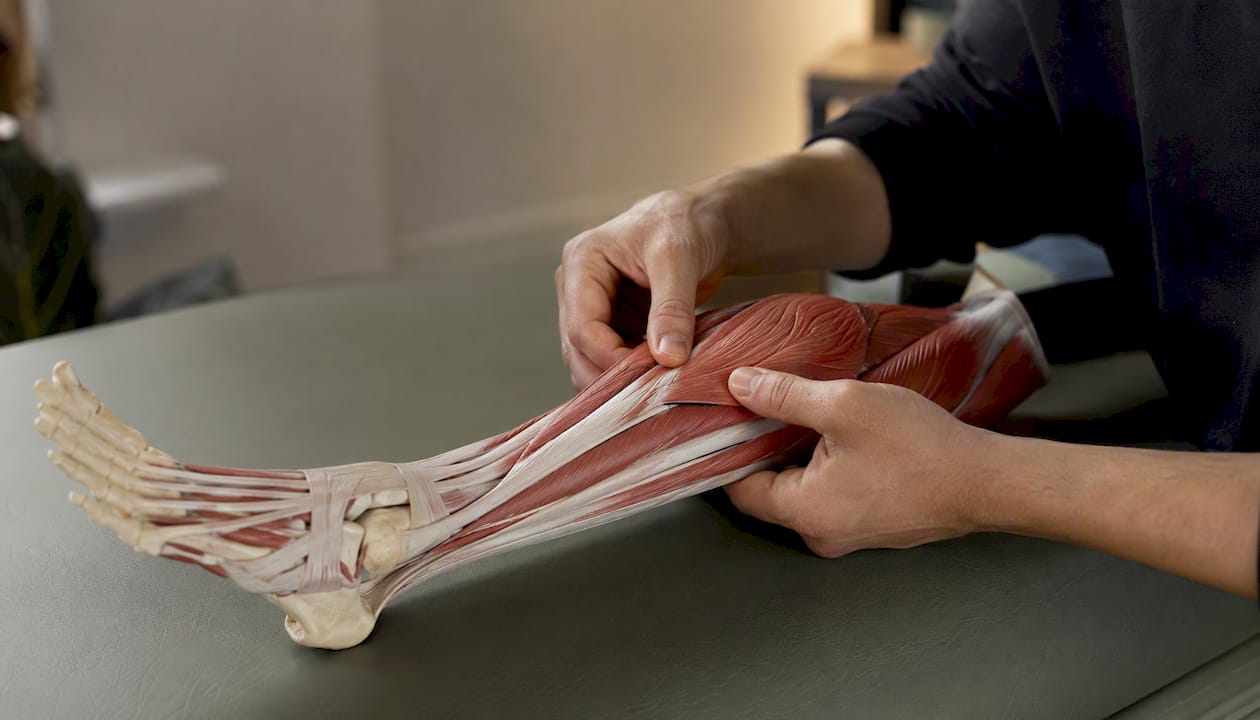
The key mechanism centres on calcium regulation. Muscle fibres contract when calcium floods into the cell and relax when calcium is pumped back into the sarcoplasmic reticulum. Magnesium competes with calcium at several points in this process, acting as a natural brake on excessive contraction. When magnesium levels drop, calcium handling becomes less precise, muscles stay in a semi-contracted state for longer, and the micro-damage from exercise takes longer to resolve.
During heavy training, magnesium is lost through sweat and urine at a higher rate than during rest. If dietary intake does not compensate, a functional shortfall develops. That shortfall does not necessarily show up on a standard blood test (most magnesium is intracellular), but it can impair the muscle’s ability to recover efficiently between sessions.
A scoping review of magnesium’s role in skeletal muscle health reported clinical evidence linking adequate magnesium status to improved muscle recovery, reduced inflammation, and better preservation of muscle integrity in both athletes and patient groups. The mechanisms proposed include reduced oxidative stress, modulation of inflammatory pathways, and support for ATP synthesis, the energy currency muscles need to repair themselves.
Key mechanisms in plain terms:
- Calcium regulation: Magnesium limits excessive calcium influx during and after exercise, reducing prolonged muscle tension.
- ATP production: Magnesium is required to activate ATP (the Mg–ATP complex), so low levels impair the energy supply muscles need for repair.
- Reduced inflammation: Adequate magnesium status is associated with lower markers of exercise-induced inflammation.
- Sweat losses: Training increases magnesium excretion, potentially widening any existing dietary gap.
Pro Tip: Magnesium’s effect on sleep quality is a separate but related benefit. Better sleep accelerates muscle repair overnight, so the two effects compound. If you are also sleeping poorly after hard sessions, read Runcomplete’s guide on magnesium for runners’ sleep.
Who is most likely to benefit from magnesium for DOMS?
Not everyone will notice a difference. The benefit is most plausible for people whose magnesium intake does not keep pace with their training demands.
Profiles most likely to benefit:
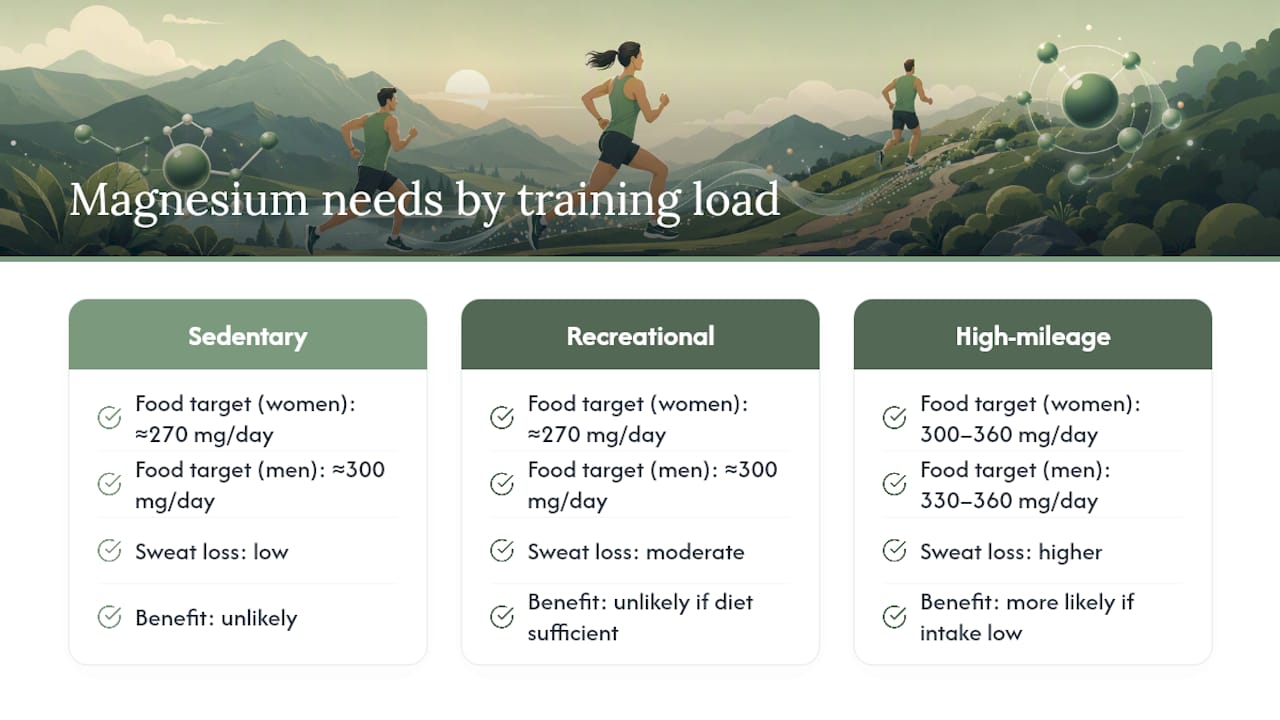
Runners logging high weekly mileage, particularly those training for half marathons or beyond, lose more magnesium through sweat than recreational joggers. If you are also eating a diet low in leafy greens, legumes, nuts, and wholegrains, the gap between intake and need can become meaningful. The 2024 systematic review specifically noted that athletes may need 10–20% more magnesium than sedentary people, a figure that translates to roughly 300–360 mg/day for women and 330–360 mg/day for men at the upper end of that range.
Other signs that suggest you may be running low: frequent muscle cramps during or after runs, poor sleep quality following hard sessions, and general fatigue that does not resolve with rest. These are not diagnostic, but they are practical flags worth taking seriously. For more on cramps specifically, Runcomplete’s guide on magnesium for muscle twitching after running covers this in detail.
Profiles less likely to benefit:
If you run two or three times a week, eat a varied diet with plenty of vegetables, nuts, and wholegrains, and recover well between sessions, your magnesium intake is probably adequate. Supplementing on top of a sufficient diet is unlikely to produce noticeable DOMS reduction. The research is consistent on this point: magnesium supplementation helps most where there is a gap to fill.
Pro Tip: A quick dietary audit is more useful than a blood test for most people. Log three days of eating and check whether you are regularly hitting 270 mg (women) or 300 mg (men) from food. If you are consistently short, that is a stronger signal than any symptom alone.
Which magnesium forms work best for recovery?
Form matters more than most supplement labels suggest. Not all magnesium is absorbed equally, and some forms cause digestive discomfort at doses relevant to recovery.
The NIH ODS factsheet covers the key forms and their absorption characteristics. In practical terms for runners:
- Magnesium bisglycinate (glycinate): Bound to the amino acid glycine, this form is well absorbed and has a low risk of causing diarrhoea. It is the form most commonly recommended by sports nutrition practitioners for recovery use.
- Magnesium citrate: Good bioavailability and widely available. Slightly more likely to cause loose stools at higher doses than bisglycinate, but generally well tolerated at 200–300 mg.
- Magnesium oxide: High elemental magnesium content per capsule, but poor absorption and the most likely to cause GI upset. Worth avoiding if tolerability is a concern.
- Topical magnesium (sprays, oils, bath flakes): Absorption through skin is plausible but not well established in clinical trials. The evidence for topical forms reducing DOMS specifically is thin.
- Magnesium lactate: Reasonable tolerability; less commonly available in the UK than bisglycinate or citrate.
For more on choosing between forms for UK runners, Runcomplete’s guide on best magnesium bisglycinate for runners goes deeper on the tolerability trade-offs.
Dosing and timing:
Studies supporting DOMS reduction used 350–400 mg/day of elemental magnesium. NHS guidance is clear: do not exceed 400 mg/day from supplements. That ceiling applies to the supplemental dose alone, not total dietary intake. Most people eating a reasonable diet are already getting 200–300 mg from food, so a supplemental dose of 150–200 mg may be sufficient to bridge any gap without approaching the upper limit.
The 2024 systematic review suggested taking capsules approximately two hours before exercise may be beneficial, based on pharmacokinetic considerations. Evening dosing is also commonly used, particularly when sleep quality is a secondary goal. Both approaches are reasonable; consistency matters more than precise timing.
Practical dosing points:
- Start at 150–200 mg supplemental magnesium (bisglycinate or citrate) and assess tolerance over one week.
- Do not exceed 400 mg/day from supplements per NHS guidance.
- Take with food to reduce any GI discomfort. Runcomplete’s guide on magnesium with food explains how meals affect absorption.
- Allow at least two weeks before judging effect on soreness.
Side effects, interactions, and who should check with a clinician
Magnesium is generally safe at doses within NHS limits, but there are real risks to know before starting.
Common side effects:
Diarrhoea is the most frequent complaint, and it is dose-dependent. It is far more common with magnesium oxide than with bisglycinate or citrate. If you experience loose stools, reduce the dose rather than stopping entirely. Nausea and stomach cramps can also occur, particularly if taken on an empty stomach.

For a full breakdown of what to expect, Runcomplete’s article on magnesium side effects covers the practical detail.
Drug interactions:
Magnesium can interfere with the absorption or action of several medications. Before starting a supplement, check whether you take any of the following:
- Certain antibiotics (particularly tetracyclines and fluoroquinolones): magnesium can bind to these in the gut and reduce their absorption. Take magnesium at least two hours apart.
- Bisphosphonates (used for osteoporosis, e.g. alendronate): similar absorption interference; spacing doses is important.
- Anticonvulsants (e.g. gabapentin): magnesium may affect drug levels; speak to your GP or pharmacist before supplementing.
- Diuretics: some increase magnesium excretion (loop diuretics), while others reduce it (potassium-sparing diuretics); the net effect depends on the specific drug.
- Proton pump inhibitors (e.g. omeprazole): long-term use can reduce magnesium absorption; supplementation may be appropriate but should be discussed with a clinician.
Who should speak to a clinician first:
- Anyone with kidney disease: the kidneys regulate magnesium excretion, and impaired kidney function can lead to dangerous accumulation.
- Anyone pregnant or breastfeeding: requirements change and supplementation should be guided by a midwife or GP.
- Anyone on the medications listed above.
- Anyone with a diagnosed heart condition: magnesium affects cardiac muscle function.
When to stop: persistent diarrhoea, muscle weakness, or irregular heartbeat after starting supplementation are reasons to stop and seek medical advice promptly.
Getting more magnesium from food first
Before reaching for a capsule, it is worth knowing how much magnesium you can realistically get from a well-structured day of eating. For most people with moderate training loads, food can get you close to or at the recommended intake.
High-magnesium foods to prioritise:
- Pumpkin seeds: around 150 mg per 30 g serving, one of the most concentrated sources available.
- Dark leafy greens (spinach, kale): roughly 80–90 mg per 100 g cooked.
- Legumes (black beans, edamame, lentils): 40–70 mg per 100 g cooked.
- Wholegrains (brown rice, oats, wholemeal bread): 40–60 mg per serving.
- Nuts (almonds, cashews, Brazil nuts): 50–80 mg per 30 g.
- Dark chocolate (70%+ cocoa): around 65 mg per 30 g.
A practical two-meal approach: porridge made with oats and topped with a tablespoon of pumpkin seeds at breakfast (roughly 80–100 mg), followed by a lunch of lentil soup with wholemeal bread (roughly 80–100 mg), gets you to 160–200 mg before dinner. Add a handful of almonds as a snack and a portion of spinach with your evening meal, and you are close to 270–300 mg from food alone.
Where food alone may fall short: very high training loads (marathon training, daily doubles), restrictive diets, or simply inconsistent eating patterns during busy weeks. In those situations, a low-dose supplement of 150–200 mg bisglycinate on top of a reasonable diet is a practical and safe approach, staying well within the NHS 400 mg supplemental ceiling.
How to run a practical trial to test magnesium for DOMS
A structured trial removes the guesswork. Here is a straightforward protocol based on the RCT evidence and review recommendations.
Starting protocol:
- Choose magnesium bisglycinate or citrate (150–200 mg elemental magnesium per dose).
- Take it daily, either approximately two hours before your main training session or in the evening with your last meal.
- Commit to a minimum of two weeks before assessing any effect; the RCT evidence used 10 days as a minimum, but four to eight weeks gives a clearer picture across varied training sessions.
- Do not change your training load or diet significantly during the trial period, as both variables affect DOMS independently.
What to monitor:
- Soreness rating: score your soreness on a simple 1–6 scale (1 = none, 6 = severe) at 24 and 48 hours after your hardest session each week. Write it down.
- Training performance: note whether you feel recovered enough to hit your planned effort on subsequent sessions.
- GI tolerance: any diarrhoea or stomach discomfort, particularly in the first week.
- Sleep quality: a secondary but related benefit; note whether sleep feels more restorative.
Interpreting results:
- If soreness ratings drop by 1–2 points consistently over four weeks and GI tolerance is fine, the supplement is working for you. Continue.
- If you notice no change after eight weeks, your dietary intake may already be sufficient, or magnesium may not be the limiting factor in your recovery. Stop supplementing and focus on other recovery levers (sleep, protein intake, training load management).
- If GI side effects persist beyond the first week, reduce the dose to 100 mg and reassess. If they continue, switch forms or stop and speak to a pharmacist.
For detailed timing guidance, Runcomplete’s article on magnesium before or after running covers the pre- versus post-exercise timing debate in more depth.
What the research still does not tell us
The evidence is encouraging, but several gaps limit how confidently anyone can recommend magnesium as a DOMS solution for all active people.
Main research gaps:
- Small sample sizes: the most cited RCT had only 22 participants. Effects that appear significant in small trials often shrink or disappear in larger ones.
- Mixed formulations: trials use different magnesium forms (oxide, citrate, glycinate), making it difficult to compare results or identify which form drives the benefit.
- Short follow-up: most trials run for 10–21 days. Whether benefits persist over a full training season is unknown.
- Baseline intake not always controlled: if participants already have adequate magnesium from diet, supplementation may show little effect. Trials that do not screen for baseline status conflate two very different populations.
- Heterogeneous populations: cyclists, recreational exercisers, and resistance-trained athletes respond differently. Generalising across these groups is imprecise.
Confidence level: low to moderate. The direction of evidence favours magnesium supplementation for people with insufficient intake, but the effect size is modest and the evidence base is not yet robust enough to make a universal recommendation.
Final recommendation for UK active people: prioritise food sources first. If your diet is consistently short of magnesium-rich foods and you train hard, a trial of 150–200 mg bisglycinate or citrate daily for four to eight weeks is reasonable and safe within NHS limits. If you take interacting medications or have a health condition, speak to your GP or pharmacist before starting.
How this article’s evidence was selected
This article prioritised systematic reviews, peer-reviewed RCTs, and guidance from the NHS and NIH Office of Dietary Supplements. Sources were selected for methodological quality, relevance to physically active adults, and applicability to UK readers. This is not an exhaustive systematic review and does not constitute personalised medical advice. If you have a health condition, take prescription medication, or are pregnant, speak to your GP or a registered pharmacist before starting any supplement. For interactions and conditions, always confirm current guidance with a qualified clinician.
A practical note from Tim
Working with everyday runners, the pattern that comes up most often is this: people who train consistently but eat inconsistently are the ones who notice the biggest difference from magnesium. Not elite athletes with carefully managed nutrition, and not casual joggers who run twice a week and eat well. It is the person doing four runs a week, eating on the go, skipping vegetables more often than they would like, and wondering why their legs still ache on Thursday after a Tuesday session.
What I find honest to say is that magnesium is not a recovery shortcut. It will not compensate for under-sleeping, overtraining, or insufficient protein. But for runners whose diet genuinely falls short of what their training demands, it is one of the more evidence-supported, low-risk interventions available. The bisglycinate form tends to be the one people stick with because it does not cause the digestive disruption that puts them off other forms. A consistent daily habit, rather than an occasional post-race dose, is what the evidence actually supports.
Runcomplete Ready: magnesium bisglycinate made for runners
If you have read this far and decided a trial is worth doing, the form and dose matter. Runcomplete’s Ready — Magnesium for Runners uses magnesium bisglycinate, the form with the strongest tolerability profile for daily use, in a capsule free of unnecessary fillers and suitable for vegetarians and vegans. It is made in the UK.

The 30-day guarantee means you can run the full trial protocol described above and assess the result without financial risk. Ready is available as a one-time purchase or a monthly subscription, so you are not locked into anything before you know whether it works for you. For runners who want a straightforward, evidence-aligned option without the noise of the broader supplement market, it is a practical starting point. Visit the Ready product page to check current options and pricing.
Sources
- Effects of magnesium supplementation on muscle soreness and performance. J Strength Cond Res 36(8): 2198-2203, 2022.
- Vitamins and minerals - Others - NHS
- Effects of magnesium supplementation on muscle soreness in different type of physical activities: a systematic review
- Effect of magnesium supplementation on muscle damage markers during a 21-day cycling race - PMC
- Magnesium — Health Professional Fact Sheet | ODS, NIH
Recommended
- Magnesium glycinate benefits for runners: what you need to know – Run Complete
- Magnesium with food for runners: sleep & recovery – Run Complete
- Best magnesium UK for runners: top pick and how to choose – Run Complete
- Best Form of Magnesium for Runners: Spray vs Tablets vs Bisglycinate – Run Complete

