
Yes, you can take magnesium with vitamin D, and for many people there is a good biochemical reason to do so. Magnesium is a required cofactor for the enzymes that convert vitamin D into its active form in the body. Without adequate magnesium, those conversion steps slow down regardless of how much vitamin D you take.
Who is most likely to benefit from combining the two:
- People with low or borderline vitamin D status, particularly those with limited sun exposure during UK winters
- Individuals with low dietary magnesium intake (common in diets low in nuts, seeds, and leafy greens)
- Runners and active adults with higher magnesium turnover from sweat and muscle demand
- Overweight or obese adults, where trial data show a more pronounced combined effect
- People who have supplemented vitamin D without seeing their 25(OH)D levels rise as expected
If your GP has tested your vitamin D status using a serum 25(OH)D test and the result is low despite supplementation, checking magnesium status alongside it is a sensible next step.
Key takeaways
Magnesium is a required cofactor for vitamin D activation, and combining the two is most evidence-backed for adults with low baseline levels of either nutrient, particularly runners, those with limited sun exposure, and overweight individuals.
| Point | Details |
|---|---|
| Magnesium activates vitamin D | Magnesium is required for both liver and kidney hydroxylation steps that convert vitamin D to its active form. |
| RCT evidence supports combined use | A 12-week trial found combined supplementation raised serum 25(OH)D more than vitamin D alone in overweight adults. |
| Bisglycinate is the preferred form | Magnesium bisglycinate offers high absorption and excellent GI tolerance, making it the best choice for runners and daily use. |
| Timing and interactions matter | Take vitamin D with a main meal; space magnesium 2–3 hours away from antibiotics, bisphosphonates, and iron supplements. |
| Runcomplete Ready fits the guidance | Runcomplete’s bisglycinate capsule is UK-made, filler-free, and designed for runner recovery and sleep, matching the checklist in this guide. |
Table of Contents
- How does magnesium help vitamin D work in the body?
- What are the benefits of taking magnesium and vitamin D together?
- Which magnesium form works best alongside vitamin D?
- How to take magnesium with vitamin D: dosing, timing and interactions
- Safety, side effects and who should be cautious
- How to choose a magnesium and vitamin D supplement in the UK
- UK products commonly available: what to look for on the label
- When is combined supplementation most likely to improve your vitamin D status?
- The evidence is clear, but the routine is simpler than you think
- Runcomplete’s magnesium bisglycinate: built for runners, not just gym-goers
- Sources
How does magnesium help vitamin D work in the body?
The relationship between magnesium and vitamin D is not simply about taking two supplements together; magnesium sits at the centre of vitamin D’s entire metabolic pathway.
When vitamin D enters the body, either from sunlight or a supplement, it is biologically inert. It needs two hydroxylation steps to become active. The first happens in the liver, where the enzyme CYP2R1 converts it to 25-hydroxyvitamin D, the form measured in blood tests. The second occurs in the kidney, where CYP27B1 converts that intermediate into 1,25-dihydroxyvitamin D, the hormonally active form. Both enzymes depend on magnesium as a cofactor. Mechanistic reviews confirm that magnesium is required for these hydroxylation reactions and for the function of the vitamin D receptor itself.
Magnesium also supports the vitamin D binding protein that transports 25(OH)D through the bloodstream. So even if you are taking a reasonable dose of vitamin D, low magnesium can create a bottleneck at multiple points in the process.
- Liver hydroxylation (CYP2R1) requires magnesium to produce 25(OH)D
- Kidney hydroxylation (CYP27B1) requires magnesium to produce the active 1,25-dihydroxyvitamin D
- Vitamin D receptor signalling depends on magnesium-dependent cellular processes
- Vitamin D binding protein transport is influenced by magnesium status
The clinical trial evidence adds weight to this mechanism. A 12-week randomised double-blind trial in overweight and obese adults found that combined magnesium and vitamin D supplementation produced a mean increase in serum 25(OH)D of 6.3 ± 8.36 ng/mL, greater than vitamin D alone. A subgroup with higher baseline blood pressure also saw a systolic reduction of 7.5 ± 8.26 mmHg.
This is why some people supplement vitamin D for months without their blood levels moving much. The bottleneck is not the vitamin D dose. It is the magnesium.
What are the benefits of taking magnesium and vitamin D together?
The combined approach is not a marketing concept. There are specific, plausible outcomes backed by trial and observational data, though the strength of evidence varies by outcome.
Benefits with reasonable trial support:
- Improved vitamin D activation and serum 25(OH)D status, particularly in those with low baseline levels or magnesium insufficiency
- Bone mineralisation, since both nutrients are independently required for calcium metabolism and bone density; vitamin D aids calcium absorption, magnesium is incorporated directly into bone matrix
- Muscle function and recovery, with magnesium supporting neuromuscular transmission and reducing cramp frequency, and vitamin D linked to muscle strength in older adults
- Blood pressure reduction in specific subgroups, as shown in the RCT above for participants with elevated baseline systolic pressure
Benefits with observational or mechanistic support only:
- Reduced fatigue and improved sleep quality (magnesium’s effect on the nervous system is well-documented, though specific combined-supplement trials are limited)
- Immune function support, where both nutrients play independent roles
Who should consider combining them:
Runners training through UK winters are a clear use case. Sun exposure drops sharply between October and March, vitamin D synthesis from skin essentially stops, and training-related sweat losses increase magnesium demand. Older adults, people with darker skin tones (who synthesise vitamin D less efficiently from UK sunlight), and those with obesity or type 2 diabetes also appear to benefit more from combined supplementation based on available data.

Pro Tip: If you have been taking vitamin D for more than three months without a noticeable improvement in energy or a rise in your 25(OH)D test result, ask your GP about checking serum magnesium alongside your next vitamin D test.
Which magnesium form works best alongside vitamin D?
Not all magnesium supplements are equal, and the form matters considerably for both absorption and tolerability.
| Form | Absorption | GI tolerance | Notes |
|---|---|---|---|
| Magnesium bisglycinate | High | Excellent | Preferred for runners; well-tolerated at bedtime |
| Magnesium glycinate | High | Excellent | Functionally similar to bisglycinate |
| Magnesium citrate | Good | Moderate | Can cause loose stools at higher doses |
| Magnesium oxide | Low (around 4%) | Poor at higher doses | Cheap but largely passes through unabsorbed |
| Magnesium chloride | Moderate | Moderate | More common in topical products |
Magnesium bisglycinate and glycinate are chelated forms, meaning the magnesium is bound to the amino acid glycine. This improves absorption across the gut wall and reduces the osmotic effect that causes diarrhoea with oxide or high-dose citrate. For runners specifically, the glycine component also has mild calming properties that can support sleep quality, making an evening dose a practical choice.
When reading a label, look for the elemental magnesium figure, not the total compound weight. A capsule containing 500 mg of magnesium bisglycinate typically delivers around 50–100 mg of elemental magnesium. Labels that only state the compound weight without specifying elemental content are harder to dose accurately.
For a detailed comparison of bisglycinate and citrate from a runner’s perspective, the magnesium glycinate vs citrate guide covers the practical trade-offs clearly.
Pro Tip: If citrate causes loose stools, switch to bisglycinate rather than reducing the dose. The form change alone usually resolves the issue without sacrificing the magnesium you need.
How to take magnesium with vitamin D: dosing, timing and interactions
Getting the dose and timing right matters as much as choosing the right form.
Practical dose ranges for UK adults:
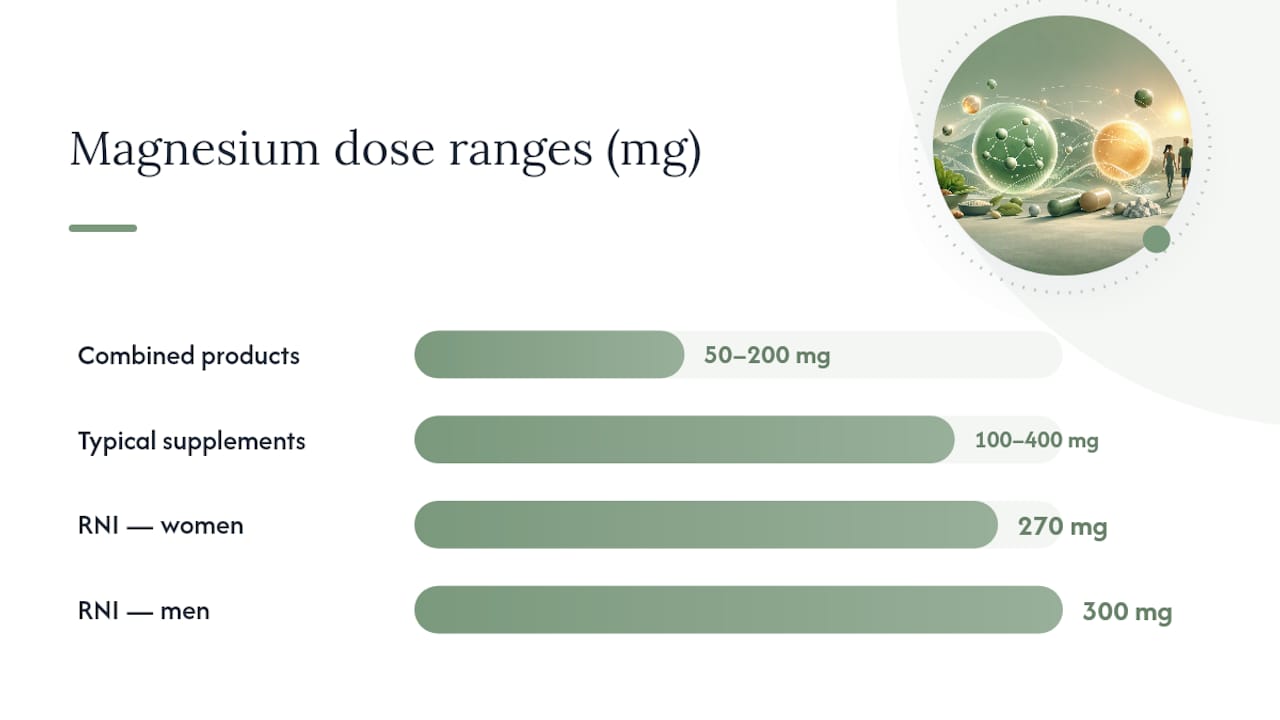
- Vitamin D: The NHS recommends 10 µg (400 IU) daily for general bone health, year-round for higher-risk groups. Therapeutic doses used in clinical practice often range from 25–50 µg (1,000–2,000 IU) daily, but doses above 25 µg should ideally follow a GP’s guidance or a confirmed deficiency test. UK guidance and typical supplement compositions note that combined products commonly contain 10–25 µg (400–1,000 IU) of vitamin D alongside 50–200 mg of elemental magnesium.
- Magnesium: The UK Reference Nutrient Intake (RNI) is 270 mg daily for women and 300 mg daily for men. Most supplements provide 100–400 mg of elemental magnesium per day. The NHS clinical guidance on hypomagnesaemia uses an acute oral replacement dose of 24 mmol daily in divided doses as a reference point for clinical correction.
Timing:
- Take vitamin D with your largest meal of the day. Fat in the meal improves absorption of this fat-soluble vitamin noticeably. UK consumer guidance consistently recommends this approach.
- Magnesium bisglycinate works well in the evening, around 30–60 minutes before bed, where it can support sleep quality alongside its recovery role. Splitting the dose (morning and evening) is a reasonable alternative if you are taking higher amounts.
Drug interactions to know:
- Space magnesium supplements at least 2–3 hours away from tetracycline antibiotics, fluoroquinolones, bisphosphonates (such as alendronic acid), and iron supplements. Magnesium can bind to these drugs in the gut and reduce their absorption significantly.
- Magnesium may also interact with certain diuretics and digoxin. If you take any regular prescription medication, check with your pharmacist before starting magnesium supplements.
For more detail on magnesium side effects and drug interactions, the Runcomplete guide covers the most clinically relevant scenarios for active adults.
When to test:
A serum 25(OH)D test is the standard measure for vitamin D status. The NHS magnesium test page explains when a GP would order a magnesium blood test, typically prompted by symptoms such as muscle cramps, weakness, nausea, or suspected electrolyte disturbance. Serum magnesium has a known limitation: it reflects only a small fraction of total body magnesium, so a normal result does not rule out cellular deficiency.
Safety, side effects and who should be cautious
For most healthy adults, combined magnesium and vitamin D supplementation at standard doses is well-tolerated. The risks are real but manageable with a little awareness.
Common side effects and how to handle them:
- Loose stools or diarrhoea, most often with magnesium oxide or high-dose citrate. Switching to bisglycinate or splitting the dose across two meals usually resolves this.
- Abdominal discomfort, particularly if magnesium is taken on an empty stomach. Taking it with food or in the evening with a small snack helps.
Who should check with a GP or pharmacist first:
- People with chronic kidney disease (CKD). The kidneys regulate magnesium excretion; impaired kidney function raises the risk of hypermagnesaemia (dangerously elevated magnesium), which can cause muscle weakness, low blood pressure, and cardiac arrhythmia.
- Those taking multiple prescription medicines, particularly diuretics, digoxin, or drugs for osteoporosis.
- Pregnant or breastfeeding individuals, where nutrient needs and safety thresholds differ from the general adult population.
Vitamin D toxicity is rare at doses below 100 µg (4,000 IU) daily but becomes a genuine risk at very high doses taken over extended periods. Symptoms of excess include nausea, vomiting, weakness, and hypercalcaemia. The NHS upper safe limit for adults is generally cited as 100 µg (4,000 IU) daily from all sources combined.
Pro Tip: If you have any kidney condition, even a mild reduction in eGFR, treat magnesium supplements the same way you would a prescription drug: check with your GP before starting.
Monitoring serum magnesium and electrolytes is worth discussing with your GP if you are taking higher doses long-term or have any of the risk factors above. The RUH NHS hypomagnesaemia guideline notes that serum magnesium can appear normal even when cellular stores are depleted, so clinical symptoms and dietary history matter alongside blood results.
How to choose a magnesium and vitamin D supplement in the UK
The UK supplement market is large and inconsistently labelled. A short checklist saves you from buying something that looks good on the front of the pack but delivers little on the back.
What to look for:
- Form: Bisglycinate or glycinate for best tolerance and absorption; citrate as a second choice
- Elemental magnesium clearly stated: Look for the actual elemental amount per dose, not just the compound weight
- Vitamin D3 (cholecalciferol): D3 raises serum 25(OH)D more effectively than D2 in most studies; check the label specifies D3
- Dose in IU or µg: 400–1,000 IU (10–25 µg) is appropriate for most adults without a confirmed deficiency
- Third-party testing: Look for products tested by an independent laboratory; this is particularly relevant for runners who may be subject to sports testing. The Runcomplete guide to third-party tested supplements explains what to look for on the label
- Vegetarian or vegan capsule: Relevant if you avoid gelatine
- Minimal fillers: Avoid products with long lists of binders, artificial colours, or unspecified “proprietary blends”
Red flags on labels:
- Magnesium listed only as compound weight with no elemental breakdown
- Very high vitamin D doses (above 50 µg / 2,000 IU) in a standard daily supplement without a clinical indication
- Unverified health claims that go beyond what the evidence supports (e.g. “cures joint pain”)
- No batch number or manufacturer contact details
Where to buy in the UK:
Reputable UK health retailers, pharmacies, and direct-from-manufacturer websites are generally reliable. For runners, buying from a brand that manufactures in the UK and provides clear elemental dosing information reduces guesswork. Your pharmacist can also advise on whether a specific product interacts with any medicines you take.
Pro Tip: When comparing products, divide the price by the number of elemental milligrams per dose, not the number of capsules. A cheaper product with low elemental magnesium often costs more per effective dose.
UK products commonly available: what to look for on the label
Rather than ranking products, it is more useful to look at what specific UK-available supplements actually contain, so you can apply the checklist above in practice.
Holland & Barrett Calcium + Magnesium & Vitamin D is one of the most widely stocked combination products in UK high streets. It contains calcium, magnesium, and vitamin D3 in a single tablet. When reading the label, check the elemental magnesium per tablet carefully, as the magnesium is often present as magnesium oxide in this format, which has lower bioavailability than bisglycinate. The added calcium is worth noting: if you already consume dairy or take a separate calcium supplement, you may not need additional calcium, and excess calcium intake carries its own considerations.
Natures Aid Calcium, Magnesium + Vitamin D3 is another UK-available option combining all three nutrients. Again, the form of magnesium used and the elemental amount per dose are the key figures to check. Products in this category typically provide vitamin D3 at 5–10 µg (200–400 IU) per tablet, which is at the lower end of the therapeutic range. If your vitamin D status is genuinely low, a standalone vitamin D supplement at a higher dose may be more appropriate alongside a separate magnesium bisglycinate product.
For runners, a combination product that includes calcium may not be the most targeted choice. Calcium and magnesium compete for absorption at high doses, and a dedicated magnesium bisglycinate supplement paired with a separate vitamin D3 capsule gives you more control over each dose. The best magnesium bisglycinate UK guide covers label reading in more detail for this audience.
Pro Tip: If you are taking a combination calcium, magnesium and vitamin D product, add up your total daily calcium from food and supplements before assuming you need more. Most UK adults eating dairy regularly are not calcium-deficient.
When is combined supplementation most likely to improve your vitamin D status?
The evidence is more nuanced than most supplement marketing suggests, and understanding the subgroup picture helps you decide whether combined supplementation is genuinely relevant for you.
Large cohort analyses report only modest overall associations between serum magnesium and circulating 25(OH)D in general adult populations. The differences are often small and not statistically significant across the whole group. This does not mean the relationship is unimportant. It means the effect is concentrated in specific subgroups.
The RCT data tell a clearer story for those subgroups. The 12-week trial cited earlier showed a meaningful rise in 25(OH)D with combined supplementation in overweight and obese participants, a group where both magnesium insufficiency and vitamin D deficiency are more prevalent. In clinical trials more broadly, the effect of magnesium on 25(OH)D tends to be larger in participants with lower baseline vitamin D status.
Subgroups where combined supplementation has the strongest evidence base:
- Adults with confirmed or suspected vitamin D deficiency (25[OH]D below 25 nmol/L)
- Individuals with low dietary magnesium intake or clinical hypomagnesaemia
- Overweight or obese adults
- Those who have not responded to vitamin D supplementation alone
Where the evidence is weaker:
- Healthy adults with adequate baseline levels of both nutrients
- General population supplementation without confirmed deficiency
Clinically, correcting magnesium deficiency is sometimes prioritised before or alongside vitamin D supplementation in cases of rickets or severe deficiency, because vitamin D cannot be properly activated without it. The RUH NHS hypomagnesaemia guideline notes that serum magnesium can be normal while cellular stores are depleted, which is why clinical assessment and symptom review remain important alongside blood tests.
Key primary sources informing this section:
- Uwitonze & Razzaque (2018), Journal of the American Osteopathic Association (PubMed 29480918)
- Deng et al. (2022), Nutrition (ScienceDirect, combined RCT)
- Cohort analysis, PMC11649730
Pro Tip: A poor response to vitamin D supplementation after 3–6 months is a practical clinical signal to check magnesium status. This is one of the most overlooked reasons why vitamin D levels fail to rise despite consistent supplementation.
The evidence is clear, but the routine is simpler than you think
The biochemistry here is genuinely interesting, and the trial data are worth knowing. But for most runners and health-conscious adults, the practical takeaway is straightforward: if you are supplementing vitamin D through a UK winter and your diet is not rich in magnesium-dense foods, adding a well-absorbed magnesium supplement is a low-risk, evidence-supported step.
What I find underappreciated in most discussions of this topic is how often people focus on the vitamin D dose and ignore the magnesium entirely. The RCT data suggest that in people who are genuinely low in both, the combined approach outperforms vitamin D alone. Yet magnesium is still treated as an afterthought in most supplement stacks.
For runners, the case is even more direct. Magnesium losses through sweat are real, muscle recovery depends on adequate magnesium, and sleep quality, which is where most of the actual recovery happens, responds well to bisglycinate in the evening. Pairing that with a vitamin D3 capsule at dinner is not a complicated protocol. It is two capsules with a meal.
The one thing I would push back on is the tendency to buy combination calcium, magnesium and vitamin D tablets as a catch-all solution. Calcium and magnesium compete for absorption, and most UK adults eating a normal diet do not need supplemental calcium. A dedicated bisglycinate supplement plus a standalone D3 capsule gives you better control and, in most cases, better value per effective dose.
Test your 25(OH)D if you have not done so. If it is low, check magnesium too. Then keep the routine simple.
Runcomplete’s magnesium bisglycinate: built for runners, not just gym-goers
Most magnesium supplements are designed for a generic health market. Runcomplete’s Ready is built specifically around what everyday runners actually need: clean recovery, better sleep, and fewer cramps, without a long list of unnecessary ingredients.

Ready uses magnesium bisglycinate, the form this guide recommends for tolerance and absorption. It is UK-made, comes in a filler-free capsule suitable for vegetarians and vegans, and delivers a clear elemental magnesium dose per serving. There are no proprietary blends or ambiguous compound weights on the label. You know exactly what you are taking.
For runners pairing it with vitamin D3, the evening timing works well: Ready before bed, vitamin D3 with your main meal. The 30-day guarantee means there is no risk in trying it, and the monthly subscription keeps the routine consistent without the hassle of reordering. See the full beginner runner nutrition guide or go straight to Runcomplete to get started.
Sources
- Role of Magnesium in Vitamin D Activation and Function
- The effect of combined magnesium and vitamin D supplementation on vitamin D status, systemic inflammation, and blood pressure: A randomized double-blinded controlled trial - ScienceDirect
- NENC ICB Management of Hypomagnesaemia in Adults in Primary Care (approved v1.1)
- Association between magnesium and vitamin D metabolite concentrations in a large cohort (PMC)
- Magnesium test - NHS
This article provides general health information only and is not a substitute for professional medical advice. Confirm current guidance and your individual suitability with your GP or a qualified healthcare professional before starting any new supplement.

