
What if that expensive magnesium spray on your bedside table isn't actually reaching your muscles? You've likely spent weeks massaging oils into your calves, hoping for an end to the post-run twitching that keeps you awake. Finding the best form of magnesium for runners shouldn't feel like a complex chemistry experiment. Most of us are just looking for a way to stop the heavy leg feeling and get a decent night's sleep before a busy work day. It is a common struggle for people balancing weekly miles with a normal life.
It's frustrating to stretch for twenty minutes only to wake up with legs that feel like lead. We know you want a recovery routine that actually works without the guesswork or the dreaded stomach upset. This article breaks down the scientific truth about magnesium absorption so you can stop wasting money on the wrong tools. We will compare sprays, standard tablets, and bisglycinate to help you finally fix those restless legs. You'll discover a simple path to waking up fresh and feeling ready for your next session. By understanding which forms actually enter your system, you can finally build a fuss-free routine that supports your long-term consistency.
Key Takeaways
- Understand why regular running creates a magnesium gap that leaves your legs feeling heavy and restless after evening sessions.
- Learn the truth about the "transdermal myth" and why messy sprays often fail to reach your bloodstream compared to oral supplements.
- Discover why magnesium bisglycinate is the best form of magnesium for runners who want high absorption without the risk of stomach upset.
- Master the timing of your recovery routine to ensure you wake up with fresh legs and improved focus for the work day ahead.
- Simplify your habit with a minimalist approach that prioritises bioavailable ingredients over unnecessary fillers or complex chemical jargon.
The Runner's Magnesium Gap: Why Your Legs Feel Heavy
Think about the feeling after a Tuesday night 5k. Your legs don't just feel tired; they feel like lead. This isn't just normal fatigue from the pavement. It is often a biological signal. Magnesium acts as the vital 'off switch' for your muscles. Without it, your nervous system keeps firing. Your muscles stay partially contracted. This persistent tension is why your legs feel heavy during a normal work day. It makes your morning commute feel like a marathon before you've even started your shift.
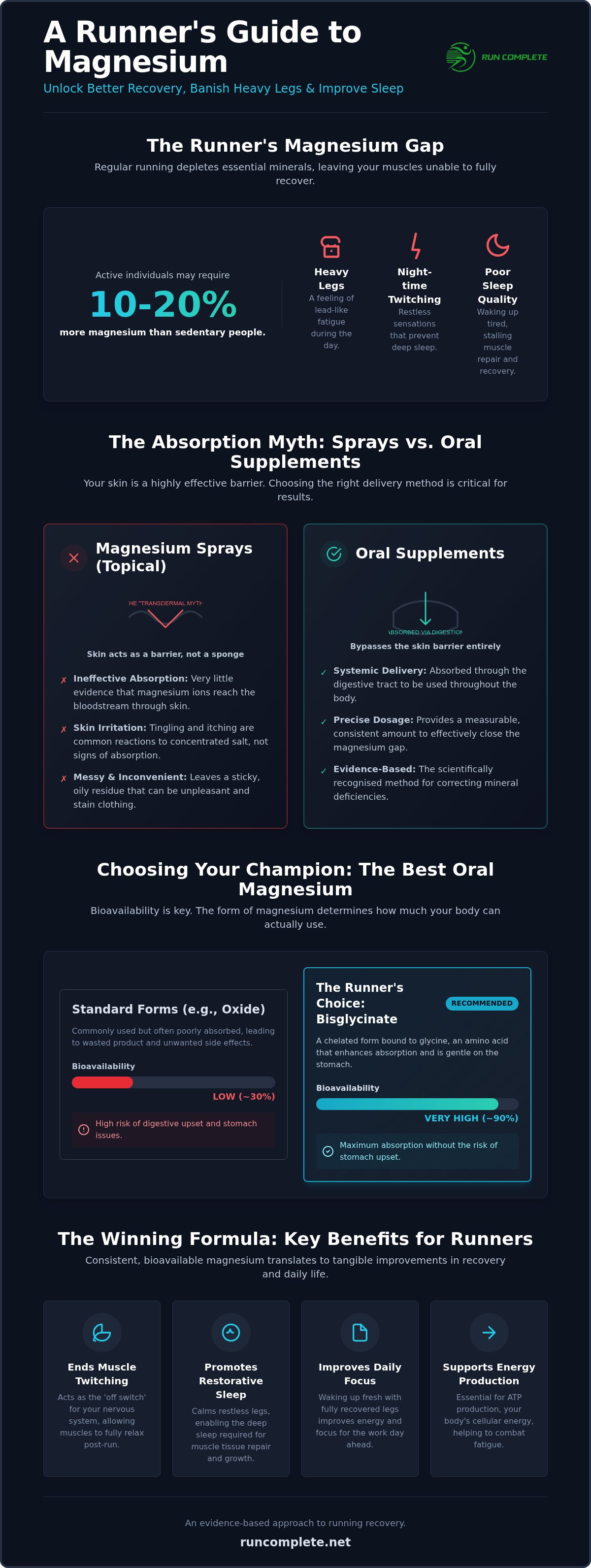
Runners lose significantly more minerals than sedentary people. You aren't just losing water through your pores. You are losing the essential sparks that keep your engine running. Research suggests that active people may require 10 to 20% more magnesium than the average person. This gap is difficult to bridge with food alone. Even a diet rich in spinach and nuts can struggle to keep up with the demands of a regular running habit. When you sweat, your body prioritises cooling down over mineral preservation.
Then comes the night. You are exhausted but your legs won't settle. This is the classic 2:00 AM twitch. It's a restless, buzzing sensation that prevents deep sleep. It is your body's way of shouting that it cannot reset. Finding the best form of magnesium for runners depends on understanding how to close this gap effectively. You need a solution that actually reaches the muscle tissue rather than just sitting on the surface.
What Happens When Runners Run Low?
Magnesium is essential for ATP production. This is the energy currency of your cells. When levels drop, every step feels like you are running through treacle. It is a physical drag that stretching won't fix. Low levels also interrupt your sleep cycle. Your body needs deep sleep for muscle tissue repair. If you can't drift off because of leg twitches, your recovery stalls. You wake up feeling just as tired as when you went to bed. This creates a cycle of fatigue that ruins your consistency.
The Rise of Topical 'Magnesium Oils'
Magnesium sprays have become a favourite amongst the UK running community. There is a clear psychological appeal to rubbing an oil directly onto a sore calf. It feels like targeted relief. Many use these sprays as a post-run ritual to signal the start of recovery. However, there is growing debate about the bioavailability of magnesium salts when applied to the skin. Whilst the ritual is comforting, many are now looking for more reliable ways to ensure their levels are actually restored. This has shifted the focus back to oral options that provide systemic support.
Magnesium Spray vs Tablets: Debunking the Transdermal Myth
Your skin is a shield, not a sponge. It is designed to keep the world out, protecting you from bacteria and environmental toxins. Despite the popularity of "magnesium oils" in running clubs, there is very little clinical evidence that magnesium ions can travel through the dermis into your bloodstream in meaningful amounts. This is the core of the transdermal myth. While it feels like you're applying a solution directly to the problem, the science suggests otherwise. Finding the best form of magnesium for runners involves choosing a method that bypasses the skin barrier entirely.
Many runners report a sharp tingling or itching sensation after spraying magnesium onto their calves. It is easy to mistake this for the mineral "working" its way into the muscle. In reality, this is often just a reaction to the concentrated salt solution on a sensitive skin barrier. If you find yourself abandoning your recovery routine because of sticky legs or skin irritation, you aren't alone. It is a common reason why hobbyists look for the best form of magnesium for runners that doesn't involve a messy bathroom floor. Reliability matters when you are trying to maintain a consistent habit.
The Science of Skin Absorption
The molecular size of magnesium salts makes it incredibly difficult for them to pass through the skin's protective layers. Most studies that show an increase in magnesium levels after using sprays or salts are small or lack rigorous controls. According to the Magnesium Fact Sheet for Health Professionals, the body is biologically primed to absorb minerals through the digestive tract. Any perceived relief from a spray often comes from the act of massaging the muscle or a simple placebo effect. It is a comforting ritual, but it rarely fixes a systemic deficiency.
Why Tablets Win on Precision
Precision is the biggest advantage of oral supplements. When you take a pill, you know exactly how many milligrams are entering your system. You aren't guessing how much of a spray actually stayed on your skin versus what rubbed off on your leggings or bedsheets. The gut is highly efficient at handling chelated minerals and distributing them where they are needed most. Bioavailability is the percentage of a nutrient that actually reaches the bloodstream. By choosing a high-quality oral option, you ensure that your recovery isn't left to chance. If you want a more reliable way to rest, you might consider switching to a simple magnesium supplement that fits into your nightly routine without the mess.
Comparing Oral Magnesium: Why Bisglycinate Wins for Runners
Running with a sensitive stomach is hard enough. The last thing you need is a supplement that causes an emergency dash to the nearest hedge. Many runners avoid pills because they fear the "trots". This reputation comes from low-quality formulations often found in high-street chemists. Choosing the best form of magnesium for runners means finding a balance between high absorption and digestive peace. You want the mineral to reach your muscles, not irritate your gut. It is about physical restoration without the drama.
The science supports this need for efficiency. A study on the role of magnesium in athletic performance highlights how deficiency can impair energy metabolism and muscle function. If you aren't absorbing what you take, you aren't recovering. This is where the specific form of the mineral salt matters most for your daily routine. You need a form that the body recognises and welcomes rather than treats as a waste product.
The Truth About Magnesium Oxide and Citrate
Magnesium Oxide is the most common form in cheap multivitamins. It has a very low absorption rate in the human body. Because it isn't absorbed well, it stays in your intestines. This draws water into the bowel and leads to the dreaded laxative effect. Magnesium Citrate is slightly better but still acts as a mild osmotic laxative. This is particularly risky on long-run days when your digestive system is already under stress. Always check the labelling on the back of the bottle. If a product just says "Magnesium" without specifying the form, it is likely the low-grade Oxide version.
The Bisglycinate Advantage
Using magnesium bisglycinate for runners is the modern solution to these old problems. In this form, the magnesium is "chelated" or bonded to two molecules of glycine. Glycine is an amino acid that the body absorbs with ease. It acts as a VIP pass through the gut wall. This ensures the magnesium enters your bloodstream quickly. It bypasses the digestive issues associated with cheaper salts. For the everyday athlete, this means you can take your supplement and get on with your day without worrying about where the nearest toilet is.
There is an added bonus for evening runners. Glycine has a naturally calming effect on the central nervous system. It helps lower your core body temperature and prepares your brain for rest. This makes it the best form of magnesium for runners who struggle with that "wired but tired" feeling after a late session. You get the physical restoration your legs need and the mental calm required for a deep sleep. It is a simple, fuss-free upgrade that prioritises your consistency over marketing fluff.
The Hobbyist’s Guide to Timing and Dosage
Finding the best form of magnesium for runners is only half the battle. You also need to know when to use it. For most of us, recovery happens whilst we sleep. This is when the body does the heavy lifting of tissue repair. Taking your supplement about 30 minutes before bed is the golden window. It aligns the calming effect of the mineral with your natural sleep cycle. It helps you transition from a busy day into a state of rest.
If your main goal is fixing heavy legs and stopping midnight twitches, nightly pills are the priority. They provide a steady baseline for your system. This is the "Runner's Rule": prioritise oral bisglycinate for foundational, long-term health. It ensures your levels stay topped up regardless of how hectic your week gets. Consistency is the secret to waking up with fresh legs rather than a feeling of dread before your morning alarm.
Sometimes you want a sensory signal that the run is over. Bath flakes are great for this. Whilst they are less efficient for raising systemic levels than oral forms, the warm water and salts create a relaxing ritual. Use them alongside your daily tablets for the best of both worlds. It is a simple way to switch off from a stressful work day and focus on your physical restoration.
How Much Do You Actually Need?
Always look for the "elemental magnesium" value on the label. This is the actual amount of the mineral your body can use. A compound might weigh 500mg, but only a small part of that is the magnesium itself. Daily consistency is far more powerful than "emergency" dosing after a hard session. Your specific needs for when to take supplements for running recovery depend on your weekly mileage. If you are upping your distance for a local 10k or half-marathon, your mineral demand naturally follows.
Building a Simple Recovery Habit
Keep your routine minimalist. A complex ten-step process is hard to maintain when you are balancing a career and family. Put your magnesium bottle next to your toothbrush or on your bedside table. This makes the habit automatic and fuss-free. Avoid products packed with unnecessary fillers or bulking agents. You want clean ingredients that support your long-term health. Feeling "Ready" for your next run starts with the choices you make the night before. If you want a supplement that cuts out the marketing fluff, you can order magnesium for runners to simplify your recovery and stay consistent.
Ready: The Evidence-Based Choice for Running Recovery
Ready is our answer to the recovery puzzle. We didn't design this for elite professionals with a team of coaches. We created it for everyday runners who need a reliable partner. It uses magnesium bisglycinate because it is the best form of magnesium for runners who value their time and comfort. You get the high absorption rates we've discussed without the digestive drama. Our formula is intentionally minimalist. There are no unnecessary fillers. No fluff. Just the essential mineral your legs need to reset after a long day.
The convenience factor is a game changer for a busy life. Taking one simple capsule whilst you brush your teeth is effortless. Compare that to the ritual of rubbing messy oils on your calves and worrying about staining your bedsheets. It fits into your existing routine without adding mental load. This simplicity is what builds long-term habits. When recovery is easy, you stay consistent. Consistency is how you remain injury-free and keep your running journey sustainable for years to come.
Choosing the best form of magnesium for runners shouldn't be a gamble. By focusing on a chelated form, we ensure the mineral actually reaches your system. It supports the goal of waking up with fresh legs, even after a tough interval session. You can focus on your miles whilst we handle the science of the "off switch" for your muscles.
Designed for Everyday Runners, Not Just Elites
We focus on the needs of parkrunners and marathon hobbyists balancing careers with training. You don't need high-pressure rhetoric or "hardcore" supplements. You need quiet confidence. Ready provides peace of mind with a 30-day money-back guarantee and free UK delivery. Our support is UK-based and unpretentious. We understand the specific challenges of fitting a 10k run into a hectic work week. We are here to help you stay prepared for every session.
Take the First Step to Better Recovery
Proper magnesium levels have a cumulative effect on your training. When your legs feel light, your motivation naturally increases. You stop dreading the stairs on a Monday morning. Feeling fresh and restored is the ultimate training hack for the regular runner. It allows you to maintain your habit without the constant drag of heavy, restless legs. Stop wasting money on tools that don't deliver on their promises. Try Ready for your next recovery window and feel the difference of a supplement built for your lifestyle.
Wake Up Ready for Your Next Run
You don't have to settle for heavy legs or interrupted sleep. We've seen that while sprays offer a nice ritual, they often fail to deliver the systemic support you need. The real shift happens when you choose a high-quality oral supplement that your body actually absorbs. Finding the best form of magnesium for runners means prioritising your gut comfort and sleep quality. It's about moving away from messy oils and towards a simple, effective habit that works whilst you rest.
Ready is designed to fit into your busy life without the fuss. It uses Magnesium Bisglycinate for 0% digestive upset. You can focus on your miles instead of the nearest toilet. With free UK shipping and a 30-day money-back guarantee, there's no risk in trying a better way to recover. Consistency is the only way to stay on the road for the long term. Take care of your legs tonight so you can enjoy your run tomorrow.
Get Ready: The runner's choice for better sleep and faster recovery
Frequently Asked Questions
Is magnesium spray better than pills for leg cramps?
No, oral supplements are generally more effective for raising your overall magnesium levels. While a spray might feel soothing on a sore calf, it doesn't provide the same systemic support as a tablet. Most people find that consistent oral dosing is the best form of magnesium for runners to prevent cramps before they start. It's about fixing the underlying deficiency rather than just treating the immediate symptom.
Does magnesium spray actually get absorbed through the skin?
Clinical evidence for transdermal absorption is very limited. Your skin is a highly effective barrier designed to keep external substances out of your bloodstream. While some small studies suggest minor uptake, it isn't a reliable way to correct a magnesium gap. If you want to ensure the mineral actually reaches your muscles and nervous system, the digestive tract is the body's preferred route for mineral uptake.
Why does magnesium spray make my skin itch or tingle?
This sensation is usually a reaction to the high concentration of salt on your skin barrier. It isn't a sign that the mineral is being absorbed or "working" its way into the muscle. If you have sensitive skin, the drying effect of the salt solution can cause redness or a stinging sensation. This discomfort is a common reason why many hobbyists switch to a simple daily capsule instead of messy oils.
Which type of magnesium pill is best for runners to avoid stomach upset?
Magnesium bisglycinate is the gold standard for avoiding digestive issues. Unlike magnesium oxide, which often has a laxative effect, bisglycinate is chelated with amino acids. This makes it much gentler on the gut and easier for your body to process. It is the best form of magnesium for runners who want high absorption without the risk of an emergency bathroom trip during their next 10k.
Can I use magnesium spray and take pills at the same time?
Yes, you can use both together safely. Many people enjoy the ritual of a post-run spray for localized cooling whilst relying on pills for their foundational intake. Just remember that the oral supplement is doing the majority of the work for your long-term recovery. Think of the spray as an optional sensory ritual rather than a replacement for your daily dose of bioavailable minerals.
How long does it take for magnesium pills to work for running recovery?
You might feel an improvement in your sleep quality within just a few days. However, it usually takes two to four weeks of consistent daily use to fully restore your systemic levels and fix heavy legs. Recovery is a cumulative process rather than an overnight fix. Sticking to a nightly routine is the most effective way to ensure you wake up feeling fresh for your morning sessions.
What is the best time of day for a runner to take magnesium?
Taking your supplement roughly 30 minutes before bed is the ideal window. This timing allows the calming properties of the mineral to support your nervous system as you wind down for the evening. It helps lower your core temperature and prepares your body for deep, restorative sleep. For evening runners, this is a crucial step in switching from workout tension to a state of readiness.
Do I really need a magnesium supplement if I eat a balanced diet?
It is difficult for active runners to get enough magnesium from food alone. You lose a significant amount of minerals through sweat and urine during every training session. Modern farming methods have also depleted the magnesium content in many common vegetables like spinach. For most hobbyists balancing weekly miles with a busy life, a supplement provides the necessary insurance to keep your recovery on track.

