
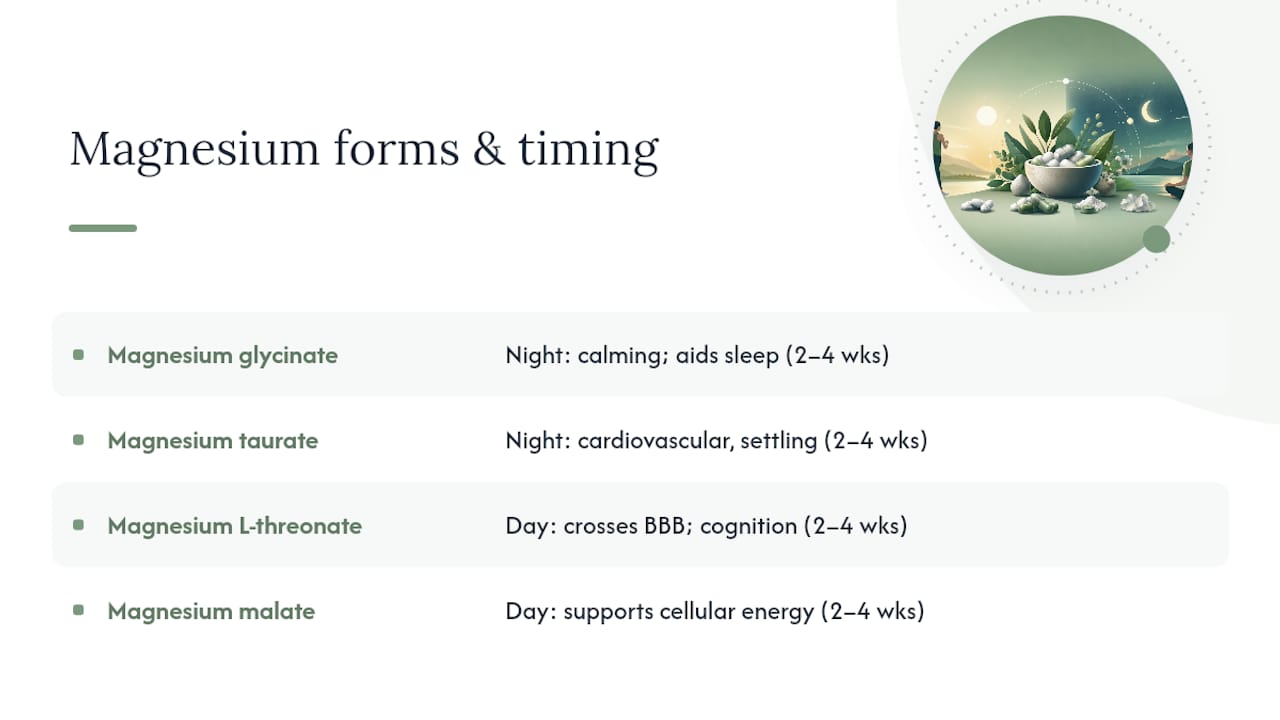
Take glycinate or taurate at night, take malate or threonate in the morning, and take citrate or oxide with breakfast if you’re using it for digestion. That’s the whole rule, built around what each form actually does in your body rather than a single “best” hour that suits everyone.
- Glycinate and taurate → evening, 30 to 60 minutes before bed, for sleep and muscle recovery
- Malate and L-threonate → morning, for energy and mental focus
- Citrate and oxide → morning with food, especially if you want the mild laxative effect
- If a form upsets your stomach or disrupts sleep, shift the timing rather than dropping it altogether
The bigger safety point matters more than the clock: if you take thyroid medication, antibiotics, or bisphosphonates, or you have kidney disease, check NHS guidance or speak to a pharmacist before adding magnesium to your routine.
TL;DR:
- Magnesium forms like glycinate and taurate are best taken at night for sleep and muscle recovery, while malate and threonate are suited for morning energy and cognition.
- Magnesium’s effectiveness does not depend on timing within a single day, but the form influences how it interacts with your body’s daily rhythm and goals.
- It is important to space magnesium from thyroid medications, antibiotics, and bisphosphonates by about two hours to maximize absorption and avoid interactions.
- Most people should trial magnesium routines for two to four weeks before assessing improvements in sleep, cramps, or energy levels.
- Runners benefit from taking magnesium bisglycinate in the evening, ideally timed around post-run recovery for better sleep and reduced cramping.
Table of Contents
- Does magnesium morning or night timing actually change the benefits?
- Taking magnesium in the morning: who benefits and how to do it
- Taking magnesium at night: sleep, recovery and timing tips
- How the magnesium form determines timing: a cheat sheet
- Interactions, safety and when to see a clinician
- Practical dosing and routines: how much, when, and how to judge results
- Runcomplete’s take: why bisglycinate suits runners specifically
- What the evidence actually tells you to prioritise
- Fit magnesium bisglycinate into your evening recovery routine
- Key Takeaways
- Sources
Does magnesium morning or night timing actually change the benefits?
Not in the way most people assume. Magnesium works by slowly correcting a deficit in your body’s stores, and that repletion happens over days and weeks, not within hours of a single dose. What timing changes isn’t the mineral’s effectiveness. It’s how the molecule it’s bound to behaves, and how that interacts with your daily rhythm.
Glycine, the amino acid in magnesium glycinate, has a calming effect on the nervous system, which is why it’s commonly taken before bed. Taurine, found in magnesium taurate, supports cardiovascular function and has a similarly settling effect. Threonine crosses the blood brain barrier more readily, which is the reason magnesium L-threonate gets marketed for cognition and is often taken earlier in the day so it doesn’t interfere with winding down. Malate, tied to ATP production in cells, tends to suit people using it for energy.

Healthline’s guidance is blunt about this: time of day doesn’t change magnesium’s core effects. What changes is whether the form you’ve chosen fights or supports the moment you take it. Most people notice sleep or cramp improvements within two to four weeks of consistent use, not overnight.
Taking magnesium in the morning: who benefits and how to do it
Morning dosing suits three groups: people using magnesium for cognitive support, people chasing daytime energy, and people who need the mild bowel-stimulating effect of citrate or oxide for digestion. It also suits anyone who simply forgets evening doses and knows a morning habit sticks better.
- Magnesium L-threonate in the morning, or split between breakfast and early afternoon, avoids the alertness effect disrupting sleep later
- Magnesium malate works well with breakfast, supporting the energy pathways it’s named after
- Magnesium citrate or oxide taken with food in the morning gives you the digestive benefit without an unplanned dash to the bathroom mid-afternoon
- Separate any magnesium supplement from iron tablets and certain antibiotics by roughly two hours, since split dosing and spacing improves absorption
Start at a modest dose for the first week, particularly with citrate, and watch how your gut responds before increasing.
Pro Tip: If you’re new to magnesium, take your first few doses on a day you’re not travelling or racing. Citrate’s laxative effect is genuinely useful for constipation, but you want to learn your own tolerance somewhere convenient.

Taking magnesium at night: sleep, recovery and timing tips
Most people who supplement with magnesium do it for sleep or recovery, and the evening slot is where glycinate and taurate earn their reputation. Glycine has a documented calming influence, and dietitian guidance consistently recommends taking glycinate 30 to 60 minutes before bed for that reason. Taurate follows a similar logic, with the added angle of supporting cardiovascular health overnight.
- Take your dose 30 to 60 minutes before you intend to sleep, not immediately as you lie down
- Pair it with a small snack if you’ve had an early dinner, since an empty stomach can amplify mild GI effects
- Avoid citrate or oxide at night; their laxative tendency is the last thing you want at 2am
- If you notice unusually vivid dreams, drop the dose slightly rather than stopping altogether
- If you’re waking mid-night needing the bathroom, that’s usually a sign you picked the wrong form, not the wrong hour
Pro Tip: If magnesium gives you vivid or unsettled dreams, try taking it earlier in the evening rather than right before bed. Give it a fair test of three or four nights before switching forms entirely.
How the magnesium form determines timing: a cheat sheet
Every common magnesium compound has a rough default timing based on how it behaves and what people take it for. This isn’t a rigid rulebook. It’s a starting point you adjust once you know how your own body responds.
| Form | Best for | Typical timing | Tolerability / GI effects |
|---|---|---|---|
| Glycinate (bisglycinate) | Sleep, recovery, cramps | Night, 30 to 60 minutes before bed | Gentle; among the best tolerated forms |
| Citrate | Digestion, occasional constipation | Morning with food | Mild to moderate laxative effect, dose-dependent |
| L-Threonate | Cognition, focus | Morning, or split morning and early afternoon | Generally well tolerated |
| Malate | Daytime energy | Morning with breakfast | Mild GI effects at higher doses |
| Oxide | Digestion, budget option | Morning with food | Notable laxative effect; poorly absorbed |
| Taurate | Calming, cardiovascular support | Night | Generally well tolerated |
If none of this fits neatly, because you’re combining goals or just want one supplement to keep things simple, pick a well absorbed form like glycinate and a time you’ll actually remember. Consistency beats precision here.
Interactions, safety and when to see a clinician
Magnesium is safe for most people, but the interactions are worth knowing before you build a routine around it. As a general rule, space magnesium roughly two hours apart from tetracycline antibiotics, bisphosphonates (used for bone density), and thyroid medication like levothyroxine, since magnesium can reduce their absorption.
- Kidney disease is a genuine contraindication; impaired kidneys struggle to clear excess magnesium, so check with a clinician first
- Symptoms of taking too much include diarrhoea, nausea, and abdominal cramping. Very high doses can, rarely, affect heart rhythm or breathing
- If GI symptoms appear, try three fixes in order: take it with food, reduce the dose, or switch to magnesium glycinate, which is far less likely to upset your gut
- Pharmacists are a genuinely useful resource here, particularly if you’re on multiple prescriptions and unsure about spacing
None of this should put you off. It just means magnesium deserves the same basic respect you’d give any supplement you’re taking daily.
Practical dosing and routines: how much, when, and how to judge results
Check the label carefully: 500mg of magnesium glycinate is not 500mg of elemental magnesium; it’s roughly 100mg once you account for the glycine molecules attached to it. Most people starting out do well with a low to moderate dose of elemental magnesium daily, adjusting upward based on tolerance and goal.
- Pick your form based on your primary goal (sleep, energy, digestion, cramps)
- Start at the low end of the dose range for one week
- If you’re above roughly 300 to 400mg elemental daily, split the dose morning and evening to ease absorption and reduce GI load
- Trial the routine for two to four weeks before judging results
- Track sleep quality, cramp frequency, and bowel changes in a simple note on your phone
- Don’t judge results after three days; magnesium repletion takes weeks
- Don’t stack multiple forms unless you have a clear reason to
- Do adjust timing before abandoning a form that seems to be working elsewhere
This is genuinely one of the few supplements where patience and consistency outperform clever dosing tricks.
Runcomplete’s take: why bisglycinate suits runners specifically
Runcomplete built its flagship product, Ready, around magnesium bisglycinate for a reason grounded in what runners actually need: better sleep quality, fewer night cramps, and a form gentle enough to take daily without gut disruption. Runners lose magnesium through sweat during long or hot sessions, and evening dosing after a hard run lines up naturally with the recovery window when muscle repair is happening.
On heavy training days, splitting a dose (part after your evening run, part with dinner) can ease the GI load some runners notice with a single larger dose, while still delivering the calming, sleep-supportive effect glycine is known for.
For runners specifically, timing magnesium around your training schedule rather than the clock alone tends to produce more noticeable results.
What the evidence actually tells you to prioritise
The obsession with finding the “right” hour to take magnesium misses the point entirely. Nobody’s sleep improved because they took glycinate at 9:47pm instead of 10:15pm. What actually moves the needle is picking a form that matches your goal and then taking it at roughly the same time every day for long enough to see results.
Conventional advice tends to flatten this into generic timing rules divorced from the compound itself, and that’s where most people go wrong: they buy citrate expecting a sleep aid, take it at bedtime, and wonder why they’re awake at 3am with cramping. Or they take threonate at night for “better sleep” and end up staring at the ceiling because threonine crosses into the brain and can be mildly stimulating for some people.
If you take one thing from this, prioritise matching form to goal first, then build a consistent time around it. For runners in particular, syncing an evening glycinate dose with post-run recovery does more for you than chasing an arbitrary “optimal window” some article invented. The mineral works over weeks. Your job is showing up daily, not hitting a precise minute.
— Tim
Fit magnesium bisglycinate into your evening recovery routine
If you’re a runner reading this and thinking “glycinate at night, got it,” Runcomplete makes that decision easier by removing the guesswork over dose, purity, and quality. Ready is a magnesium bisglycinate capsule built specifically for the recovery window this article just walked through: taken 30 to 60 minutes before bed, or split with your post-run meal on heavy training days, it supports the deeper sleep and reduced cramping that everyday runners are actually after, not elite athletes chasing marginal gains.

It’s UK-made, free from unnecessary fillers, suitable for vegetarians and vegans, and backed by a 30-day guarantee, so if it doesn’t fit your routine, that’s a low-risk way to find out. Whether you run three times a week or you’re building toward a longer distance, pairing consistent evening dosing with your training schedule is exactly the kind of small, sustainable habit that compounds over a season. Try Ready today and see how it fits your own post-run evenings.
Key Takeaways
Magnesium’s form, not the clock, determines whether it belongs in your morning or evening routine, and consistency over weeks matters more than precise timing.
| Point | Details |
|---|---|
| Match form to goal | Glycinate and taurate suit evening use; malate and threonate suit mornings. |
| Take citrate and oxide with food | Both have a laxative effect, so use them in the morning, not before bed. |
| Space out medications | Leave roughly two hours between magnesium and thyroid drugs, antibiotics, or bisphosphonates. |
| Check kidney health first | Kidney disease is a contraindication; get NHS or clinician guidance before starting. |
| Trial for weeks, not days | Give any routine two to four weeks before judging sleep, cramp, or energy changes. |
| Runners benefit from evening bisglycinate | Runcomplete’s Ready pairs magnesium bisglycinate with post-run recovery timing, UK-made with a 30-day guarantee. |
Sources
- Vitamins and minerals: other vitamins and minerals - NHS
- When to Take Magnesium? Morning or Night (Dietitian Guide) - Keatley MNT
- Magnesium timing: Should You Take Magnesium in the Morning or at Night? - MitoHealth
Recommended
- When to Take Magnesium for Running: Timing Your Dose for Better Recove – Run Complete
- When to Take Magnesium for Running: Timing Your Dose for Better Recove – Run Complete
- Magnesium glycinate timing: when it works best for sleep – Run Complete
- Best magnesium for sleep: top UK picks in 2026 – Run Complete

