
Magnesium effects can appear within hours for some outcomes and take up to 40 weeks for full tissue repletion. The honest answer depends entirely on what you are trying to fix.
For most everyday runners, the practical windows look like this:
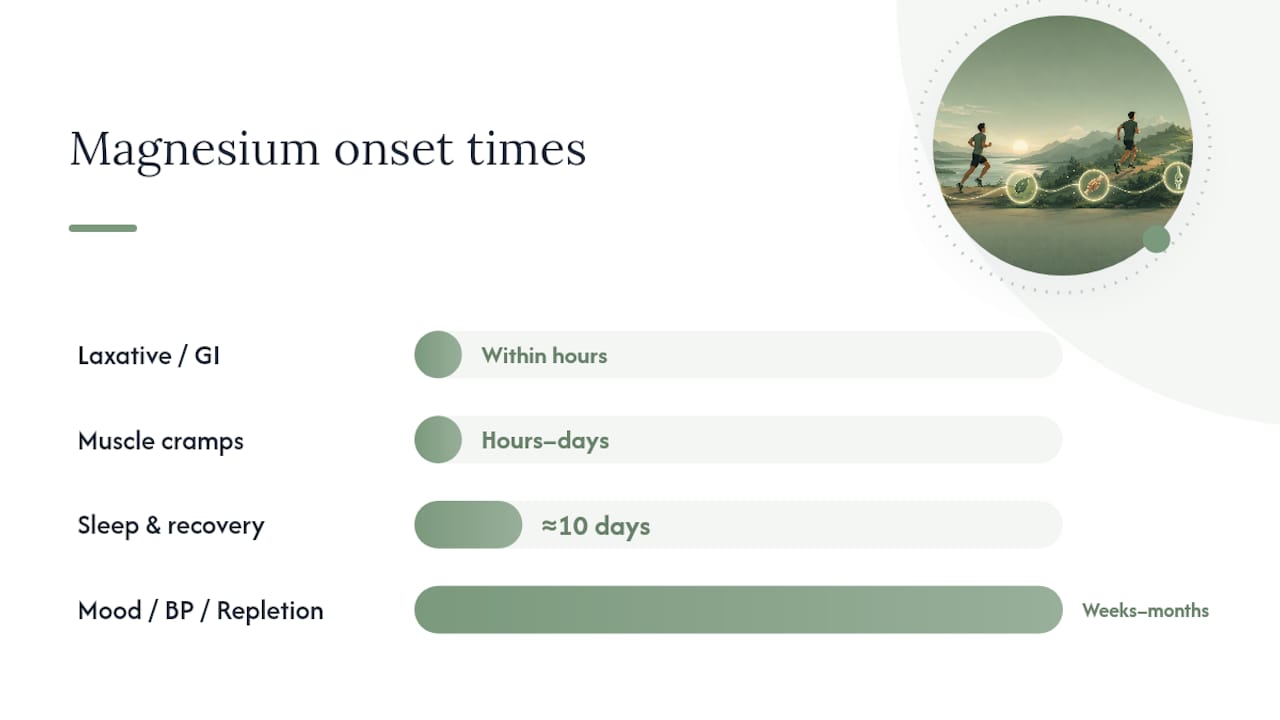
- Hours: laxative or GI effects (primarily from oxide or citrate forms)
- 1–7 days: possible early cramp relief; some people with significant deficiency notice sleep changes within the first week
- 1–3 weeks: the most commonly reported window for sleep quality and mood improvements with glycinate or bisglycinate forms
- Several weeks to a few months: timeframes for cardiovascular markers, migraine prevention, and sustained muscle recovery benefits as assessed in clinical trials
- Several weeks to many months: full tissue repletion when correcting chronic deficiency, as NHS guidance confirms
That last figure surprises people. Serum magnesium normalises relatively quickly, but the body’s tissues and muscles hold the vast majority of total magnesium stores. Getting those back to a healthy level is a slow process, not a two-week fix.
Key takeaways
Magnesium’s timeline varies by outcome: sleep and cramp relief typically appear within one to three weeks of consistent bisglycinate use, while full tissue repletion after chronic deficiency can take several weeks to around 40 weeks.
| Point | Details |
|---|---|
| GI and laxative effects | Appear within hours from oxide or citrate forms; unrelated to systemic benefits. |
| Sleep and cramp relief | Most users notice changes within 1–3 weeks of daily bisglycinate use. |
| Tissue repletion timeline | Full repletion after chronic deficiency can take several weeks to around 40 weeks. |
| Renal and drug safety | Check with a GP before supplementing if kidney function is reduced or you take interacting medications. |
| Runcomplete Ready | A UK-made, filler-free bisglycinate designed for everyday runners’ sleep and recovery needs. |
Table of Contents
- How long magnesium works for each health outcome
- What affects how quickly magnesium is absorbed?
- UK clinical guidance on repletion and when to see a GP
- How to tell whether magnesium is working
- Safe dosing and side effects for UK readers
- What the research actually shows: acute vs chronic dosing
- A runner’s perspective on setting realistic expectations
- Runcomplete Ready: a UK-made bisglycinate for everyday runners
- Sources
How long magnesium works for each health outcome
Different goals have genuinely different timelines. Here is what the evidence suggests for the outcomes runners and health-conscious adults care about most.
| Outcome | Typical onset | Notes |
|---|---|---|
| Laxative / GI effect | Within hours | Mainly oxide and citrate; separate from systemic benefits |
| Muscle cramps | Hours to days | Variable; not guaranteed; NICE does not recommend routine use for idiopathic leg cramps |
| Sleep quality | about 1 to 2 weeks (some people report earlier) | Bisglycinate and glycinate forms most commonly cited; Bolt Pharmacy’s timeline guide notes this timeframe for many users |
| Mood and stress | a few weeks | Clinical trials typically run multiple weeks to assess change |
| Muscle soreness / recovery | ~10 days onward for active individuals | Consistent daily use required; acute dosing alone is insufficient |
| Blood pressure | several weeks to a few months | Modest effects; assessed over longer trial windows |
| Tissue repletion (deficiency) | Several weeks to many months | Depends on severity, form, and absorption |
Sleep. Bisglycinate is the form most associated with sleep improvements, and many users report a noticeable shift within one to two weeks. People who are significantly deficient sometimes notice changes within three to seven days; those who are borderline sufficient typically wait two to four weeks before seeing a clear difference. The mechanism is not sedation. Magnesium supports GABA receptor activity and helps regulate the nervous system, so the effect builds as intracellular levels rise rather than arriving in a single dose.

Muscle cramps and twitching. Some runners feel relief within days, particularly if cramps are driven by low magnesium. The response is variable, though, and NICE does not recommend magnesium as a routine treatment for idiopathic leg cramps. If cramps persist beyond two to three weeks of supplementation, a GP review is worth arranging.
Muscle soreness and recovery. For runners specifically, the magnesium glycinate benefits for runners literature points to measurable recovery improvements appearing around 10 days into consistent daily use. This is not the same as taking a dose before a hard session and expecting it to work acutely.
Mood and anxiety. Trials assessing magnesium’s effect on stress and mood typically run for at least three weeks. Most people who respond notice a shift somewhere in the two-to-four-week window, often described as feeling less wired in the evenings or recovering mentally faster after a tough day.
Constipation. Oral magnesium salts, particularly oxide and citrate, can produce a laxative effect within a few hours. This is a distinct, acute GI mechanism and has nothing to do with the slower systemic benefits that come from tissue repletion.
Blood pressure. Cardiovascular effects are modest and slow. Clinical trials typically assess blood pressure changes over 8–12 weeks, and the effects seen are generally small rather than dramatic.
What affects how quickly magnesium is absorbed?
Understanding the absorption timeline helps set realistic expectations. Magnesium absorption from an oral dose begins roughly one hour after intake, plateaus between two and five hours, and is substantially complete by six hours, according to review evidence on absorption kinetics. Fractional absorption typically ranges roughly from about 30 to 50 percent under normal conditions, and is lower with very large single doses.
Several factors shift that window considerably.
Form matters most. Magnesium oxide has poor bioavailability and is mainly useful as a laxative. Citrate absorbs better and is a reasonable general-purpose option. Glycinate and bisglycinate are chelated forms that are gentler on the gut and better absorbed, which is why they are the preferred choice for sleep and recovery. For a detailed comparison, the magnesium glycinate vs citrate guide for runners covers the practical differences.
Food and gastric acidity. Taking magnesium with food slows absorption slightly but reduces the risk of GI discomfort. Low stomach acid, which becomes more common with age or with proton pump inhibitor use, can reduce absorption meaningfully.
Gut health and alcohol. Inflammatory bowel conditions, coeliac disease, and chronic alcohol use all impair magnesium absorption in the small intestine. Runners who train heavily and drink alcohol regularly may find their magnesium requirements are higher than the UK reference nutrient intake for women or men respectively.

Diuretics and chronic stress. Both increase urinary magnesium losses. If you are taking a thiazide diuretic or going through a sustained period of high stress, your body is losing magnesium faster than average, which extends the time needed to correct a deficit.
Kidney function. The kidneys regulate magnesium excretion tightly. Reduced renal function slows the body’s ability to manage magnesium levels safely, which affects both the speed of repletion and the risk of accumulation.
Pro Tip: If you are taking bisglycinate for sleep, try taking it 30–60 minutes before bed. This aligns the plasma peak with sleep onset and may reduce the time it takes before you notice a difference in how quickly you fall asleep.
UK clinical guidance on repletion and when to see a GP
Serum magnesium is the standard clinical test, but it only reflects what is circulating in the blood, which accounts for less than 1% of total body magnesium. A normal serum result does not rule out intracellular deficiency. Clinicians know this, which is why symptoms and risk factors matter as much as the number on a blood test.
The BNSSG oral magnesium supplementation guide sets out the standard UK approach:
- Serum magnesium is monitored weekly during active oral repletion, with monitoring frequency possibly reduced after several weeks if appropriate
- Treatment is stopped or adjusted if serum magnesium exceeds 1.0 mmol/L
- Severe symptomatic hypomagnesaemia warrants consideration of parenteral (intravenous) therapy rather than oral supplementation alone
For most people taking magnesium as a general supplement, this level of monitoring is not needed. It becomes relevant when a GP has identified low serum magnesium and is actively managing repletion.
When to contact a GP:
- Persistent muscle weakness, irregular heartbeat, or severe cramps that do not improve after two to three weeks of supplementation
- Known reduced kidney function (eGFR below 30) before starting any magnesium supplement
- Persistent diarrhoea lasting more than a few days after starting supplementation
- Taking medications that interact with magnesium (see the dosing section below)
- Symptoms suggesting severe deficiency: confusion, numbness, or cardiac symptoms
A GP managing active hypomagnesaemia will typically run a short oral replacement course of four to fourteen days, recheck serum levels, and decide whether to continue. If oral replacement fails to normalise levels, or if the underlying cause is ongoing, specialist input is usually sought.
How to tell whether magnesium is working
The most reliable approach is a simple tracking system you actually use. Serum tests have a role, but they will not tell you whether your intracellular stores are improving or whether your sleep quality has genuinely shifted.
- Start a one-week baseline. Before you begin supplementing, rate the following on a 1–10 scale each morning: sleep quality, ease of falling asleep, number of night wakings, morning muscle soreness, and daytime energy. Do this for seven days.
- Continue the same ratings daily for four weeks. Look for directional trends rather than dramatic overnight changes. A shift from 4/10 to 6/10 on sleep quality over two weeks is meaningful even if it does not feel dramatic in the moment.
- Track cramp frequency separately. Note how many cramp episodes you have per week and at what point in your training cycle they occur. Runners often find cramps cluster around high-mileage weeks; tracking this separately makes it easier to see whether frequency is genuinely falling.
- Add training and recovery metrics. If you use a GPS watch or a training app, log your resting heart rate and any subjective recovery score alongside your symptom ratings. Subtle improvements in overnight recovery often show up in resting heart rate data before you consciously notice them. For more on what to watch, the magnesium for runners’ sleep and overnight recovery guide covers this in detail.
- Review at four weeks. If you have seen no change in any tracked metric after four weeks of consistent daily use, consider whether the dose is adequate, whether the form you are using suits you, or whether a GP review is appropriate.
Pro Tip: A serum magnesium test is worth requesting from your GP if you have been supplementing for six or more weeks with no improvement and you have risk factors for deficiency (heavy training, diuretic use, or a history of GI conditions). A normal result does not close the case, but a low result confirms active deficiency and opens the door to supervised repletion.
Safe dosing and side effects for UK readers
The NHS advises that up to approximately 400 mg of supplemental magnesium per day is unlikely to cause harm for most healthy adults. That figure refers to elemental magnesium from supplements, separate from dietary intake. Check product labels carefully, as the elemental magnesium content varies significantly between products.
Common side effects and how form affects them:
- Oxide and citrate at higher doses frequently cause loose stools or diarrhoea, particularly on an empty stomach
- Bisglycinate and glycinate are considerably gentler and are the preferred forms for people who have experienced GI discomfort with other types
- Nausea is uncommon at standard doses but can occur if magnesium is taken without food
For runners who have had stomach issues with other forms, the gentle magnesium for runners guide explains why bisglycinate tends to be better tolerated.
Drug interactions to know about:
| Medication | Interaction | Recommended action |
|---|---|---|
| Antibiotics (tetracyclines, fluoroquinolones) | Magnesium reduces absorption | Take magnesium at least 2 hours before or 4–6 hours after |
| Levothyroxine | Magnesium may reduce absorption | Separate doses by at least 4 hours |
| Bisphosphonates (e.g. alendronic acid) | Reduced bisphosphonate absorption | Take bisphosphonate on an empty stomach, magnesium separately |
| Diuretics (thiazide) | Increase urinary magnesium loss | May increase magnesium requirements; discuss with GP |
| Potassium-sparing diuretics | Risk of elevated magnesium | Avoid supplementing without GP guidance |
Renal caution. Anyone with significantly reduced kidney function should not start magnesium supplements without speaking to a GP first. The kidneys control magnesium excretion, and impaired function raises the risk of accumulation to toxic levels.
What the research actually shows: acute vs chronic dosing
The distinction between acute and chronic supplementation matters more than most guides acknowledge. A randomised trial comparing one-week acute and four-week chronic loading at approximately 300 mg per day found that some vascular and performance improvements appeared with the acute strategy and were not necessarily amplified by extending supplementation to four weeks. This does not mean chronic loading is pointless. It means the two strategies serve different purposes.
Acute dosing (days to one week) may produce early vascular and performance signals. Chronic loading is what actually shifts tissue stores and produces the sustained sleep, recovery, and mood benefits that runners are typically after.
The absorption kinetics review makes this concrete: serum magnesium can normalise within days of starting supplementation, but that tells you almost nothing about what is happening in muscle tissue. Tissue repletion lags serum normalisation by weeks or months, which is why the clinical guidance on magnesium deficiency and supplementation sets trial windows of 8–12 weeks for outcomes like migraine prevention and blood pressure.
For runners, short-term supplementation may help reduce cramps before events, while improvements in sleep quality and recovery typically require consistent use over several weeks.
This distinction between serum normalisation and tissue repletion is the single most important thing to understand about how long magnesium works. Getting your blood test back into range is not the same as restoring your body’s full magnesium stores.
A runner’s perspective on setting realistic expectations
The evidence on magnesium is genuinely good, but the marketing around it often skips the part where patience is required. Most runners who start a bisglycinate supplement and give up after ten days because they “didn’t notice anything” are stopping just as the intracellular shift is beginning.
My recommendation for everyday runners is this: start with a well-tolerated bisglycinate form, track sleep and recovery metrics from day one, and give it a minimum of two to four weeks before judging sleep effects. If you are correcting a deficiency, extend that window to six to twelve weeks and consider a GP-supervised serum check at the six-week mark.
Supplements work alongside sleep hygiene, nutrition, and training load management, not instead of them. Magnesium will not compensate for chronic under-sleeping or overtraining. What it can do, used consistently, is support the recovery processes that happen overnight, reduce the frequency of cramps during heavy mileage weeks, and take the edge off the nervous system activation that keeps some runners staring at the ceiling at 11 PM.
For runners who want to go deeper on the evidence, the magnesium bisglycinate for heavy leg recovery and sleep guide covers the practical application in more detail.
Runcomplete Ready: a UK-made bisglycinate for everyday runners
Runners who have read this far and want a bisglycinate supplement that is actually designed for their use case rather than adapted from a general wellness product have a straightforward option.

Runcomplete’s Ready is a magnesium bisglycinate capsule made in the UK, free from fillers, and suitable for vegetarians and vegans. It is formulated specifically for the recovery and sleep needs of everyday runners, not elite athletes or gym-goers. The dose is clean and consistent, which matters when you are trying to track whether supplementation is actually working. A 30-day guarantee means you can give it the full evaluation window the evidence recommends without financial risk. Available as a one-time purchase or monthly subscription, visit Runcomplete to see the full product details and order.
If you have kidney disease, take prescription medications, or have been diagnosed with hypomagnesaemia, speak to your GP before starting any magnesium supplement.
Sources
The following sources informed this article and are worth consulting directly for clinical detail or further reading.
- NHS — Vitamins and minerals: other important vitamins and minerals
- PMC5652077 — review on magnesium absorption and physiology
- Oral magnesium supplementation guide — BNSSG (2023 update)
- PMC4419474 — effect of acute vs chronic magnesium supplementation on exercise and recovery
- Pharmacy Magazine — Magnesium deficiency: risks, diagnosis and supplementation
- Bolt Pharmacy — How long does magnesium glycinate take to work? Timeline
This article provides general information only and is not a substitute for professional medical advice. If you have concerns about magnesium deficiency, kidney function, or drug interactions, consult a GP or qualified healthcare professional.
Recommended
- Magnesium Before or After Running: The Best Timing for Recovery – Run Complete
- When to Take Magnesium for Running: Timing Your Dose for Better Recove – Run Complete
- When to Take Magnesium for Running: Timing Your Dose for Better Recove – Run Complete
- Magnesium with food for runners: sleep & recovery – Run Complete

