
Your magnesium supplement isn't for your run. It's for the eight hours after it. Knowing exactly when to take magnesium for running is the difference between waking up refreshed or dragging yourself out of bed. Most hobbyists think they need a boost before hitting the pavement, but the real recovery happens whilst you're asleep.
If you've ever dealt with heavy legs after an evening session or annoying muscle twitches whilst trying to rest, you know the frustration. You're training hard, but your body isn't bouncing back. It's common to feel like you're stuck in a cycle of poor sleep and sluggish recovery. You want to stay consistent without the burnout, yet your muscles don't always cooperate.
This guide explains the specific timing protocols to maximise your recovery and improve your sleep quality. You'll learn how to time your dose to avoid stomach issues and stop night-time leg cramps for good. We'll focus on a simple, no-fuss approach that fits into your busy daily schedule. It's about being prepared for tomorrow's run by making the right choices tonight.
Key Takeaways
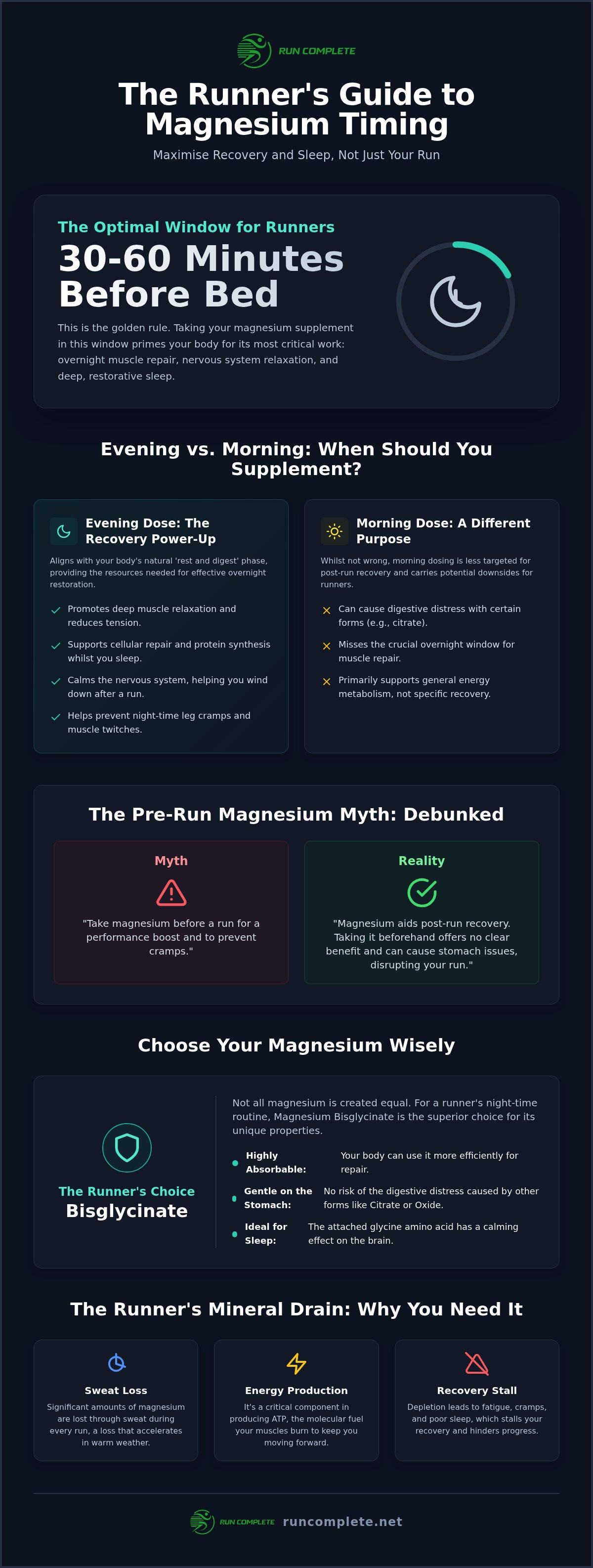
- Discover why 30-60 minutes before bed is the optimal window when to take magnesium for running to maximise repair whilst you sleep.
- Avoid digestive distress by learning which magnesium forms to skip before you head out for a training session.
- Identify why magnesium bisglycinate is the gentlest and most effective option for everyday hobbyist runners.
- Create a consistent recovery routine by pairing your supplement with a simple evening wind-down habit.
The Importance of Magnesium Timing for Runners
Magnesium is a silent partner in every mile you cover. It's a vital mineral responsible for over 300 biochemical reactions. For everyday runners, it's the bridge between a hard effort and a successful recovery. Understanding the role of magnesium in the body is the first step to better training. It isn't just about avoiding a mid-run cramp. It's about how your body manages energy and repairs itself whilst you rest.
Timing is everything. Your magnesium levels directly impact muscle relaxation and energy production. If your timing is off, you might feel sluggish or find it hard to wind down after an evening session. A consistent schedule helps regulate your internal clock. It creates a predictable recovery rhythm that your body can rely on. When you know when to take magnesium for running, you stop guessing and start recovering. It's about being prepared for the next day's challenges.
Why Runners Need a Timing Strategy
Every step requires energy. Magnesium plays a critical role in ATP production, which is the fuel your muscles use to keep moving. Without enough of it, your body struggles to convert food into the power needed for your local parkrun or long Sunday loop. It's the spark plug for your physical engine. If you've ever felt like you're running on empty despite eating well, your mineral timing might be to blame.
Post-run, its job changes. It helps flush lactic acid from tired muscles. This process is essential for preventing that dreaded heavy-leg feeling the next morning. By topping up your levels at the right time, you ensure your nervous system can switch from "go" mode to "repair" mode. It's about physical restoration and staying ready for your next session. Consistency here keeps your routine sustainable for the long term. You aren't just training for a race; you're maintaining a lifestyle.
The Impact of Sweat Loss on Mineral Levels
Running is a high-drain activity. You lose significant amounts of magnesium through sweat and muscle use. During a humid UK summer, this loss accelerates. Even a standard 5k can deplete your stores faster than you might think. You can't always rely on your favourite sports drink to fix the problem. Most of these drinks focus on salt and sugar, often leaving magnesium out entirely. They provide a quick fix but ignore long-term restoration.
This depletion leads to deep post-run fatigue. It isn't just tired muscles; it's a systemic drain on your energy. If you don't replace what you've lost, your recovery stalls. You might notice muscle twitches whilst you're sitting on the sofa or a general sense of restlessness. A targeted timing strategy ensures you replace these minerals before the fatigue sets in. It keeps you on track and makes your training feel like a habit rather than a chore. Being proactive about your mineral levels means you're always ready for the next run.
Morning vs Evening: When is the Best Time to Supplement?
Deciding when to take magnesium for running usually comes down to your daily routine. While you can take it at any time, your body processes it differently depending on the hour. Morning doses are often used to support energy metabolism. Evening doses focus on repair and relaxation. For the average hobbyist runner, the evening window is generally the favourite. It aligns with the body's natural need to recover after a day of movement.
Consistency is more important than hitting a specific minute. However, the form of magnesium you choose changes the rules. Many articles suggest taking "any" magnesium, but they miss a key detail. Magnesium citrate is often used for digestive issues. Taking that in the morning might lead to an unplanned dash for the loo. Magnesium bisglycinate is different. It's highly bioavailable and much gentler on the stomach. This makes it ideal for a regular habit that doesn't disrupt your day.
The Case for Evening Dosing
Evening is when your body switches gears. It moves from the high-pressure "fight or flight" state into the "rest and digest" phase. This is controlled by your parasympathetic nervous system. Magnesium acts as a gentle nudge for this system. It helps your muscles relax and tells your brain it's time to wind down. This is particularly useful if you tend to run in the late afternoon or evening. It helps settle the nervous system before your head hits the pillow.
Overnight is when the real magic happens. Muscle protein synthesis and cellular repair peak whilst you're asleep. Having magnesium available during this window supports these processes. It also helps reduce "restless legs." That buzzing, twitchy feeling in your calves often happens when mineral levels are low after a run. An evening dose ensures your body has what it needs for a deep, uninterrupted rest. For a fuss-free finish to your day, consider a magnesium for runners supplement as your final bedside habit.
The Case for Morning Dosing
Morning supplementation has its own benefits. It can help maintain steady energy levels throughout a busy day. According to an NIH review on magnesium and exercise, the mineral helps enhance glucose availability. It also helps the body clear lactate more efficiently. If you are wondering when to take magnesium for running to support an early-bird schedule, the morning is a strong secondary choice. It ensures your metabolism is supported from the moment you lace up your trainers.
If you often suffer from midday energy crashes, a morning dose might help. It provides a foundation for your physical and mental readiness. Just remember to take it with a meal. Taking any supplement on an empty stomach can cause slight nausea or upset. Pairing it with breakfast makes it part of a sustainable routine. It's about finding what fits your life. Whether you choose AM or PM, staying consistent is what keeps you running.
Taking Magnesium Before or During a Run: Myth vs Reality
Many runners treat magnesium like a pre-workout caffeine shot. They hope for an instant boost or a shield against cramps. This is a common misunderstanding. Magnesium is not a fast-acting mineral like salt or sugar. It doesn't provide an immediate "hit" that changes your performance in the next thirty minutes. When you are deciding when to take magnesium for running, you must think about your baseline levels rather than a single dose.
Your body prioritises blood flow during exercise. It sends oxygen and nutrients to your working muscles and your heart. Digestion becomes a secondary concern. Any supplement you take right before a run sits in your stomach. It waits for a digestive process that has effectively slowed down. This creates a heavy, uncomfortable feeling that can ruin a good training session. Focus on long-term saturation. It is about keeping your tank full throughout the week.
Why Pre-Run Dosing Might Backfire
Taking the wrong form of magnesium before a run is a gamble. Cheaper options, such as magnesium oxide or citrate, have a well-known laxative effect. When combined with the physical jostling of a run, this often leads to digestive distress. Nobody wants to be scouting for a public toilet mid-session. It's a distraction you don't need. Magnesium is a recovery tool for physical restoration, not a stimulant for immediate energy.
There is also the "relaxation" factor. Magnesium helps your nervous system wind down. It encourages your muscles to let go of tension. This is the opposite of what you want at the start line. You need to be alert and physically "up" for the effort ahead. Counteracting your body’s natural pre-run readiness with a relaxing mineral can make you feel flat. It might even make your legs feel heavier than usual. Save the relaxation for after the work is done.
The Truth About Mid-Run Cramps
Cramps are often blamed on a lack of magnesium. While mineral loss through sweat is real, it isn't the only factor. Most mid-run cramps are the result of neuromuscular fatigue. Your muscles are being pushed beyond their current capacity. A frantic pre-race dose won't fix this. It won't stop a cramp that is already brewing due to overexertion. You cannot out-supplement a lack of training or poor pacing.
A consistent evening routine is your best defence. By taking magnesium regularly at night, you ensure your tissues are saturated. This supports muscle function throughout the following day. Hydration also plays a massive role. Magnesium works in tandem with water and other electrolytes to keep your muscles firing correctly. If you are dehydrated, even high magnesium levels won't save you from a stitch or a cramp. Stick to a simple, daily habit. It is the most reliable way to stay on the road.
Building a Consistent Routine for Everyday Runners
Success isn't about intensity. It's about consistency. For most of us, the hardest part of any supplement is simply remembering to take it. Keep your magnesium where you will see it every night. The bedside table is a perfect spot. By making it visible, you remove the mental effort of searching through a kitchen cupboard. It becomes as natural as lacing up your trainers. It's a small change that makes a big difference to your readiness.
Understanding when to take magnesium for running is only half the battle. You also need to consider what else you are eating. Avoid taking your dose with high-calcium meals like a big bowl of Greek yoghurt. Calcium and magnesium compete for the same absorption pathways in the body. If you take them together, you might not get the full benefit of either. Space them out to ensure your body actually uses what you provide whilst you sleep. It's about getting the most out of your nightly habit.
The 3-Step Runner’s Evening Routine
A solid evening routine prepares you for tomorrow’s miles. It doesn't need to be complicated. Start by finishing your last meal at least two hours before bed. This gives your digestion time to settle before you rest. Next, take your magnesium bisglycinate with a small glass of water. Finally, switch off your screens. This allows the magnesium to support your natural melatonin production without blue light interference. It's a simple, effective way to reclaim your rest. You can buy magnesium for runners to start building your own nightly habit today.
Managing Your Dose Around Training Cycles
Your needs change as your mileage increases. During a marathon training block, your body is under significantly more stress. You might find that your legs feel heavier or your sleep becomes more fragmented during these high-mileage weeks. This is the time to be extra diligent with your timing. If you are an early morning Parkrun enthusiast, an evening dose is still your best bet. It ensures you wake up feeling loose rather than stiff for that 9 am start. It's the final step of the day for a consistent running habit.
Be patient with the process. Track your sleep quality and leg freshness over a 30-day window to see the real results. Physiological changes take time to become noticeable. You won't see a transformation overnight, but you will notice the difference after a month of steady use. It's about the long-term sustainability of your training. Consistent timing leads to consistent results. Stay focused on the everyday experience rather than looking for a quick fix.
Why Magnesium Bisglycinate is the Ideal Night-time Choice
Not all magnesium is created equal. If you're researching when to take magnesium for running, you likely want a solution that actually works. Magnesium bisglycinate is the gold standard for restoration. It's magnesium bound to glycine. Glycine is an amino acid that helps your body feel naturally calm. It's the most bioavailable form on the market. This means your body actually uses what you take rather than letting it pass through your system. It's efficient, effective, and reliable.
Digestion is a major concern for hobbyist runners. Cheaper forms like oxide can cause real trouble. They often lead to an upset stomach or an urgent need for the bathroom. Bisglycinate is different. It's incredibly gentle on your gut. It doesn't rely on high levels of stomach acid to break down. This makes it the perfect partner for your evening routine. You get the recovery benefits without the side effects. It's about being prepared for tomorrow's miles without any unnecessary fuss.
The Science of the Bisglycinate Bond
The secret is in the bond. Because bisglycinate doesn't require high stomach acid for absorption, it enters your system smoothly. Glycine itself acts as a natural neurotransmitter. It helps lower your core body temperature and improves overall sleep quality. This is why it's the favourite choice for everyday runners. You don't need to be an elite professional to value a good night's rest. You just need to be someone who wants to feel refreshed and prepared for your next training session. It supports the physical restoration your body craves after a day of movement.
Clean Recovery Without the Fillers
Many high-street supplements are packed with bulk raw ingredients. They use binders and fillers that your body simply doesn't need. These can sometimes interfere with how well you absorb the mineral. A UK-based, runner-focused brand understands your specific needs better than a generic chemist. We focus on what matters for your routine. Our "Ready" supplement is designed specifically for that overnight recovery window. It's clean, filler-free, and functional. It fits seamlessly into a busy life without requiring significant mental effort.
You deserve a recovery tool that works as hard as you do. Stop settling for generic brands that don't consider the specific when to take magnesium for running protocols. Focus on quality and consistency to see real physiological changes over your 30-day window. Try Ready — Magnesium for Runners and feel the difference in your recovery.
Take Control of Your Recovery Tonight
Recovery doesn't have to be complicated. By shifting your focus to the evening window, you give your body the best chance to repair. Knowing when to take magnesium for running is about your nightly habit, not a pre-run boost. Stick with magnesium bisglycinate to avoid stomach issues. It keeps your training on track without the fuss. It's the final step for a consistent routine.
Consistency is your greatest tool. Give your routine 30 days to show real results in your sleep and leg freshness. We've designed a solution specifically for everyday UK runners like you. It isn't for elite pros or gym-goers. It's for people who value a sustainable, long-term habit. You'll wake up feeling ready rather than restless.
Get Ready: The No-Fuss Magnesium for Everyday Runners. Every order includes free UK domestic delivery. We also offer a 30-day happiness guarantee. If it doesn't help your recovery, get your money back. It's formulated for regular runners who want to stay active. Keep showing up for your miles.
Frequently Asked Questions
Is it better to take magnesium before or after a run?
It is significantly better to take it after your run. Taking it before can cause digestive distress or make you feel too relaxed when you need to be active. Focus on the post-run window to support muscle repair and nervous system calm. This is the most effective way to manage when to take magnesium for running for long-term consistency.
Can I take magnesium on an empty stomach before bed?
You can, especially if you use a gentle form like magnesium bisglycinate. It doesn't require stomach acid for absorption like cheaper alternatives. However, many runners find that taking it an hour after their final meal works best. This avoids any slight nausea and fits perfectly into a steady night-time routine.
How long does it take for magnesium to start working for running recovery?
You might notice better sleep on the very first night. For physical muscle recovery and reduced cramping, it usually takes between two and four weeks of daily use. Your body needs time to saturate your tissues and correct any existing depletion. Stick with it for at least 30 days to see the full physiological benefits.
Will taking magnesium in the morning make me feel drowsy whilst working?
No, magnesium isn't a sedative or a sleeping pill. It supports relaxation but won't make you feel drugged or sluggish during the day. It simply helps your body manage stress and energy metabolism more effectively. If you prefer morning doses, you can stay focused and alert throughout your shift without any issues.
Should I take magnesium every day or only on my running days?
Take it every day for the best results. Magnesium levels need to remain stable in your system to support ongoing muscle repair. If you only take it on running days, you miss the chance to build up the necessary stores. Consistency is what separates a successful habit from a wasted effort. Make it a permanent part of your daily restoration.
Can I take magnesium whilst training for a marathon?
Yes, it is highly recommended during high-mileage blocks. Marathon training puts immense stress on your muscles and nervous system. You also lose more minerals through increased sweat during long Sunday runs. Increasing your focus on when to take magnesium for running during these cycles helps prevent burnout and keeps your legs feeling fresh for the next session.
What happens if I take too much magnesium at once?
The most common side effect of taking too much is loose stools. This is particularly true if you use cheaper forms like magnesium oxide. Your body flushes out the excess it cannot absorb. To avoid this, stick to the recommended daily dose of around 300mg to 400mg. Higher doses don't necessarily lead to faster recovery.
Does magnesium help with heavy legs after a long run?
It definitely helps by encouraging muscle relaxation and supporting the clearance of metabolic waste. Heavy legs are often a sign of a tired nervous system and tight muscle fibres. Magnesium helps switch off that tension whilst you sleep. This ensures you wake up feeling ready to move again rather than stiff and sluggish.

