
Yes, magnesium and zinc together are safe for most healthy adults, provided you stay within recommended supplement limits. The two minerals don’t compete for absorption at the doses found in typical supplements, and pairing them is common practice in sports nutrition and general wellbeing formulas. The one caveat worth taking seriously: overshoot the tolerable upper intake for zinc for long enough and you risk copper deficiency, while very high magnesium doses cause straightforward digestive trouble. The NHS is blunt about this: supplements should top up a diet, not replace one, and anyone on regular medication should check with a pharmacist before starting a new combined supplement.
Do this:
- Check the elemental amount on the label, not just the total salt weight.
- Keep supplemental zinc at or below 25 mg a day unless a clinician has told you otherwise.
Don’t do this:
- Don’t assume “natural” means unlimited. Magnesium bisglycinate is well tolerated, but tolerance isn’t the same as no ceiling.
Products such as Runcomplete’s Ready, built on magnesium bisglycinate, are formulated with these limits in mind rather than pushing megadoses that sound impressive on a label but do nothing extra for a healthy body.
Key Takeaways
Magnesium bisglycinate paired with a maintenance-level zinc dose offers the best balance of tolerance and evidence-backed support for active, healthy adults.
| Point | Details |
|---|---|
| Safety for healthy adults | Magnesium and zinc together are generally safe within recommended limits, but check with a pharmacist if you take regular medication. |
| Clinical evidence is population-specific | The strongest trial results came from diabetic, cardiac patients on doses far above general supplement guidance, not healthy adults. |
| Keep zinc conservative | Stay at or below 25 mg supplemental zinc daily unless a clinician has recommended more for a diagnosed need. |
| Choose bisglycinate for tolerance | Magnesium bisglycinate causes fewer digestive side effects than oxide or citrate, making it easier to take consistently. |
| Runcomplete’s approach | Ready uses magnesium bisglycinate in a single evening capsule, built specifically for runners’ recovery and sleep needs, backed by a 30-day guarantee. |
Table of Contents
- What clinical evidence says about magnesium and zinc benefits
- How much magnesium and zinc should you take daily?
- Which forms of magnesium and zinc absorb best?
- When is the best time to take magnesium and zinc?
- Do certain conditions or medications rule out combined use?
- What should you check before buying a magnesium zinc supplement?
- Why Runcomplete builds around magnesium bisglycinate for runners
- What actually matters when combining these two minerals
- Ready: built for runners who just want reliable recovery
- Sources
What clinical evidence says about magnesium and zinc benefits
Most of what gets repeated about magnesium and zinc together traces back to a small number of clinical trials, and the strongest of them wasn’t run on healthy runners or gym regulars. It was run on people with type 2 diabetes and coronary heart disease.
A 12-week randomised, double-blind trial gave patients with T2DM and coronary heart disease 250 mg of magnesium oxide plus 150 mg of zinc sulfate daily. The result: significant improvements in fasting plasma glucose, insulin levels, HDL cholesterol, and a reduction in CRP, a key marker of inflammation, compared with placebo, reported in a trial with 60 subjects.
That’s a genuinely striking result, and it’s the single best piece of clinical trial evidence for combined supplementation currently available. But read it carefully. The dose used, 150 mg of zinc sulfate a day, is well above the upper limit most health authorities recommend for general supplement use. This was a targeted intervention in a specific metabolic condition, monitored presumably with some clinical oversight, not a template for everyday use. Extrapolating “magnesium and zinc improve blood sugar” from a diabetic, cardiac population to a healthy 35-year-old training for a half marathon is exactly the kind of leap that supplement marketing loves and evidence doesn’t support.
So what’s actually happening at a mechanism level, and does it matter for someone who isn’t managing diabetes?
Magnesium is involved in over 300 enzymatic reactions, most relevantly for active people its role in muscle contraction and relaxation, and in nervous system signalling that affects how easily you wind down at night. Low magnesium status has been linked to muscle cramping and poorer sleep quality, though the research quality here varies and much of it is observational rather than tightly controlled.
Zinc does different work entirely. It’s central to immune cell function and to the synthesis of several hormones, including those involved in tissue repair. This is why zinc gets mentioned so often in the context of recovery from illness or intense physical stress, even though the direct evidence linking zinc supplementation to faster athletic recovery in already-replete individuals is thinner than the marketing suggests.
Here’s the honest gap: for most healthy adults eating a reasonably varied diet, dietary intake already meets requirements for both minerals. The NHS position is that supplements exist mainly for people with a demonstrable shortfall, whether from restricted diets, higher physiological demand, or an underlying health condition, not as a blanket addition for everyone. Endurance athletes are a partial exception, since sweat losses can push magnesium requirements slightly higher than the general population, but “slightly higher” is a far cry from the therapeutic doses used in the diabetes trial above.
Some blended products combine zinc, magnesium and vitamin B6, sometimes marketed under names similar to older “ZMA” style formulations. Reviews of these blends caution that while the individual nutrients are well studied, the broader performance claims made for the combination aren’t strongly supported by evidence. Worth knowing before you pay a premium for a formula promising more than its ingredients can deliver.
None of this means combined supplementation is pointless for a healthy, active person.
How much magnesium and zinc should you take daily?
Dosage is where most people either underdose out of caution or overdose out of enthusiasm, and both mistakes are avoidable once you know the actual numbers.
For zinc, general health guidance keeps supplemental intake at or below 25 mg per day for most adults unless a GP or dietitian has specifically recommended more for a diagnosed deficiency. The NIH’s Office of Dietary Supplements sets the tolerable upper intake level higher for short-term use, but sustained high-dose zinc, well above what a typical multivitamin or standalone supplement contains, is where problems accumulate rather than appearing overnight.
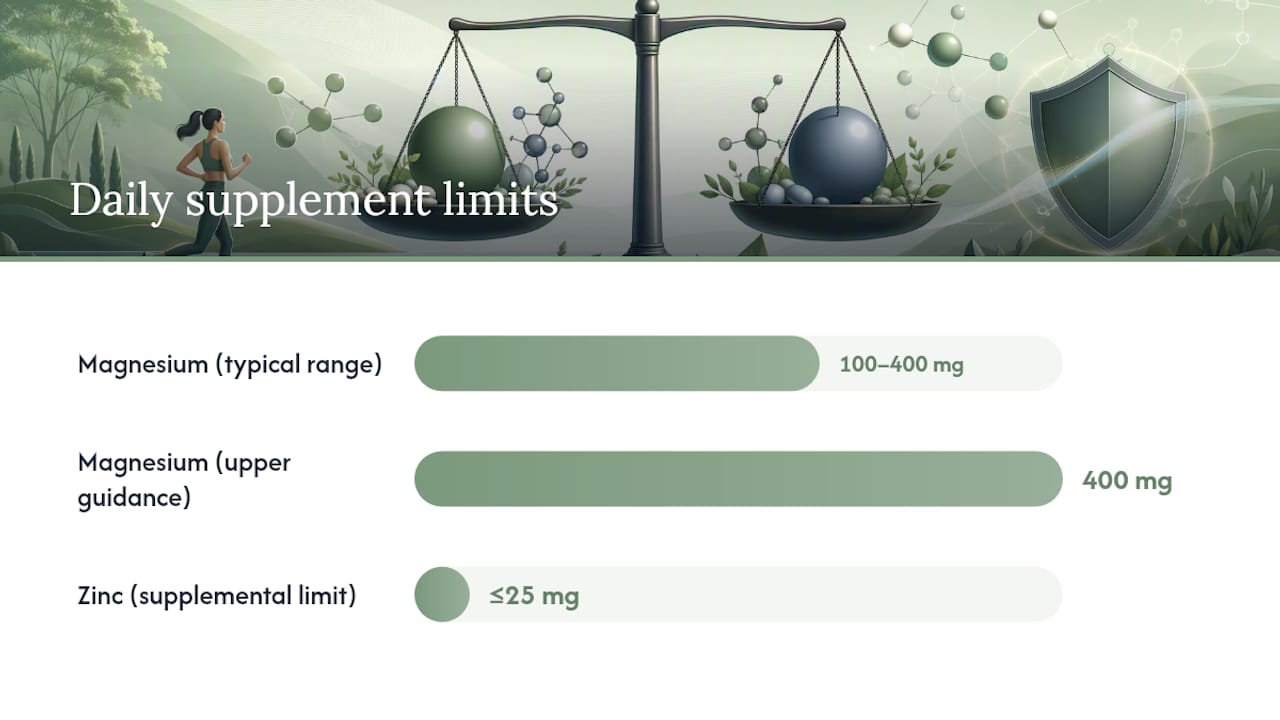
For magnesium, supplemental doses commonly range from 100 mg to 400 mg of elemental magnesium daily, and UK guidance generally advises keeping supplemental intake below 400 mg unless under medical supervision, since higher amounts reliably cause loose stools in a meaningful proportion of people. This is a dose-dependent effect, not an allergy or intolerance. It’s your gut telling you there’s more magnesium in the tube than it can absorb.
Practical rules to follow:
- Always check the elemental amount, not the compound weight. A capsule listing “500 mg magnesium bisglycinate” typically delivers around 50 to 100 mg of actual elemental magnesium, since the glycine component makes up much of that weight.
- Keep supplemental zinc at 25 mg a day or below unless you’re working with a clinician on a diagnosed deficiency.
- Split any magnesium dose above 150 to 200 mg elemental across two servings, morning and evening, to reduce the digestive load in one sitting.
- Start at the lower end of a product’s suggested range for the first week and assess tolerance before increasing.
- Stop and speak to a pharmacist or GP if you notice persistent diarrhoea, nausea that doesn’t settle, or unusual fatigue that develops over weeks of use.
The most common side effect by far is straightforward gastrointestinal upset from magnesium, particularly with cheaper oxide-based formulas. Zinc’s side effects tend to show up more slowly. Nausea can appear with a single high dose taken on an empty stomach, but the more serious concern is copper deficiency, which develops over months of sustained high zinc intake because the two minerals compete for the same absorption pathway in the gut. Fatigue, unexplained anaemia and a weakened immune response are the classic warning signs, and they’re exactly why nobody should be taking zinc at multiples of the daily allowance for extended periods without blood monitoring.
If you’ve been on a combined supplement for more than a few months at doses near the upper limits, that’s a reasonable point to ask a GP for a simple blood panel rather than guessing whether it’s still doing what you intended.
Which forms of magnesium and zinc absorb best?
Not all magnesium capsules are created equal, and the compound listed on the label matters as much as the milligram figure next to it.
Magnesium oxide is the cheapest and most common form in budget supplements, largely because it packs a high percentage of elemental magnesium by weight. The trade-off is poor absorption and a well-documented laxative effect, which is precisely why it’s also the active ingredient in some over-the-counter laxatives.

Magnesium citrate absorbs better than oxide and is a reasonable middle-ground option, though it can still cause loose stools at higher doses for some people.
Magnesium bisglycinate (also called glycinate) is magnesium bound to the amino acid glycine, and research from Oregon State University’s Micronutrient Information Center notes this form is generally better tolerated with fewer gastrointestinal side effects than citrate or oxide. It’s become the preferred choice among practitioners recommending magnesium for sleep and recovery, partly because glycine itself has a calming effect independent of the magnesium.
Zinc has its own set of common forms. Zinc gluconate and zinc sulfate are widely used and reasonably well absorbed, while zinc citrate and zinc acetate tend to be marginally gentler on the stomach for some people. The practical difference between these forms matters less than getting the total elemental dose right.
- Bisglycinate and citrate magnesium: better tolerated, moderate to good absorption.
- Magnesium oxide: cheap, high elemental content on paper, but poorly absorbed and more likely to cause diarrhoea.
- Zinc gluconate and sulfate: standard, reliable absorption for general supplementation.
- Zinc citrate or acetate: sometimes preferred for a gentler stomach experience.
Pro Tip: When comparing products, divide the elemental mineral amount by the total capsule weight listed. If a label says “400 mg magnesium bisglycinate” but only “80 mg elemental magnesium” in smaller print, that second number is the one that actually counts toward your daily target.
For anyone training regularly, bisglycinate tends to be the sensible default. You’re less likely to derail your gut the night before a long run, and the added digestive gentleness matters when you’re already asking your body to recover from repeated physical stress. This is the reasoning behind why magnesium with vitamin B6 combinations and bisglycinate-based formulas have become the standard recommendation in runner-focused supplement guides.
When is the best time to take magnesium and zinc?
Timing won’t change the total amount your body absorbs over a day by much, but it changes how comfortable the experience is and how well it fits your routine, particularly if you’re using magnesium and zinc together for sleep or post-exercise recovery.
Evening dosing makes sense if sleep support is your main goal. Magnesium’s role in nervous system regulation means many people notice a calming effect when taken 30 to 60 minutes before bed, and pairing it with zinc in the same evening dose is standard practice since neither mineral needs to be taken at a specific time relative to the other.

Post-workout timing matters more for magnesium than zinc, particularly for anyone training hard enough to sweat heavily and regularly. Practitioner guidance around endurance training often recommends splitting a magnesium dose, part after a hard session to support muscle relaxation, part in the evening to support sleep, rather than taking the full daily amount in one sitting.
A few practical rules cut down on side effects:
- Take both minerals with food if you’re prone to any stomach sensitivity. An empty stomach is where zinc-related nausea tends to show up.
- If your total magnesium dose exceeds roughly 150 to 200 mg elemental, split it into two servings rather than one.
- Avoid taking zinc supplements within two hours of antibiotics such as tetracyclines or quinolones, and keep magnesium away from bisphosphonate medications by a similar window, since both interactions reduce how well the drugs themselves are absorbed.
For a low-maintenance daily template, a single evening capsule combining moderate elemental magnesium with a standard zinc dose covers most general wellbeing goals. For a recovery-focused template suited to regular runners, splitting magnesium between a post-run and an evening dose, while keeping zinc at a single daily maintenance amount, tends to fit training schedules better than one large dose.
Do certain conditions or medications rule out combined use?
Some groups need to treat magnesium and zinc together with more caution than the general advice above suggests, and this is the section worth reading twice if you’re on regular medication.
Kidney disease changes the picture substantially, since impaired kidneys struggle to clear excess magnesium and zinc from the blood, allowing levels to build up in ways that don’t happen in someone with normal kidney function. Anyone with diagnosed kidney impairment should only take these supplements under direct medical guidance.
Pregnancy shifts nutrient requirements in both directions, and while magnesium and zinc are both needed in pregnancy, the specific doses and forms should be confirmed with a midwife or GP rather than chosen from general supplement guidance.
Inflammatory bowel conditions, including colitis, can make magnesium’s laxative tendency considerably worse, and gut inflammation may itself affect how well zinc gets absorbed in the first place.
Lamotrigine, an anticonvulsant and mood stabiliser, is one of the more specific interaction concerns worth flagging. Divalent minerals like magnesium and zinc can, in some cases, interfere with the absorption of certain oral medications when taken too close together, and anyone on epilepsy or mood-stabilising medication should get pharmacist confirmation before adding a mineral supplement rather than assuming it’s fine.
- Kidney disease: don’t supplement without medical supervision.
- Pregnancy: confirm doses with a midwife or GP rather than following general guidance.
- On lamotrigine or other prescription medicines: check timing and interaction risk with a pharmacist first.
- Long-term high-dose zinc use: watch for fatigue, unexplained anaemia or slow-healing wounds, signs of copper deficiency.
Pro Tip: If you’re on any regular prescription medication, the two-minute pharmacist conversation before starting a combined supplement is genuinely worth it. It’s the single most overlooked safety step in this entire topic, and pharmacists field this exact question routinely.
Anyone using high-dose supplementation for more than a few months, particularly zinc, should ask a GP about a simple blood test rather than assuming things are fine because nothing feels obviously wrong.
What should you check before buying a magnesium zinc supplement?
Reading a supplement label properly takes about thirty seconds once you know what to look for, and it saves you from paying premium prices for a product that’s mostly filler weight.
Start with the elemental amount, not the total compound weight. This is the single most common source of confusion in the whole category, and it’s covered in more depth in our guide to magnesium’s common side effects, but the short version is: a label showing 500 mg of magnesium bisglycinate is not giving you 500 mg of actual magnesium, since glycine makes up a large share of that weight.
- Elemental mg for both magnesium and zinc, listed clearly, not buried in small print.
- Serving size and how many capsules that requires, since some products need three or four capsules to hit an effective dose.
- Presence of vitamin B6, a common co-ingredient that supports magnesium metabolism, worth checking against our guide to magnesium and B6 pairing.
- The magnesium compound used. Bisglycinate for tolerance, oxide as a red flag for a budget filler-heavy formula.
- UK-made statements and any third-party testing claims, which indicate a manufacturer willing to be checked.
Different buying goals call for different priorities. Someone after general maintenance mainly needs a modest, well-tolerated daily dose without complexity. Someone targeting sleep support should prioritise an evening-friendly bisglycinate formula, ideally without stimulants or unnecessary additions. A runner focused on recovery should weigh elemental magnesium content most heavily, since that’s the mineral doing the bulk of the muscle-related work, with zinc present at sensible maintenance levels rather than an aggressive dose that risks the copper depletion issue covered earlier.
The products worth trusting are the ones that make the elemental numbers easy to find, rather than hiding them behind marketing language about “advanced absorption technology.”
Why Runcomplete builds around magnesium bisglycinate for runners
Runcomplete exists because generic sports supplements are built for gym-goers and elite athletes chasing marginal gains, not for someone fitting five runs a week around a full-time job. That’s a real gap. Everyday runners have real recovery needs, disrupted sleep from evening training, cramping after long sessions, but little patience for complicated stacks or proprietary blends nobody can decode.
The choice to build Ready around magnesium bisglycinate wasn’t arbitrary. Given what the evidence shows about bisglycinate’s tolerance advantage over oxide and citrate, it’s the form least likely to cause the exact stomach trouble that makes people abandon a supplement after a week.
A supplement only works if you actually keep taking it. The best formula on paper is worthless if it gives you a reason to stop by day ten.
Practically, this looks like a single evening capsule for general use, or timing a dose after a longer run when muscle relaxation and next-day recovery matter most. No proprietary blends, no filler ingredients, and a straightforward capsule count that doesn’t require a spreadsheet to track. Ready ships with a 30-day guarantee precisely because tolerance is personal, and what works for one runner’s gut might not suit another’s straight away.
- Bisglycinate chosen specifically for digestive tolerance during training weeks.
- Evening-focused use case, built around sleep and overnight recovery rather than daytime stacking.
- UK-made with a 30-day guarantee, reducing the risk of trying something new.
What actually matters when combining these two minerals
The conventional advice on magnesium and zinc together tends to swing between two extremes: either “perfectly safe, take as much as you like” or vague nervousness about “interactions” nobody explains properly. Neither is honest. The real picture is duller and more useful: these minerals are safe together at sensible doses, the clinical evidence for dramatic benefits applies mainly to people with existing metabolic conditions, and the actual risk sits almost entirely in overdoing zinc for months on end.
What gets underrated is how much the form of magnesium matters compared to the dose. People chase bigger numbers on a label when they should be checking whether the compound will actually sit well in their gut long enough to matter. Consistency beats intensity here, same as training.
If you take one thing from this: read the elemental figures before you buy anything, and treat zinc’s upper limit as a genuine boundary, not a suggestion.
— Tim
Ready: built for runners who just want reliable recovery
Ready brings together magnesium bisglycinate in a straightforward evening capsule, designed around the exact tolerance and label-clarity criteria covered throughout this guide. No proprietary blends, no filler compounds, just an elemental dose you can actually verify against the numbers on the tub. It’s UK-made, backed by a 30-day guarantee, and available as a one-time purchase or a monthly subscription for runners who’d rather not think about reordering mid-training block.

If cramping, patchy sleep, or slow recovery between runs sound familiar, it’s worth checking whether your current supplement is actually giving you the elemental dose it claims. Visit Runcomplete to see Ready’s full ingredient breakdown and place an order backed by that 30-day guarantee.
This article is general information, not a substitute for advice from a qualified doctor. Consult a qualified healthcare professional about your own circumstances before acting on anything here.
Sources
- The effects of combined magnesium and zinc supplementation on metabolic status in patients with type 2 diabetes mellitus and coronary heart disease
- Vitamins and minerals – NHS
- Zinc - Health Professional Fact Sheet (NIH/ODS)
- Magnesium — Micronutrient Information Center (Oregon State University)

