
Magnesium can ease tired or restless legs for some people, particularly those with low dietary intake, physically active adults, and a subset of people with mild to moderate restless legs syndrome. The evidence is mixed rather than definitive. Chelated magnesium bisglycinate tends to suit legs and muscles best, supplements should stay under 400 mg a day, and most people who respond notice a difference after several weeks, not days.
TL;DR:
- Magnesium supplements, especially glycinate chelate, can help mild to moderate restless legs syndrome and muscle fatigue, but evidence remains limited and mixed.
- Taking 150 to 200 mg of elemental magnesium in the evening, with food, starting conservatively, can support sleep and recovery without causing digestive issues.
- Magnesium absorption peaks around two hours after intake, so timing doses around workouts or before bed maximizes recovery and relaxation benefits.
- Dietary sources like leafy greens, nuts, seeds, and oily fish may suffice for many, reducing the need for supplements unless diet remains deficient.
- People with kidney disease or on certain medications should consult healthcare professionals before supplementing with magnesium to avoid interactions or adverse effects.
Table of Contents
- Does the research support magnesium for tired legs and restless legs syndrome?
- Which form of magnesium works best for legs and muscles?
- When should you take magnesium: for recovery or for sleep?
- What foods and habits help alongside magnesium?
- What are the side effects and risks of taking magnesium?
- How should you actually use magnesium for heavy leg recovery?
- Author perspective: what actually changes for runners who try this
- Ready: a practical bisglycinate option if you decide to supplement
- Sources
Does the research support magnesium for tired legs and restless legs syndrome?
The honest answer is: partly, and it depends who you ask. A single-blinded trial found that 250 mg of magnesium oxide daily for two months improved RLS symptom scores and sleep measures compared with placebo, using the International RLS scale and Pittsburgh sleep quality index. That is a genuine positive signal. But older open studies from the 1990s reported similar improvements in periodic limb movements and sleep efficiency without the rigour of a modern randomised design, so the field still lacks a large, blinded trial that would settle the question outright.
The mechanism is plausible even where the trial data is patchy. Magnesium acts as a natural calcium antagonist in muscle cells, which helps muscle fibres relax rather than stay locked in a mild contraction. It also has a calming effect on nerve excitability, which may explain why some people with restless legs report fewer involuntary movements at night.
Where magnesium seems to help most reliably:
- People with mild to moderate RLS symptoms, rather than severe cases needing medication.
- Physically active adults, including runners, who lose magnesium through sweat and repeated muscle contraction.
- Anyone whose diet is genuinely short on magnesium-rich foods.
The evidence gap: No large-scale, multi-centre trial has confirmed magnesium as a reliable RLS treatment on its own, and a systematic review of magnesium and muscle soreness notes that optimal dose, form and timing still need more research even where benefits show up.
Which form of magnesium works best for legs and muscles?
Not all magnesium supplements behave the same way once they reach your gut. The form on the label matters as much as the dose.
- Magnesium bisglycinate (glycinate chelate): bound to the amino acid glycine, absorbed gently, and generally the best tolerated option for evening use without stomach upset.
- Magnesium citrate: reasonably well absorbed but more likely to have a laxative effect at higher doses, which some people use deliberately, others find inconvenient.
- Magnesium oxide: cheap and high in elemental magnesium per tablet, but poorly absorbed and the form most associated with loose stools.
Labels list “elemental magnesium,” the actual amount your body can use, separate from the total compound weight. A tablet listing 400 mg of magnesium bisglycinate might only provide around 60 to 80 mg of elemental magnesium, so check the small print rather than the headline number.
The NHS sets the reference intake at 300 mg daily for men and 270 mg for women aged 19 to 64, and advises that supplement doses should not normally exceed 400 mg a day. A practical starting point for most adults is 150 to 200 mg of elemental magnesium from a bisglycinate supplement, alongside dietary intake, rather than maxing out the ceiling from day one.

Pro Tip: Start at the lower end of the dose range for the first week and see how your gut responds before increasing. It’s far easier to titrate up than to recover from a week of diarrhoea and decide magnesium “doesn’t agree with you.”
When should you take magnesium: for recovery or for sleep?
Timing changes depending on what you’re trying to fix, tired muscles or restless nights.
- For post-run recovery: research on magnesium and muscle soreness suggests absorption peaks roughly two to two and a half hours after intake, so taking a dose around two hours before a run, or shortly after finishing, tends to align best with recovery windows.
- For sleep and restless legs: take your dose in the evening, ideally with dinner, to support nervous system relaxation as you wind down.
- With food, not on an empty stomach: food buffers the gut lining and reduces the chance of cramping or loose stools, particularly with citrate or oxide forms.
- Space it from other supplements: leave a couple of hours between magnesium and calcium or iron supplements, since they compete for absorption in the gut.
What foods and habits help alongside magnesium?
A food-first approach often solves the problem before you need a supplement at all, and it comes with none of the tolerability trade-offs.
- Leafy greens: spinach and kale are reliable everyday sources.
- Nuts and seeds: almonds, cashews and pumpkin seeds pack a decent dose per handful.
- Wholegrains and beans: brown rice, oats and black beans add up over a week.
- Oily fish: mackerel and salmon contribute magnesium alongside other recovery-friendly nutrients.
Dietary sources come with co-nutrients that supplements can’t replicate, and for many people, correcting the diet is enough on its own. Beyond food, hydration, consistent sleep hours, and checking iron stores if restless legs are suspected all matter, since low iron is a well-known trigger for RLS symptoms that magnesium alone won’t fix.
What are the side effects and risks of taking magnesium?
The most common issue by far is digestive, not dangerous. Loose stools or diarrhoea show up at higher supplement doses, especially with oxide or citrate, and it’s the main reason the NHS caps supplemental intake at around 400 mg a day.
A smaller but more serious group of people needs to be more careful:
- Severe kidney disease: impaired kidneys struggle to clear excess magnesium, so clinical guidance advises caution and medical supervision in this group.
- Certain antibiotics and bisphosphonates: magnesium can reduce absorption of these medicines if taken too close together.
- Digoxin: magnesium levels can interact with this heart medication, so monitoring matters.
- Some anticonvulsants, including lamotrigine: combined use warrants a conversation with a pharmacist rather than guesswork.
If any of that applies to you, or you’re on regular prescription medicine, check with a pharmacist or GP before adding a daily supplement, not after you’ve started one.
How should you actually use magnesium for heavy leg recovery?
Runners tend to feel tired legs differently from someone with true restless legs syndrome, but the practical approach overlaps more than you’d expect. Here’s a sensible order of operations:
- Audit your diet first. Most people underestimate how little magnesium-rich food they eat in a normal week.
- Adjust food and lifestyle before reaching for a bottle. Hydration, sleep timing and iron status often move the needle on their own.
- Consider a chelated supplement if diet alone isn’t cutting it. Bisglycinate is the form Runcomplete builds its Ready formula around, specifically because it’s gentler on the gut and suits evening dosing without the laxative trade-off of oxide or citrate.
- Start conservatively and give it four to eight weeks before deciding whether it’s working. Magnesium isn’t a same-week fix.
- See a GP if nothing improves, or if you’re on medicines that interact with magnesium. Persistent restless legs deserve a proper check, including iron levels.
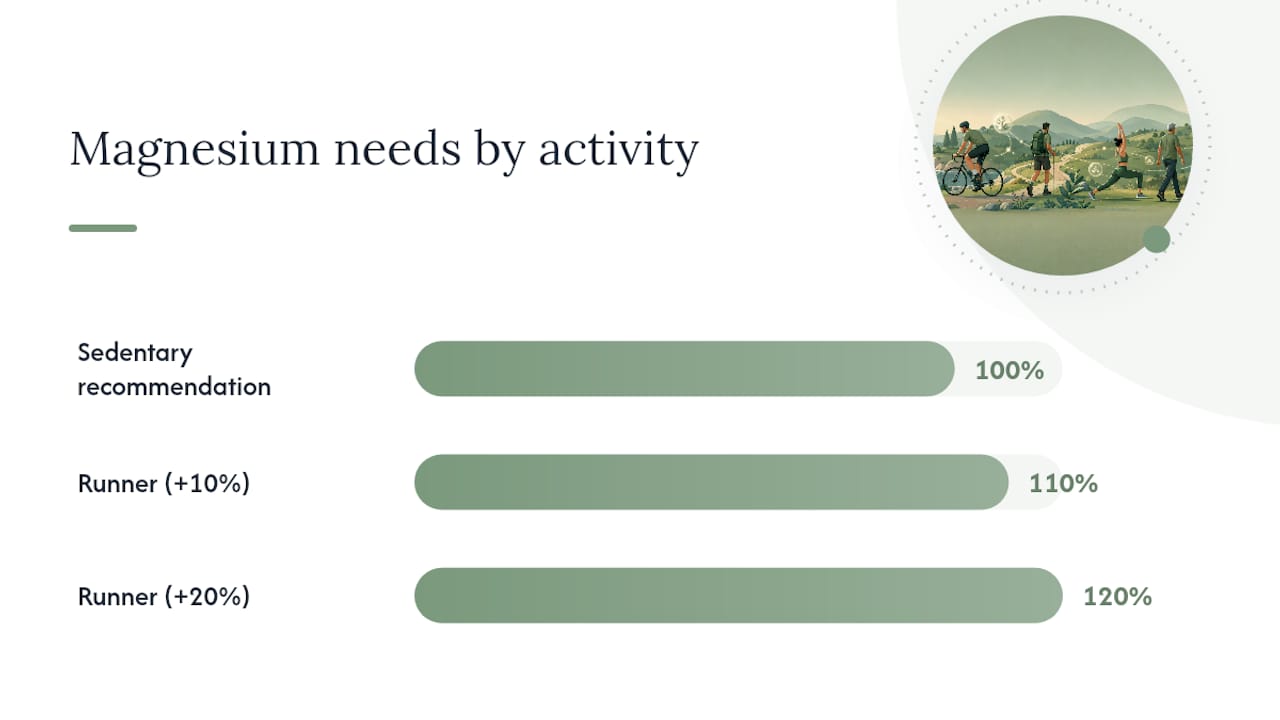
Runcomplete’s approach leans on runners’ increased magnesium needs during heavy training, which studies put at roughly 10 to 20% above sedentary recommendations. That’s the gap a lot of generic multivitamins don’t account for.
Pro Tip: If you run in the evening, take your dose with your post-run meal. You cover the recovery window and the sleep window in one go, rather than juggling two separate doses.
UK manufacture and a 30-day guarantee matter here because supplement quality varies wildly between brands, and knowing exactly what you’re taking, and having a way out if it doesn’t suit you, removes most of the guesswork.
Author perspective: what actually changes for runners who try this
Patience is the part people skip. Give it four to eight weeks before judging results, not four days. The mistake I see most often is starting high, getting an upset stomach within a week, and writing magnesium off entirely, when the fix was simply a smaller dose taken with food. The second mistake is ignoring interactions, particularly with kidney conditions or regular medication, and assuming a supplement aisle product is automatically low risk.
— Tim
Ready: a practical bisglycinate option if you decide to supplement
If the evidence above has convinced you it’s worth trying, the next question is which product actually does the job without wrecking your stomach. Runcomplete’s Ready is built around magnesium bisglycinate specifically, formulated for muscle recovery and sleep quality rather than as a generic multivitamin add-on.

Each capsule is free from unnecessary fillers, suitable for vegetarians and vegans, and manufactured in the UK, backed by a 30-day guarantee if it doesn’t suit you. A sensible starting point is one capsule with your evening meal, adjusting gradually within the NHS-recommended range. If you have kidney disease or take medicines such as bisphosphonates, digoxin, or lamotrigine, speak to a pharmacist or GP before adding it to your routine. For more detail on why bisglycinate suits runners specifically, see how it compares with other magnesium forms or how it fits into overnight muscle recovery. When you’re ready to try it, check out Ready on Runcomplete and see whether one capsule a day makes the difference to your legs.
This article is general information, not a substitute for advice from a qualified doctor. Consult a qualified healthcare professional about your own circumstances before acting on anything here.
Sources
- Vitamins and minerals - Others | NHS
- Effect of magnesium and vitamin B6 on restless legs syndrome symptoms: randomized trial | PMC
- Effects of magnesium supplementation on muscle soreness in different type of physical activities: a systematic review | Journal of Translational Medicine
Recommended
- Magnesium Bisglycinate for Runners: The Secret to Heavy Leg Recovery a – Run Complete
- Magnesium for Muscle Twitching After Running: A Practical Recovery Gui – Run Complete
- How long magnesium takes to work: a runner’s timeline – Run Complete
- Magnesium deficiency symptoms for runners: what to look for – Run Complete

