
The evidence-backed core is short: magnesium glycinate most evenings for recovery and sleep, caffeine before hard sessions, and carbohydrate plus sodium on long runs. This suits recreational and semi-serious runners eating a reasonably balanced diet who want fewer, better-justified additions rather than a cupboard full of tubs. Get your food right first, and get a ferritin blood test before touching iron.
TL;DR:
- Most runners benefit from a simple stack of magnesium glycinate for recovery and sleep, especially those training three to four times weekly.
- Caffeine should be used sparingly before hard sessions or races at 3 to 6 mg per kilogram of body weight, not as a daily habit.
- Sodium and electrolytes are most important during runs over 90 minutes or in hot conditions, requiring small, frequent doses rather than a single shot.
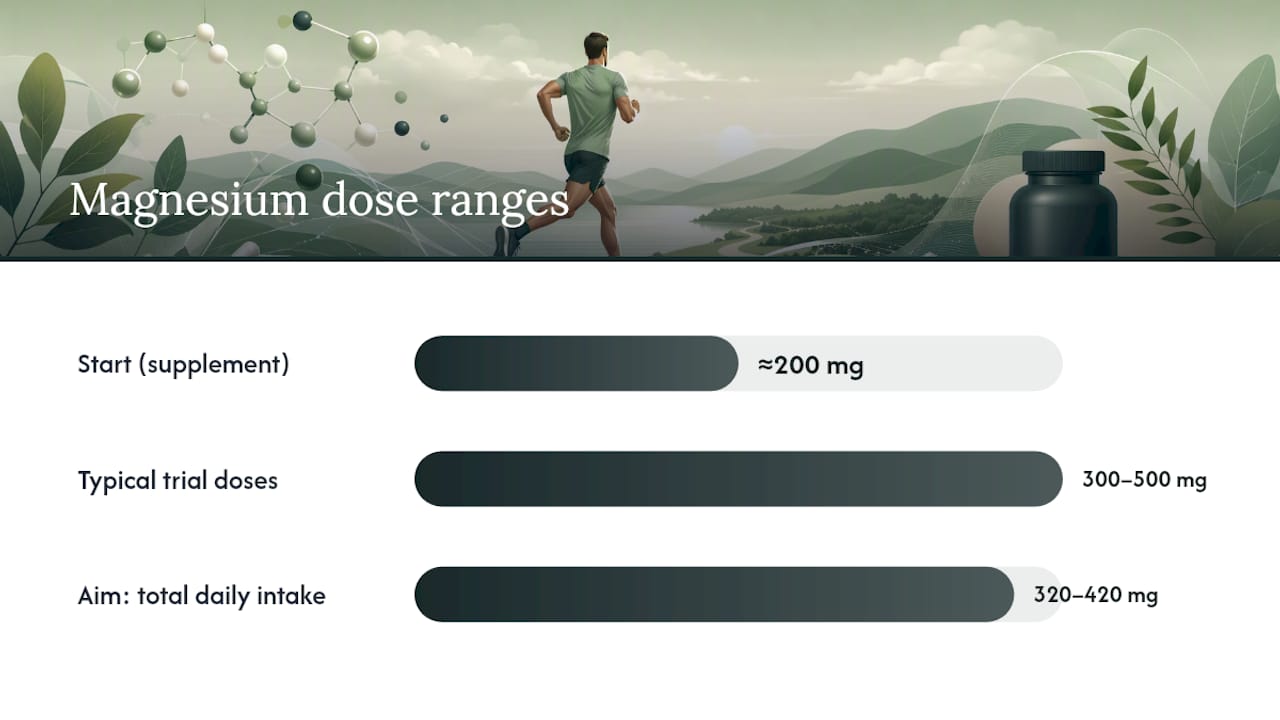
- Magnesium absorption varies by form; glycinate and citrate are preferable, with typical doses between 300 and 500 mg for recovery benefits.
- Blood testing is recommended before iron supplementation to avoid excess intake, especially for runners with symptoms of low ferritin or fatigue.
Table of Contents
- What’s the simplest supplement stack for runners?
- Magnesium: the evidence, the best forms, and how much to take
- Caffeine, beetroot, and sodium: the acute performance aids
- Creatine, protein, and BCAAs: strength and recovery support
- How to build your stack without overcomplicating it
- Quality, regulation, and when to see a clinician
- Why trust this runner’s supplement guide
- A practical note on trial and error
- Try a magnesium bisglycinate supplement designed for the recovery gap this guide keeps coming back to: glycinate magnesium, in the dose range the research actually supports, without the filler ingredients that pad out a lot of generic sports capsules. It’s aimed squarely at everyday runners rather than gym-goers chasing bulk, which is a different customer with different needs.
- Sources
- FAQ
What’s the simplest supplement stack for runners?
You don’t need ten products. Three categories cover most of what the evidence supports for recreational and semi-serious runners, and each maps to a different goal.
Minimal maintenance stack. One item, taken consistently: magnesium glycinate in the evening, most days of the week. This is the stack for someone who trains three or four times weekly and mainly wants better sleep and less next-day stiffness.
Race-day or hard-session stack. Caffeine (3 to 6 mg per kilogram of bodyweight) taken 30 to 90 minutes before the effort, plus sodium if the session runs long or hot. This is an acute, occasional addition, not a daily habit.
Recovery-focused stack. Nightly magnesium as the base, 20 to 40 grams of protein within a couple of hours of a hard session, and electrolytes during anything over 90 minutes. This suits runners stacking back-to-back training days or building towards a race and needing to recover faster between sessions.
- Maintenance: magnesium glycinate, evenings, most days
- Performance: caffeine pre-session, sodium on long or hot runs
- Recovery: nightly magnesium, post-session protein, in-run electrolytes
Someone running twice a week for fitness rarely needs more than the maintenance stack. Someone training for a marathon on tired legs benefits more from the full recovery version.
Magnesium: the evidence, the best forms, and how much to take
Magnesium has the strongest single-ingredient case of anything on this list, specifically for recovery rather than raw performance. A systematic review of magnesium supplementation across different types of physical activity found it commonly reduces muscle soreness and improves how recovered people feel, with trial doses generally between 300 and 500 mg. A separate narrative review reached a similar conclusion: recovery markers improved more consistently across studies than performance metrics did, which fits the honest picture. This is a recovery aid, not a shortcut to a faster 10K.
Form matters more than the number on the label. Glycinate and citrate absorb well and sit gently on the stomach; oxide is cheap, common, and poorly absorbed, so a lot of what you swallow passes straight through. Marathon Handbook’s guidance on magnesium for runners makes the same point: check the salt form, not just the milligram total on the front of the pack.
- Start with roughly 200 mg of supplemental magnesium and adjust from there
- Study ranges commonly sit between 300 and 500 mg
- Aim for total daily intake (food plus supplement) of around 320 to 420 mg, depending on sex and training load
- Take it in the evening for sleep and recovery, or around two hours before an intense session if using it acutely
Pro Tip: Daily evening dosing shows more consistent recovery benefit in trials than a single pre-race dose, so build it into your evening routine rather than saving it for race week.
Watch for loose stools at higher doses; that’s usually a sign to drop back or split the dose. Anyone with kidney disease or taking certain medications should check with a doctor first. Our own guides on magnesium timing for runners and taking magnesium with food go into more detail on getting the routine right.
Caffeine, beetroot, and sodium: the acute performance aids
These three are for specific moments, not daily maintenance, and they work through different mechanisms entirely.
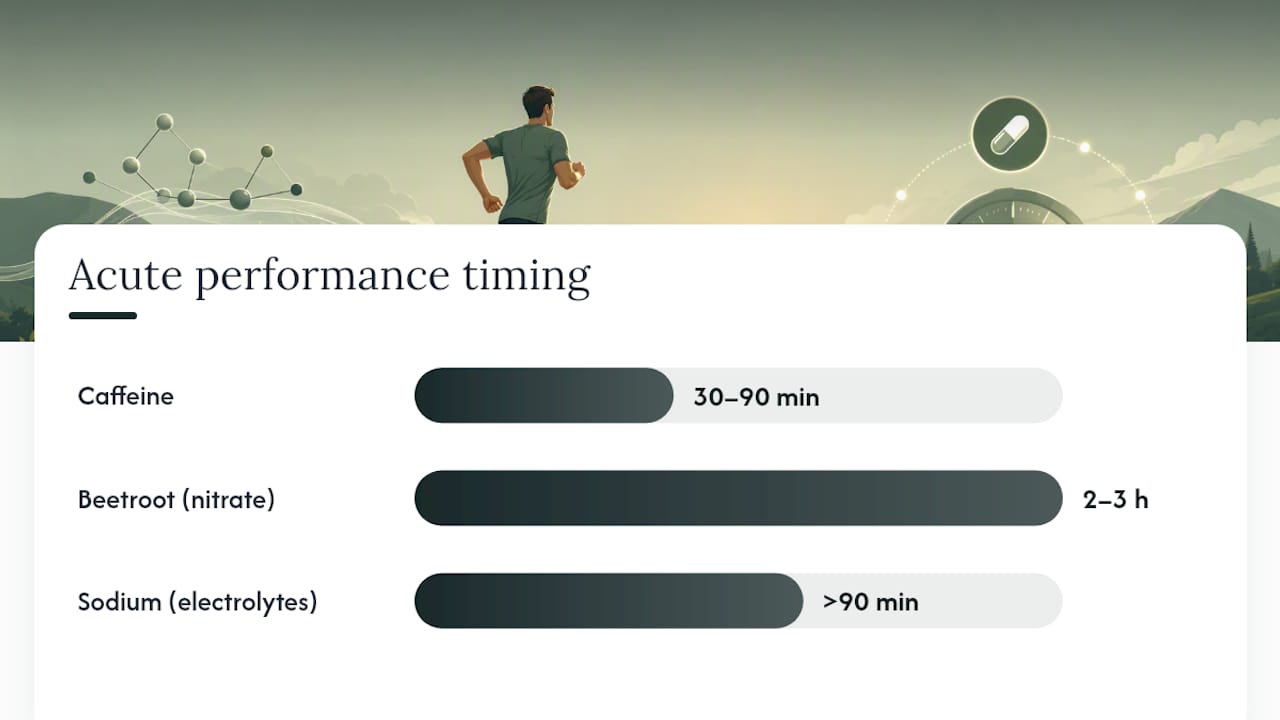
Caffeine has the most consistent research backing of any performance supplement for runners. A narrative synthesis of supplements and running performance.2026.4565) reports caffeine improving performance fairly reliably across sprint, repeated-effort, and endurance running. The usual effective range is 3 to 6 mg per kilogram of bodyweight, taken 30 to 90 minutes before the session. Use it for key sessions and races, not every easy run, or you’ll blunt the effect and wreck your sleep.
Beetroot and dietary nitrate show more selective benefits. The same synthesis found nitrate works best for moderately trained athletes doing shorter, high-intensity efforts, typically taken as a shot or juice two to three hours before the event. It’s not a guaranteed win for everyone, and evidence for long steady-state running is weaker than for shorter, punchier efforts.
Sodium and electrolytes matter most on long or hot runs. There’s no single number that fits every runner, since sweat rates vary hugely, but a practical starting point for anything over 90 minutes in warm conditions is regular small doses through the run rather than one big hit at the start.
- Caffeine: 3 to 6 mg/kg, 30 to 90 minutes pre-session
- Beetroot/nitrate: 2 to 3 hours pre-event, best for shorter intense efforts
- Sodium: little and often on runs over 90 minutes
Test all three in training. Race day is the wrong place to discover caffeine gives you a jittery stomach.
Creatine, protein, and BCAAs: strength and recovery support
Creatine tends to get filed under bodybuilding, but it has a real, narrower use case for runners: sessions built around repeated surges, hill reps, or strength work in the gym. A typical maintenance dose is 3 to 5 grams a day, with or without an initial loading phase. It isn’t a weight-loss aid, and some runners notice modest water retention in the first couple of weeks, which settles.
Protein does more heavy lifting than most runners give it credit for. Aim for 20 to 40 grams within a couple of hours of a hard session, and pay attention to total daily intake, since that’s what actually drives adaptation, not the post-run shake in isolation.
BCAAs are the least clear-cut of the three. An acute trial during a 21 km run found a BCAA-containing electrolyte beverage reduced muscle damage markers and soreness at 24 hours, though it made no difference to finishing time. That’s a genuine recovery signal, but it doesn’t mean isolated BCAA powders beat a normal serving of whole protein for most runners.
- Creatine: 3 to 5 g/day, useful for interval and strength work
- Protein: 20 to 40 g post-session, total daily intake matters more
- BCAAs: modest soreness benefit shown acutely; whole protein usually covers the same ground
How to build your stack without overcomplicating it
Add one thing at a time, and give each one a proper trial before judging it.
- Audit your diet first. Track food intake for a week, paying attention to magnesium-rich foods (nuts, seeds, leafy greens), iron sources, and total protein. Recreational runners often get enough magnesium from food alone, so this step tells you whether supplementation is worth it before you spend anything.
- Introduce one supplement at a time. Start with magnesium if sleep or soreness is the issue. Give it two to four weeks before adding anything else.
- Keep a simple log. Note sleep quality, next-day soreness, and how recovered you feel each morning. This is more useful than any single lab marker for judging whether a supplement is doing anything for you.
- Arrange a blood test if you suspect low iron. Fatigue, unusually poor recovery, or breathlessness on easy runs can point to low ferritin. Get tested before supplementing iron; too much causes its own problems.
- Adjust for race week. Daily magnesium stays the same. Add caffeine and, if it suits your event, nitrate in the days immediately before. Don’t trial anything new in that window.
Pro Tip: If a supplement hasn’t changed your sleep, soreness, or perceived recovery after four weeks of consistent use, it probably isn’t doing much for you. Drop it and reassess rather than adding a second product on top.
Stop and reassess if you notice persistent GI upset, disrupted sleep from late caffeine, or any symptom that feels off. None of this is worth pushing through.
Quality, regulation, and when to see a clinician
Supplements sit under lighter regulation than medicines, which is exactly why sourcing matters. NHS guidance on vitamins and minerals recommends choosing reputable suppliers and treating supplements as secondary to diet, and third-party testing is one of the few ways to check what’s actually in a capsule matches the label.
- Magnesium’s main downside is GI tolerance at higher doses; drop the dose if it causes loose stools
- Caffeine late in the day can disrupt sleep, undermining the recovery it’s meant to support
- Creatine causes modest water retention for some people, usually temporary
Anyone pregnant, managing kidney disease, on regular medication, or with suspected low ferritin should speak to a clinician before adding any of these. The underlying trial evidence is also worth holding lightly: many studies are small, use different magnesium formulations, and don’t always agree on the size of the effect. Treat the guidance here as a sensible starting point, not a guarantee.
Why trust this runner’s supplement guide
This guide comes from Tim at Runcomplete, drawing on published trials and systematic reviews rather than marketing copy from supplement brands.
Runcomplete specialises specifically in magnesium bisglycinate for everyday runners, rather than trying to be a general sports nutrition brand chasing elite athletes. That focus shows up in the detail: the flagship Ready product uses a well-absorbed glycinate form, is UK-made, and carries a 30-day guarantee.
- Timing magnesium around your training
- Spotting the signs of low magnesium
- A broader look at supplements for runners
A practical note on trial and error
Give any new supplement a fair one to two week trial before judging it, and track sleep and soreness rather than guessing. Diet, sleep, and consistent training still do most of the work here; supplements are the last 10%, not the first. If you try something from this stack, we’d genuinely like to hear how it went.
— Tim
Try a magnesium bisglycinate supplement designed for the recovery gap this guide keeps coming back to: glycinate magnesium, in the dose range the research actually supports, without the filler ingredients that pad out a lot of generic sports capsules. It’s aimed squarely at everyday runners rather than gym-goers chasing bulk, which is a different customer with different needs.

Ready is priced at £34.99 as a one-off purchase, or you can subscribe and save if you’d rather not think about reordering. It’s made in the UK, and every order carries a 30-day guarantee, so trying it costs you nothing if it doesn’t suit your routine. If you have a medical condition or take regular medication, check with a doctor before starting, as noted above. Otherwise, the sensible next step is to try it against your own sleep and soreness log for a month and see what changes.
This article is general information, not a substitute for advice from a qualified doctor. Consult a qualified healthcare professional about your own circumstances before acting on anything here.
Sources
- NHS — Vitamins and minerals
- Effects of magnesium supplementation on muscle soreness in different types of physical activities: a systematic review — PMC
FAQ
Do supplement stacks actually work?
The recovery-focused ones have decent evidence behind them, particularly magnesium for soreness and sleep, and caffeine for performance in specific sessions. They work best as a small addition to a solid diet, not as a substitute for one.
What supplement is best for runners?
Magnesium glycinate has the strongest recovery evidence for the average recreational runner, backed by a systematic review showing reduced soreness and better perceived recovery. Caffeine is the best-supported option specifically for performance on hard sessions or race day.
What’s a good simple supplement stack for runners?
Magnesium glycinate most evenings, caffeine before hard sessions or races, and sodium or electrolytes on long or hot runs covers most of what the evidence supports. Runcomplete’s Ready magnesium is built around the glycinate form this stack calls for.
Is there a well-known celebrity supplement stack, like Joe Rogan’s?
High-profile personal stacks tend to include a long list of products, many aimed at general health rather than running performance specifically, and they aren’t built around the evidence base runners actually need. A shorter, running-specific stack focused on magnesium, caffeine, and electrolytes will do more for recovery and race performance than copying a celebrity routine wholesale.
Do I need to blood-test before taking iron?
Yes. Iron supplementation without a confirmed low ferritin result can cause its own health problems, so get tested first rather than guessing based on fatigue alone.

