
Yes, magnesium supplements can make dreams feel sharper, stranger, and easier to recall for some people, usually within the first fortnight of taking them. The likely cause is deeper REM sleep and better sleep quality overall, not anything sinister. If dreams turn unpleasant, try moving your dose earlier in the evening or dropping it for a few nights. See a GP if you notice muscle weakness, an irregular heartbeat, or dreams that tip into distressing nightmares.
TL;DR:
- Magnesium supplements can deepen REM sleep and improve dream recall, which often results in more vivid dreams within the first two weeks.
- Magnesium glycinate is better tolerated than other forms and is linked to modest improvements in insomnia severity when taken in doses around 250 mg daily.
- Starting with low doses between 100 to 200 mg and gradually increasing, while moving intake earlier in the evening, helps minimize disruptive dreams and side effects.
- Excessive magnesium can cause diarrhea, cramping, and in severe cases, muscle weakness or irregular heartbeat, especially in those with kidney issues.
- People taking certain medications like lamotrigine should consult their healthcare provider before adding magnesium to avoid drug interactions.
Table of Contents
- How magnesium affects sleep neurochemistry and REM
- Why does better sleep make dreams more vivid?
- What makes magnesium glycinate different?
- How much magnesium should you take, and when?
- What are the warning signs of taking too much magnesium?
- Does magnesium interact with medications like lamotrigine?
- What can you do if vivid dreams become disruptive?
- What runners typically experience with magnesium bisglycinate
- A balanced view on vivid dreams and magnesium
- Try magnesium bisglycinate built for runners’ recovery routines
- Sources
- FAQ
How magnesium affects sleep neurochemistry and REM
Magnesium works as a neuromodulator, not a sedative. It calms neural activity by supporting GABA receptors (the brain’s main “brake” system) while dampening NMDA receptors, which otherwise keep neurons firing. Less excitability tends to mean an easier route into deep sleep.
There’s a knock-on effect on hormones too. Magnesium plays a supporting role in melatonin synthesis and appears linked to lower evening cortisol, both of which help you settle into deeper, more consolidated sleep stages rather than surfacing repeatedly through the night.
A randomised trial of magnesium L-threonate found measurable improvements in REM and deep sleep scores against placebo over 21 days. That’s one of the few objective, sleep-lab-style results in this area, and it matters because it shows a specific magnesium salt can shift sleep architecture, not just subjective “I slept better” reports. Reviews of magnesium’s role in sleep describe the same GABAergic and glutamatergic mechanisms feeding into this.
None of this amounts to proof that magnesium causes vivid dreams directly. The honest picture is that magnesium plausibly deepens and lengthens REM, and REM is where vivid dreaming happens, so the two are connected without a single trial pinning down the exact mechanism. Large-scale, dream-specific randomised evidence simply doesn’t exist yet.
Why does better sleep make dreams more vivid?
REM sleep is where most vivid dreaming occurs, and it’s also when the brain does much of its memory consolidation work. Strengthen REM and you strengthen both the dream content and your ability to remember it the next morning, which is a large part of why “vivid dreams” often just means “dreams you can now recall in detail.”
Most reports of this effect cluster in the first one to two weeks of starting an evening magnesium supplement, according to supplement review commentary. That timing lines up with the body adjusting to more consistent, deeper sleep rather than something building up toxically.
There’s a real difference between vivid dreams and a problem. Dreams that feel strange, emotional, or unusually detailed but leave you rested are almost always harmless. Recurring nightmares, night sweats, waking in a panic, or acting out dreams physically are different: that pattern points towards a parasomnia or another sleep disorder, and it’s worth mentioning to a GP rather than adjusting your supplement alone.
What makes magnesium glycinate different?
Magnesium glycinate, also called magnesium bisglycinate, pairs magnesium with glycine, an amino acid with its own calming, inhibitory role in the nervous system. The theory is that you get magnesium’s neuromodulation alongside glycine’s separate effect on sleep quality, though the two haven’t been cleanly separated in trials.
What’s better established is tolerability. Bisglycinate tends to cause far less gastrointestinal upset than magnesium oxide or citrate, both of which pull water into the gut and can trigger loose stools at moderate doses. That gentler profile is a major reason it’s the form most often recommended for nightly use rather than occasional flushing.
A randomised trial of magnesium bisglycinate found a small but statistically significant improvement in insomnia severity over four weeks, using 250 mg of elemental magnesium daily against placebo. The effect size was modest, not dramatic, which matches what Sleep Foundation’s review says: evidence is real but limited, and glycinate earns its recommendation mainly through tolerability rather than proven superior potency. Bioavailability claims made in marketing outrun the head-to-head data that would actually confirm them.

How much magnesium should you take, and when?
Sleep-focused doses generally sit in the 200 to 400 mg elemental magnesium range, though the NIH’s Office of Dietary Supplements advises capping supplemental intake at around 350 mg daily to keep gastrointestinal side effects manageable. That figure covers supplements specifically, on top of whatever magnesium you already get from food.
A few practical moves make the biggest difference to how your body handles it:
- Start low. Begin around 100 to 200 mg elemental magnesium and increase gradually rather than jumping straight to 400 mg.
- Move the timing earlier. Taking it one to two hours before bed rather than right at lights-out gives dreams less chance to feel disruptive.
- Split the dose. Half in the early evening, half closer to bedtime, can smooth out the effect for some people.
- Take it with food. A small snack alongside your dose reduces the odds of stomach upset.
- Give it two to four weeks before judging whether it’s working. Sleep changes rarely show up on night one, and neither do side effects settle immediately.
If loose stools or cramping show up early, that’s your body telling you to drop the dose before pushing higher.
What are the warning signs of taking too much magnesium?
The most common side effect by far is dose-dependent diarrhoea, particularly with magnesium oxide or citrate, which draw water into the bowel. Bisglycinate is gentler here, but nobody is immune at high enough doses.
Genuine magnesium toxicity is rare in people with healthy kidneys, because the body simply excretes the excess. It becomes a real risk mainly in severe renal impairment, where the warning signs include profound muscle weakness, dangerously low blood pressure, and an irregular heartbeat. Severe diarrhoea alongside cramping is your everyday signal to stop and reassess.
Stop the supplement and speak to a GP if you notice heart rhythm changes, marked weakness, or confusion. Keeping a simple note of dose, timing, and symptoms makes that conversation far more useful, and it’s the same habit worth carrying into any medication review, as NHS guidance on vitamins and minerals suggests for anyone with persistent sleep or health complaints.
Does magnesium interact with medications like lamotrigine?
Several drug classes warrant a conversation with a pharmacist before you add magnesium. Tetracycline and quinolone antibiotics can bind to magnesium in the gut and become less effective if taken too close together, so leave a few hours’ gap. Some anticonvulsants interact too. If you take lamotrigine specifically, ask your prescribing clinician or pharmacist before starting magnesium rather than assuming it’s fine, since anticonvulsant levels are not something to guess at.
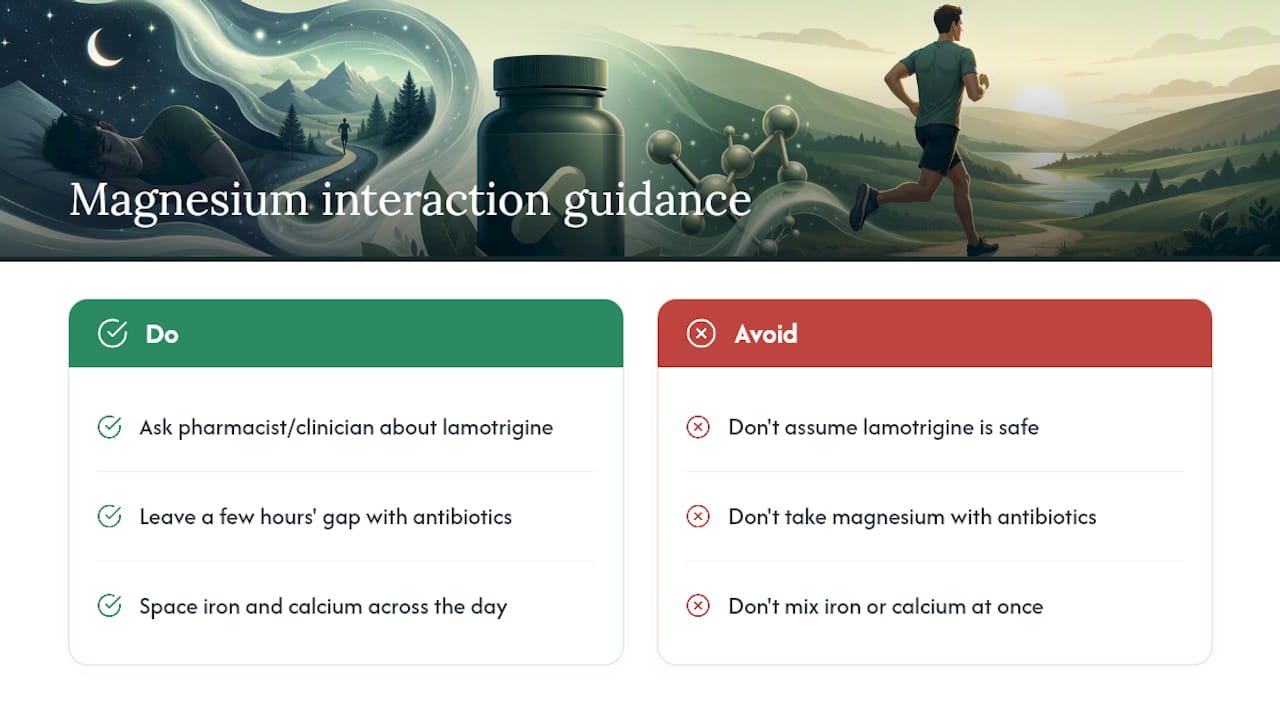
Iron and calcium supplements can also compete with magnesium for absorption, so spacing them out across the day helps all three work as intended.
Kidney function changes everything about magnesium safety, since impaired renal clearance is what turns a normal dose into a risk. Inflammatory bowel conditions such as colitis affect absorption unpredictably too, sometimes reducing it and sometimes increasing sensitivity to GI side effects. Anyone with kidney disease, colitis, or another chronic gut condition should check with a GP before starting, bringing a list of current medications to that appointment.
What can you do if vivid dreams become disruptive?
- Cut the dose or shift the timing first. Halve your evening amount for a few nights, or move it one to two hours earlier, before assuming magnesium isn’t for you.
- Change how you take it for a week. Pair it with a small snack, or try taking it slightly earlier in the evening, and watch whether dream intensity settles.
- Keep a short dream and sleep diary. Note the date, dose, timing, and a rough intensity score for your dreams over seven to fourteen nights. Patterns usually show up fast.
- Pause and consult if nothing improves. If disruptive dreams continue past two weeks of adjustment, stop the supplement and speak to your GP, who may suggest a different magnesium salt or a different approach entirely.
Pro Tip: Log your dose next to your dream notes, not just your sleep quality. Most people trying to troubleshoot this only track how rested they feel, then can’t work out whether the dose, the timing, or something unrelated caused the shift.
What runners typically experience with magnesium bisglycinate
Runners tend to report the same pattern: better sleep depth within a week or two, occasional vivid dreams early on, and good tolerability once the dose is right. Muscle cramps and restless legs after long training sessions are common complaints, and magnesium’s calming effect on nerve and muscle excitability is the usual reason people reach for it in the first place.
A sensible pilot looks like this: start low for a week, move the dose earlier if dreams intensify, and track effects for a fortnight before judging it. Runcomplete’s dosage guidance and runner-specific sleep guide both walk through this in more depth if you want the fuller version.
A balanced view on vivid dreams and magnesium
Vivid dreams are, in almost every case, a sign that something in your sleep architecture has changed for the better, not a red flag. The mistake I see people make is treating any dream that feels intense or odd as a problem to solve rather than a data point to note. Write it down, adjust the dose or timing, and give it a proper fortnight before deciding anything.
The evidence here is real but limited. Critics of the current trial base are right that sample sizes are small and effect sizes modest, which is exactly why I’d frame this as a worthwhile experiment rather than a guaranteed fix. If you’re on lamotrigine, have kidney disease, or have inflammatory bowel disease, get clinical advice before you start. Everyone else has a low-risk, well-tolerated supplement worth trying properly.
— Tim
Try magnesium bisglycinate built for runners’ recovery routines
Runcomplete makes Ready — Magnesium for Runners, a magnesium bisglycinate capsule built specifically around the recovery and sleep needs of everyday runners rather than elite athletes or gym-goers chasing marginal gains. It’s UK made, free of unnecessary fillers, and suitable for vegetarians and vegans, which matters if you’ve been put off other supplements by long ingredient lists you can’t pronounce.

Where Ready fits naturally into the pilot protocol above: start with a low dose, take it earlier in the evening if dreams feel too intense, and give it the full two to four weeks before judging results. Ready is available for one-time purchase or through a Subscribe & save plan if you’d rather not think about reordering. Every order carries a 30 day guarantee, so testing it against your own sleep and dream diary carries little downside. Head to the Runcomplete homepage to choose one off or subscription and get your first dose into tonight’s routine.
Sources
The Sleep Medicine trial on magnesium L-threonate provides the clearest objective link between a magnesium salt and REM sleep changes. The NIH’s magnesium fact sheet sets safe upper intake guidance. Sleep Foundation’s overview covers form-by-form tolerability, and NHS guidance on vitamins and minerals flags when persistent sleep issues need a GP. For a comparative look at glycinate versus citrate, NZSupps’ breakdown is a useful outside reference.
This article is general information, not a substitute for advice from a qualified doctor. Consult a qualified healthcare professional about your own circumstances before acting on anything here.
- Sleep Medicine: X MgT trial (2024)
- Randomised trial: magnesium bisglycinate and insomnia (2025)
- Sleep Foundation: magnesium and sleep
- ODS Magnesium fact sheet (NIH)
FAQ
Does magnesium make you have vivid dreams?
For some people, yes, usually within the first one to two weeks of starting an evening supplement, most likely because magnesium deepens REM sleep and improves dream recall rather than causing dreams directly.
What are the warning signs of too much magnesium?
Severe diarrhoea and cramping are the earliest signs; in people with significant kidney impairment, watch for profound muscle weakness, very low blood pressure, or an irregular heartbeat, and stop the supplement and seek medical care if these appear.
Is magnesium OK to take with lamotrigine?
Don’t assume it is: speak to your prescribing clinician or pharmacist before combining magnesium with lamotrigine, since anticonvulsant interactions need individual checking rather than general guidance.
Can I take magnesium if I have colitis?
Check with a GP first, because inflammatory bowel conditions like colitis can alter magnesium absorption unpredictably and may increase sensitivity to gastrointestinal side effects.
How much magnesium should I take for sleep?
Most sleep-focused doses fall between 200 and 400 mg of elemental magnesium, though it’s sensible to keep supplemental intake at or below roughly 350 mg daily and start at the lower end for the first week.

