
Magnesium with protein usually refers to a chelated magnesium supplement, where the mineral is bound to amino acids for better absorption, rather than magnesium mixed casually into a protein shake. Chelated forms such as magnesium bisglycinate tend to be gentler on the gut than magnesium oxide. It’s generally safe at sensible doses, though you should watch for diarrhoea and check specific drug interactions before combining it with certain medicines.
TL;DR:
- Chelated magnesium, such as magnesium bisglycinate, offers better absorption and tolerance than inorganic salts like magnesium oxide or citrate.
- Magnesium binds to amino acids like glutamate, affecting how it is absorbed and reducing gastrointestinal side effects compared to unbound forms.
- Starting with low doses, taking magnesium with food, and splitting larger doses can significantly reduce stomach upset and diarrhea.
- Foods like pumpkin seeds, salmon, tofu, and lentils naturally provide both magnesium and protein, helping maintain levels without supplements.
Table of Contents
- What does “magnesium with protein” actually mean?
- How protein binding changes absorption and gut tolerance
- What does the clinical evidence say about efficacy and safety?
- How to time and dose magnesium with protein for fewer side effects
- What to look for when choosing a magnesium supplement
- How Runcomplete applies this evidence for everyday runners
- Which foods give you both magnesium and protein naturally?
- The gap between supplement marketing and what the evidence actually supports
- Sources
- FAQ
What does “magnesium with protein” actually mean?
The phrase covers two different things, and mixing them up leads to confused label reading. The first is protein-bound or chelated magnesium: the mineral is attached to amino acids like glycine or a small peptide chain, which changes how your gut absorbs it. The second, looser meaning is simply taking a magnesium supplement around the same time as a protein shake or protein-rich meal, with no chemical bond involved at all.
Chelated products go by several names on packaging, and it’s worth knowing them before you buy:
- Magnesium amino acid chelate, sold under names like MG Plus Protein, where magnesium is bound to amino acids for absorption and tolerability.
- Magnesium bisglycinate (or glycinate), where the mineral is bound to two glycine molecules.
- Magnesium citrate, a mineral salt bound to citric acid rather than protein, often chosen for its stronger laxative effect.
- Magnesium threonine, bound to chronic acid, marketed mainly for its ability to cross into brain tissue rather than for muscle recovery.
Labels rarely make the elemental magnesium content obvious. A capsule listing “500mg magnesium bisglycinate” might contain only 50 to 100mg of actual elemental magnesium, since the amino acid carrier makes up much of the weight. Always check for the elemental figure, not just the compound’s total weight.
How protein binding changes absorption and gut tolerance
Magnesium doesn’t just float freely in your gut waiting to be absorbed. At a molecular level, it binds to proteins through specific amino acids, particularly glutamate, aspartame and histidine, which is exactly the chemistry that chelated supplements are designed to exploit. When magnesium is pre-bound to an amino acid or small peptide before you swallow it, it travels through the small intestine using different transport routes than free mineral ions do.
This matters practically because protein-derived peptides can chelate metal ions and improve their stability and intestinal uptake compared with some inorganic magnesium salts. Unbound magnesium, like magnesium oxide, relies heavily on passive diffusion and tends to pull water into the bowel by osmosis, which is why it’s such an effective laxative and why it causes loose stools so often.
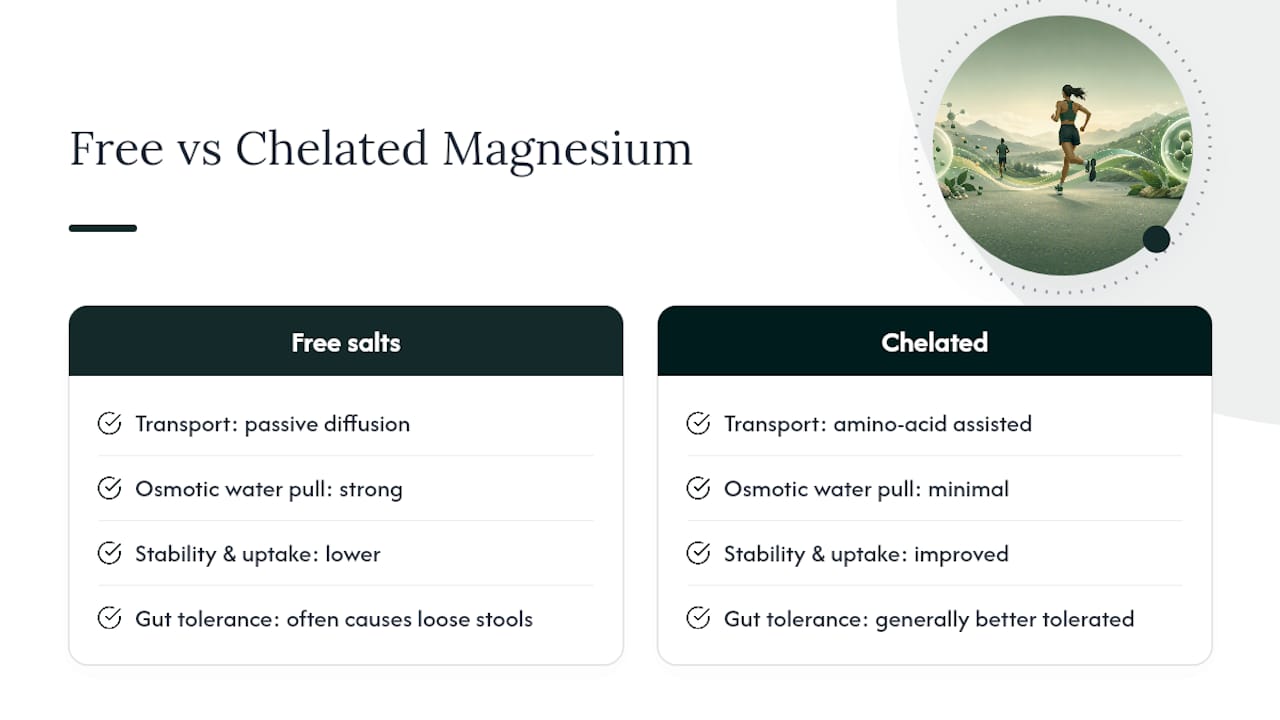
Chelated magnesium generally sidesteps that osmotic pull because the amino acid carrier shields the mineral from reacting freely in the gut. Not every product performs identically. Binding strength depends on which amino acid or peptide is used and how the manufacturer processes it, so two “amino acid chelate” products can behave quite differently in your stomach. If you’ve tried magnesium oxide or citrate and found it unbearable, a glycinate or amino acid chelate form is the logical next step to test.
What does the clinical evidence say about efficacy and safety?
Trial data on chelated magnesium is thinner than you’d expect for something this widely sold, but what exists is reassuring rather than alarming. Product monographs for MG Plus Protein list diarrhoea, nausea and stomach pain as the most commonly reported side effects, consistent with what you’d expect from any oral magnesium salt taken above your gut’s tolerance threshold.
A randomised crossover trial testing magnesium ions alongside tramadol found no significant change in plasma concentrations of the drug or its active metabolite, meaning the two didn’t interfere with each other pharmacokinetically.
That tramadol study is worth knowing about if you’ve seen forum chatter about magnesium and painkillers. Researchers investigate this combination partly because magnesium can potentiate pain relief through NMDA receptor activity, a separate mechanism from any drug interaction, so the two questions (does it interact, does it enhance the effect) get muddled in casual discussion.
For lamotrigine and diltiazem, the honest answer is less definitive. Clinical interaction databases show no documented interaction between magnesium and lamotrigine, but pharmacists are quick to point out that absence of a recorded interaction isn’t the same as proof of safety, especially with citrate forms where interaction reports exist for other drugs. Diltiazem sits in a similar grey zone: no flagged interaction, but caution is still the sensible default.
Watch for these signs that mean you should stop and speak to a doctor:
- Severe or ongoing diarrhoea that doesn’t settle after reducing the dose.
- Unexplained muscle cramps or weakness.
- Noticeable mood changes.
These warning signs come directly from product safety monographs rather than guesswork, and they apply regardless of which chelated form you’re taking.
How to time and dose magnesium with protein for fewer side effects
Getting the timing right does more to prevent stomach upset than switching brands ever will. Follow these steps:
- Start low. Begin at roughly 100 to 150mg of elemental magnesium daily rather than jumping straight to a full 300 to 400mg dose, and increase gradually over one to two weeks.
- Take it with food, not on an empty stomach. A small snack or meal containing protein slows gastric emptying and reduces the sharp osmotic hit that triggers loose stools.
- Split larger doses. If you’re aiming for 300mg or more daily, take half in the morning and half in the evening rather than one large dose.
- Pair with your evening routine if sleep is the goal. Taking it 30 to 60 minutes before bed, alongside a light protein snack, is a common pattern for recovery-focused use.
- Back off if you notice loose stools. Drop to the previous tolerated dose for a few days before trying to increase again.
Pro Tip: If you’re prone to a sensitive gut, try magnesium bisglycinate before ruling out supplementation altogether. Citrate and oxide forms are far more likely to cause the diarrhoea that puts people off magnesium entirely.
If you take regular medication, have kidney disease, or are pregnant, check with a clinician before starting. Kidney function directly affects how magnesium is cleared from your body, and reduced clearance raises the risk of excess accumulation.
What to look for when choosing a magnesium supplement
Not every product marketed as “high-absorption” magnesium deserves that label, and a few checks separate the genuinely useful products from the vague ones.
- Check the elemental magnesium amount per serving, not just the total compound weight. A bottle that only lists “500mg magnesium glycinate” without breaking out the elemental figure is hiding the number that actually matters.
- Favour bisglycinate or amino acid chelate forms if your goal is recovery or sleep support and you want to avoid a laxative effect; choose citrate if occasional constipation relief is actually what you’re after.
- Avoid “proprietary blend” labelling that doesn’t disclose individual ingredient amounts. If a manufacturer won’t tell you how much elemental magnesium is in the capsule, assume it’s less than you’d hope.
- Look for third-party testing verification, which confirms the capsule contains what the label claims and hasn’t been contaminated during manufacturing.
- Check the filler list. Unnecessary binders, colours and flow agents add bulk without benefit, and some people react to them even when the magnesium itself sits fine.
Threonate forms are worth a separate mention here, since they’re often shelved next to bisglycinate and citrate but serve a different purpose. Threonate is formulated to cross into brain tissue and gets marketed for cognitive support rather than muscle recovery, so it isn’t the right choice if your goal is easing post-run cramping or improving sleep depth.
How Runcomplete applies this evidence for everyday runners
Runcomplete generally favours magnesium bisglycinate over citrate or oxide, because chelated forms tend to cause less diarrhoea than inorganic salts, and the last thing a runner needs the morning after a long session is gut trouble on top of sore legs. For everyday runners rather than elite athletes, tolerability usually matters more than squeezing out marginal absorption gains.
A practical regimen looks like this: taking magnesium in the evening, ideally with a small protein-containing snack, supports both overnight muscle recovery and sleep quality without disrupting a pre-run stomach. Certain magnesium bisglycinate supplements are formulated to avoid fillers and GI complaints common in some magnesium oxide products, and some may be UK-made with a satisfaction guarantee. For more on timing magnesium around training and sleep, the detailed guide to magnesium with food covers this in depth.
Which foods give you both magnesium and protein naturally?
Supplements aren’t the only route, and several whole foods deliver a genuinely useful combination of both nutrients without any label-reading required.
Pumpkin seeds are one of the densest natural sources of magnesium available, and they carry a respectable protein content per handful too, making them an easy snack addition rather than a meal centrepiece. Salmon and mackerel pair a strong protein hit with meaningful magnesium content, and the omega-3 content is a separate bonus for anyone doing regular training. Tofu and tempeh work well for anyone eating plant-based, offering both nutrients in a single ingredient that adapts to almost any meal.

Greek yoghurt stacks protein generously but contributes only a modest amount of magnesium, so it’s better thought of as a protein source with a small magnesium bonus rather than a genuine dual source. Black beans and lentils bring solid amounts of both, plus fibre that slows digestion in a way that can actually help magnesium tolerance compared with a fasted supplement dose. Almonds and cashews round things out, offering enough magnesium per serving to matter, alongside moderate protein.
None of these foods will get you to a therapeutic magnesium dose the way a supplement can, particularly if you’re running a magnesium deficit from heavy training or poor sleep. But building meals around a few of them consistently reduces how much you need to top up separately, and it’s a far more pleasant way to hit your baseline than swallowing extra capsules for the sake of it.
The gap between supplement marketing and what the evidence actually supports
The marketing around chelated magnesium often implies dramatic absorption differences between forms, and the honest picture is more modest than that. The mechanistic case for chelation is solid. Amino acid binding does change how magnesium travels through the gut, and it does reduce the osmotic diarrhoea that puts so many people off supplementing altogether. But “better absorbed” and “life-changing” are not the same claim, and anyone promising the latter is overselling a genuinely useful, incremental improvement.
If you’re on regular medication, particularly for epilepsy or heart rhythm conditions, the interaction databases showing “no documented interaction” are a reasonable starting point, not a substitute for asking your GP or pharmacist directly. For runners specifically weighing up a magnesium routine, Runcomplete’s Ready supplement page is a sensible next stop once you’ve settled on bisglycinate as your preferred form.
— Tim
FAQ
What is magnesium with protein?
It usually means a protein-bound or chelated magnesium supplement, such as magnesium amino acid chelate, where the mineral is attached to amino acids to improve absorption and gut tolerance.
Is magnesium okay to take with lamotrigine?
Interaction databases show no documented interaction between magnesium and lamotrigine, but pharmacists still advise checking with a doctor since absence of a recorded interaction isn’t absolute proof of safety.
Can I take magnesium supplements with diltiazem?
No specific interaction is flagged in clinical databases between magnesium and diltiazem, but you should still confirm with your prescriber given the limits of interaction reporting.
Can I take magnesium if I take tramadol?
Yes, a randomised crossover trial found magnesium didn’t alter plasma levels of tramadol or its active metabolite, so no significant pharmacokinetic interaction was detected.

