
Chelated magnesium is magnesium bound to a ligand, most commonly an amino acid such as glycine, forming a stable molecular complex. That binding changes how the mineral behaves in your gut: chelated forms tend to dissolve more readily in intestinal fluid and can be absorbed via amino-acid transport pathways rather than relying solely on the ion channels that inorganic salts depend on. The practical upshot is better bioavailability for many people and, crucially, far less of the laxative effect that puts runners off magnesium oxide or high-dose citrate.
If you are scanning for the quick answer: look for magnesium bisglycinate or magnesium glycinate on the label, check the elemental magnesium per dose (not just the compound weight), and note whether the product states “fully reacted.”
- Chelated magnesium = magnesium ion bonded to one or more ligands at multiple attachment points
- Bisglycinate = two glycine molecules bound to one magnesium ion (bidentate chelate)
- Absorption advantage: amino-acid transport pathways supplement the usual mineral channels
- Gut advantage: less free magnesium ion in the colon means a lower laxative risk
- Who benefits most: runners with high sweat losses, people with sensitive stomachs, anyone who has experienced loose stools on other forms
Pro Tip: Always check the elemental magnesium figure, not just the capsule weight. A 500 mg bisglycinate capsule typically delivers a moderate amount of elemental magnesium, depending on the formulation.
Table of Contents
- How does chelation actually change magnesium absorption?
- Chelated magnesium vs regular magnesium: how do the main forms compare?
- What are the main benefits of chelated magnesium?
- Why runners and people with sensitive stomachs often prefer bisglycinate
- Side effects, safety, and interactions you should know about
- How to read a supplement label and spot a genuine chelated product
- Key takeaways
- The case for bisglycinate is stronger than most runners realise
- Runcomplete Ready: bisglycinate built for everyday runners
- Useful sources and further reading
How does chelation actually change magnesium absorption?
Chelation is not a marketing term. IUPAC defines it as bonding between two or more separate binding sites within the same ligand and a single central atom. When glycine wraps around a magnesium ion at two points, that is a bidentate chelate. Three glycine molecules create a triglycinate complex (tridentate). The ring-like structure that forms is more stable than a simple ionic bond, which is why chelates resist breaking apart in the acidic environment of the stomach.
Why does that stability matter? Inorganic salts like magnesium oxide dissociate readily into free Mg²⁺ ions. Those ions compete with calcium and other minerals for the same paracellular and ion-channel routes in the small intestine. A chelated complex, by contrast, can travel intact to the intestinal wall and be taken up via amino-acid or peptide transporters, bypassing some of that competition entirely.
Common ligands used in magnesium supplements:
- Glycine (bisglycinate/glycinate): the most widely studied; gentle, well-tolerated, glycine itself has physiological roles in sleep and inflammation
- Taurine (taurate): used in some cardiac-focused formulations
- Citric acid (citrate): technically an organic salt rather than a true amino-acid chelate, but still more soluble than oxide
- Peptides (triglycinate, MgG3): newer research area; MgG3 showed exceptional water solubility and improved cellular uptake in CaCo-2 cells compared with several commonly used magnesium supplements in published research
The practical implication is improved solubility in intestinal fluid and a gentler ride through the digestive tract, particularly at the higher doses runners often need after long training sessions.

Chelated magnesium vs regular magnesium: how do the main forms compare?
Not all magnesium supplements are equal, and the difference is not trivial once you factor in how consistently you can take them. Cheaper inorganic salts cost less to produce but often cause the laxative effects that undermine long-term supplementation.
| Form | Bioavailability | GI tolerance | Best for |
|---|---|---|---|
| Magnesium bisglycinate | High | Excellent | Recovery, sleep, sensitive stomachs, runners |
| Magnesium citrate | Moderate–high | Good at lower doses | General deficiency correction, constipation relief |
| Magnesium oxide | Low | Poor at higher doses | Short-term laxative use; not ideal for supplementation |
| Magnesium chloride | Moderate | Moderate | Topical use; oral forms less common in UK |
| Magnesium taurate | Moderate–high | Good | Cardiovascular support, less studied for sport |
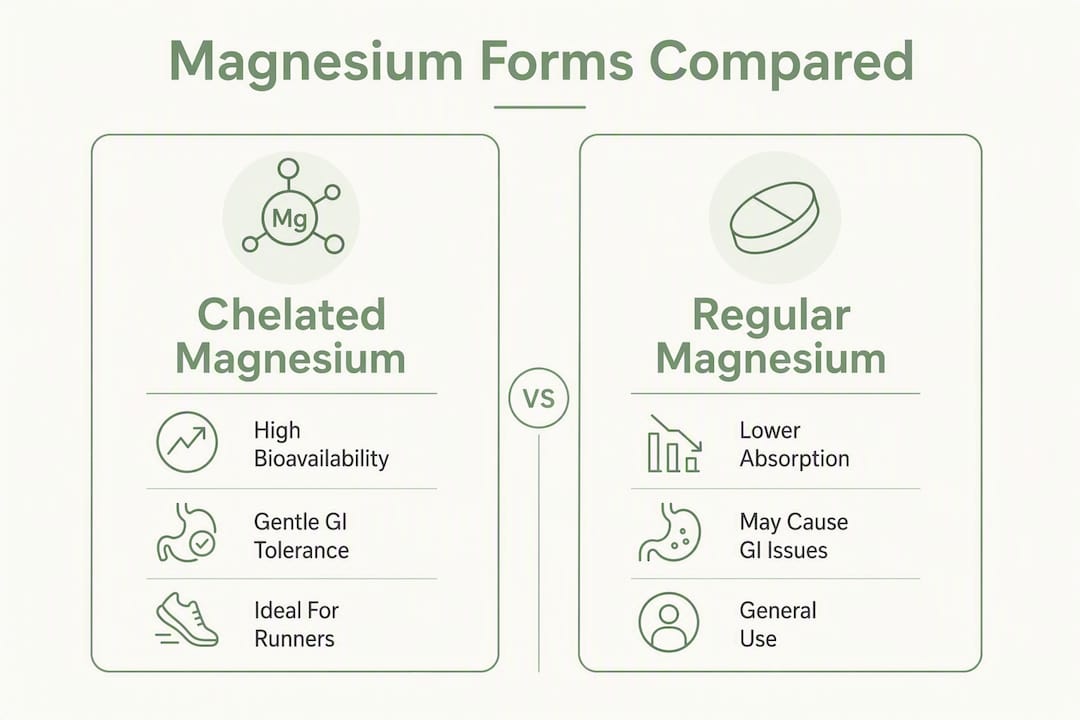
A systematic review of magnesium supplement bioavailability confirms that organic complexes generally show higher solubility than inorganic salts, while also noting that absorption depends on dose, food matrix, and individual factors. No single form wins for every person in every context.
Key distinctions worth knowing:
- Bisglycinate vs citrate: both outperform oxide, but bisglycinate tends to cause fewer loose stools at the doses runners need; citrate is a reasonable budget option for people without GI sensitivity
- Oxide: high elemental magnesium percentage by weight, but absorption studies in animal models show organic salts typically outperform inorganic alternatives in availability; oxide’s low cost is its main selling point
- Triglycinate (MgG3): emerging evidence suggests superior solubility and cellular uptake, though human trial data is still limited compared with bisglycinate
For a direct comparison of glycinate and citrate from a runner’s perspective, the magnesium glycinate vs citrate guide at Runcomplete covers the practical trade-offs in detail.
What are the main benefits of chelated magnesium?
The strongest evidence sits around solubility, cellular uptake, and digestive tolerance. The sleep and recovery claims are well-supported in practice, though the clinical picture is more nuanced.
Absorption and solubility. Organic magnesium complexes generally outperform inorganic salts on solubility, and the triglycinate form (MgG3) demonstrated notably higher water solubility and improved uptake in CaCo-2 cell studies. Absorption is dose-dependent and influenced by baseline magnesium status: people who are genuinely depleted absorb a higher proportion of any supplemental form, which is relevant for runners who lose magnesium through sweat.
Digestive tolerance. This is where bisglycinate earns its reputation. Free magnesium ions in the colon draw water osmotically, which is the mechanism behind the laxative effect of oxide and high-dose citrate. A stable chelate delivers less free ion to the colon, so the osmotic pull is reduced. Runners who have abandoned magnesium supplementation after a bad experience with oxide often find bisglycinate entirely manageable, even at meaningful doses.
Sleep and recovery. Magnesium plays a role in over 300 enzymatic processes, including those governing muscle relaxation and neurotransmitter regulation. The glycine ligand in bisglycinate adds a separate layer: glycine has documented physiological roles in sleep regulation and may reduce muscle inflammation, giving bisglycinate a dual action that plain magnesium salts cannot replicate. For runners, that combination of magnesium and glycine in a single capsule is genuinely useful, not just a marketing angle.
Where the evidence is less clear. Most human trials on magnesium and sleep or cramp reduction use mixed populations and varied forms. The absorption advantage of chelates over citrate, for instance, is real but modest in healthy adults with adequate magnesium status. The clearest benefit shows up in people who are depleted or who cannot tolerate other forms.
Why runners and people with sensitive stomachs often prefer bisglycinate
Endurance running depletes magnesium faster than most people realise. Sweat losses, elevated cortisol, and the metabolic demands of sustained aerobic effort all draw on magnesium reserves. The problem is that the doses needed to meaningfully replenish those reserves, taken as oxide or high-dose citrate, frequently cause GI distress at exactly the wrong time.

Bisglycinate sidesteps that problem. Sports nutrition guidance for endurance athletes recommends bisglycinate specifically for its superior tolerance and its suitability for the split-dosing approach that works best in practice: one portion after training to support muscle recovery, and a smaller portion before bed to leverage glycine’s sleep-promoting effects.
Pro Tip: Split your daily dose rather than taking it all at once. A post-run dose supports muscle recovery while a pre-sleep dose takes advantage of glycine’s calming effects. This is a practitioner approach, not a fixed clinical rule, so adjust based on your own tolerance.
The glycine angle matters beyond just tolerance. Glycine supports collagen synthesis, which is relevant for connective tissue recovery after high-mileage weeks, and it acts as an inhibitory neurotransmitter that can ease the transition into deep sleep. For a runner logging four or five sessions a week, that dual action is worth paying attention to.
UK runners looking for practical guidance on timing and food interactions can find more detail in Runcomplete’s magnesium with food guide, which covers how meals affect absorption and tolerance.
Magnesium also fits within a broader nutrition strategy for training. If you are building a recovery-focused nutrition plan, the role of nutrition in training is worth reading alongside supplement-specific guidance.
Side effects, safety, and interactions you should know about
Chelated magnesium is generally well-tolerated, but “well-tolerated” does not mean risk-free, and a few interactions are clinically significant enough to warrant a conversation with your GP or pharmacist before starting.
Common side effects:
- Loose stools or mild nausea, most often with higher doses or on an empty stomach; bisglycinate causes this far less than oxide or citrate
- Drowsiness if taken in large amounts during the day (the glycine component contributes to this)
- Rarely, abdominal cramping at very high doses
Signs of excessive magnesium intake (hypermagnesaemia): low blood pressure, muscle weakness, irregular heartbeat, and in severe cases difficulty breathing. These are uncommon from oral supplements in healthy adults but become a real risk with renal impairment, since the kidneys are the primary route for excreting excess magnesium.
Drug interactions to check:
- Oral bisphosphonates (alendronate, risedronate): magnesium can impair absorption; separate doses by at least two hours
- Certain antibiotics (tetracyclines, fluoroquinolones): chelation chemistry underlies the interaction — magnesium binds these drugs in the gut, reducing their effectiveness; take antibiotics at least two hours before or four to six hours after magnesium
- Antiepileptics (including lamotrigine): interactions are possible; always check with a clinician
- Diuretics and proton pump inhibitors: can affect magnesium levels in either direction
Who should consult a GP or pharmacist first:
- Anyone with kidney disease or reduced renal function
- Pregnant or breastfeeding people
- Anyone taking multiple prescription medications
- People with a history of heart rhythm problems
Start at a lower dose and increase gradually. Monitor bowel tolerance as your guide. If you experience persistent loose stools even on bisglycinate, reduce the dose rather than switching to a less tolerable form.
This article provides general information, not medical advice. Check current guidance with your GP, pharmacist, or a qualified nutrition professional before starting any supplement.
How to read a supplement label and spot a genuine chelated product
The word “chelated” on a label is not regulated in the UK, which means it can be applied loosely. Knowing what to look for takes about thirty seconds once you know the terms.
Label terms that indicate a genuine chelate:
- Magnesium bisglycinate, magnesium glycinate, magnesium diglycinate: all refer to the same bidentate glycine chelate
- Magnesium triglycinate (MgG3): a triglycinate peptide chelate with emerging evidence for superior solubility
- Magnesium taurate: taurine-chelated form
- “Fully reacted bisglycinate”: the gold-standard claim; fully reacted products reliably deliver the chelate form consumers expect, whereas “buffered” blends may mix bisglycinate with cheaper oxide
Red flags:
- “Magnesium chelate” with no ligand name listed
- No elemental magnesium figure per serving
- Unusually low price for a high elemental magnesium claim
- “Amino acid chelate” without specifying which amino acid
Elemental magnesium vs compound weight: a 1,000 mg bisglycinate compound contains roughly 100 mg of elemental magnesium. The compound weight is largely the glycine. Always dose by elemental magnesium, not compound weight.
UK buying checklist:
| Check | What to look for |
|---|---|
| Ligand name | Bisglycinate, glycinate, or triglycinate — not just “chelate” |
| Elemental magnesium | Stated per serving, not just compound weight |
| “Fully reacted” claim | Preferred over “buffered” or unspecified blends |
| Vegetarian/vegan capsule | Stated on label (HPMC capsule, not gelatin) |
| Country of manufacture | UK-made products fall under MHRA oversight |
| Third-party batch testing | Certificate of analysis available on request |
For a deeper buying guide focused on UK runners, Runcomplete’s best magnesium bisglycinate UK guide covers quality markers and what to prioritise at different price points.
Key takeaways
Chelated magnesium, particularly bisglycinate, offers meaningfully better absorption and digestive tolerance than inorganic salts for most people, making it the preferred form for runners and anyone with a sensitive stomach.
| Point | Details |
|---|---|
| What chelated magnesium means | Magnesium bound to a ligand (commonly glycine) at multiple sites, forming a stable complex that improves solubility and absorption. |
| Absorption advantage | Chelates can use amino-acid transport pathways, and organic forms generally show higher bioavailability than inorganic salts like oxide. |
| Digestive tolerance | Bisglycinate delivers less free magnesium ion to the colon, significantly reducing the laxative risk common with oxide and high-dose citrate. |
| Label reading | Look for “bisglycinate” or “triglycinate” plus an elemental magnesium figure; avoid vague “chelate” claims with no ligand name. |
| Runcomplete Ready | Runcomplete’s bisglycinate capsules are UK-made, filler-free, and designed for everyday runners needing gentle, effective recovery support. |
The case for bisglycinate is stronger than most runners realise
Most articles on chelated magnesium stop at “better absorbed, gentler on the stomach” and leave it there. That is true, but it undersells the glycine piece considerably.
Glycine is not just a carrier molecule that happens to improve solubility. It is an inhibitory neurotransmitter, a precursor to collagen, and an anti-inflammatory agent in its own right. When you take magnesium bisglycinate before bed, you are not just getting magnesium: you are getting a dose of glycine at the moment your body is trying to shift into recovery mode. For a runner who has just done a hard interval session and is lying awake with tight calves and a racing mind, that dual action is more useful than any single-ingredient supplement.
The conventional wisdom says “just get enough magnesium from food.” Spinach, nuts, seeds, dark chocolate: all good sources. But the same foods that are high in magnesium often contain oxalates, which are chelating agents themselves and can reduce how much magnesium you actually absorb from that meal. A well-formulated bisglycinate supplement sidesteps that entirely.
My honest view: if you are a runner who has tried magnesium before and stopped because it upset your stomach, the form almost certainly mattered more than the mineral itself. Bisglycinate is not a premium upsell. It is what the supplement should have been in the first place.
Runcomplete Ready: bisglycinate built for everyday runners
Runners who want to put the label-reading guidance above into practice immediately have a straightforward option. Runcomplete’s Ready supplement delivers magnesium bisglycinate in a clean capsule format, made in the UK, with no unnecessary fillers and no gelatin, making it suitable for vegetarians and vegans.

What sets it apart for runners specifically is the combination of factors the article above describes: a fully chelated bisglycinate form for gentle, effective absorption; a dose designed for split use (post-run and pre-sleep); and a 30-day guarantee that removes the risk of trying it. There is no subscription lock-in if you prefer a one-off purchase.
For runners building their nutrition from the ground up, Runcomplete’s beginner runner nutrition guide puts magnesium in context alongside the other dietary foundations that support consistent training. Start there, or go straight to Ready if you already know bisglycinate is what you need.
Useful sources and further reading
| Source | What it covers |
|---|---|
| Intestinal Absorption and Factors Influencing Bioavailability of Magnesium (PMC) | Comprehensive review of absorption mechanisms, dose dependence, and how food components like oxalates affect bioavailability |
| IUPAC definition of chelation | Authoritative chemical definition of chelation, bidentate and tetradentate binding |
| Synthesis and evaluation of magnesium triglycinate chelate (PMC) | Cell-based study showing MgG3’s water solubility and CaCo-2 uptake versus common magnesium supplements |
| Bioavailability of magnesium food supplements: systematic review | Systematic review comparing organic and inorganic magnesium salts on solubility and bioavailability |
| Study of magnesium bioavailability from ten organic and inorganic salts | Stable isotope study in rats comparing absorption rates across ten magnesium forms |
| Coordination chemistry of bio-relevant magnesium complexes | Detailed review of magnesium chelate chemistry and its relevance to supplementation |
| NIH Office of Dietary Supplements: Magnesium fact sheet | US NIH reference covering recommended intakes, food sources, deficiency, and drug interactions |

