
Magnesium is not a proven fix for exercise-associated muscle cramps. The best available evidence, including a Cochrane review, found no quality trials showing it prevents cramps during exercise, and it only shows modest promise for confirmed dietary deficiency. Before you reach for a supplement, it’s worth understanding why cramps happen in the first place, and what actually reduces the risk.
TL;DR:
- No quality clinical trials have tested magnesium specifically against exercise-associated muscle cramps during running or other activities.
- Cramps are primarily caused by neuromuscular fatigue and altered nerve control, not magnesium deficiency or electrolyte imbalance.
- Magnesium may help if you have a confirmed dietary deficiency, but it does not prevent cramps in healthy, well-nourished runners.
- Training adjustments, strength exercises, and hydration strategies are more effective for cramp prevention than supplementing with magnesium.
- If considering supplementation, focus on food sources first and choose well-absorbed forms like magnesium bisglycinate, starting with low doses in the evening over several weeks.
Table of Contents
- What the best evidence says about magnesium and running cramps
- Why do muscles cramp during a run?
- What the trials actually measured (and where they fall short)
- When trying magnesium actually makes sense
- How to use magnesium safely if you decide to try it
- What actually reduces cramp risk (try these first)
- Where magnesium fits in a sensible runner’s routine
- Ready by Runcomplete: a straightforward option, not a miracle cure
- Sources
- FAQ
What the best evidence says about magnesium and running cramps
The strongest data point available comes from a Cochrane systematic review, which looked at magnesium’s effect on skeletal muscle cramps across several trial populations. Its conclusion was blunt: magnesium is unlikely to provide clinically meaningful cramp prevention for idiopathic or rest cramps in older adults, and there simply aren’t quality randomised controlled trials testing it against exercise-associated muscle cramps (EAMC) specifically. That’s a gap, not a green light. No RCT means no one has properly tested magnesium against a placebo in runners who cramp mid session.
Athlete-focused reviews tell a similar story. A systematic review from the University of the Sunshine Coast examined magnesium’s impact on cramping, recovery, performance, and sleep in athletes and found effects that were, at best, mixed. The review notes that some sporting bodies, including the Australian Institute of Sport, classify magnesium as a supplement with insufficient evidence for routine use.
Put simply:
- No quality RCTs exist testing magnesium specifically against running related cramps.
- Trials in older adults with nocturnal cramps show no meaningful benefit.
- Athlete reviews find inconsistent effects on cramp frequency and performance.
- Where benefits appear, they tend to relate to sleep or recovery, not an acute anti-cramp effect.
None of this means magnesium is useless. It means the evidence doesn’t support treating it as a general cramp cure, which is exactly how it gets marketed.
Why do muscles cramp during a run?
Cramping during exercise looks like an electrolyte problem from the outside, but the leading explanation points somewhere else entirely: your nervous system, not your mineral levels. Research published in the British Journal of Sports Medicine makes the case that exercise-associated muscle cramps stem from altered neuromuscular control, driven largely by fatigue, rather than simple electrolyte or magnesium depletion.
Here’s the mechanism in plain terms. As a muscle fatigues, particularly one that’s being asked to work at unfamiliar intensity or duration, the nerve signals controlling contraction and relaxation start to misfire. Motor neurons become overexcitable, and the muscle spindles that normally regulate smooth contraction lose some of their inhibitory control. The result is an involuntary, sustained contraction, which is what a cramp actually is. This explains why cramps cluster near the end of long runs or races, and why they tend to hit the same muscles that are working hardest, like calves and hamstrings on hilly courses.
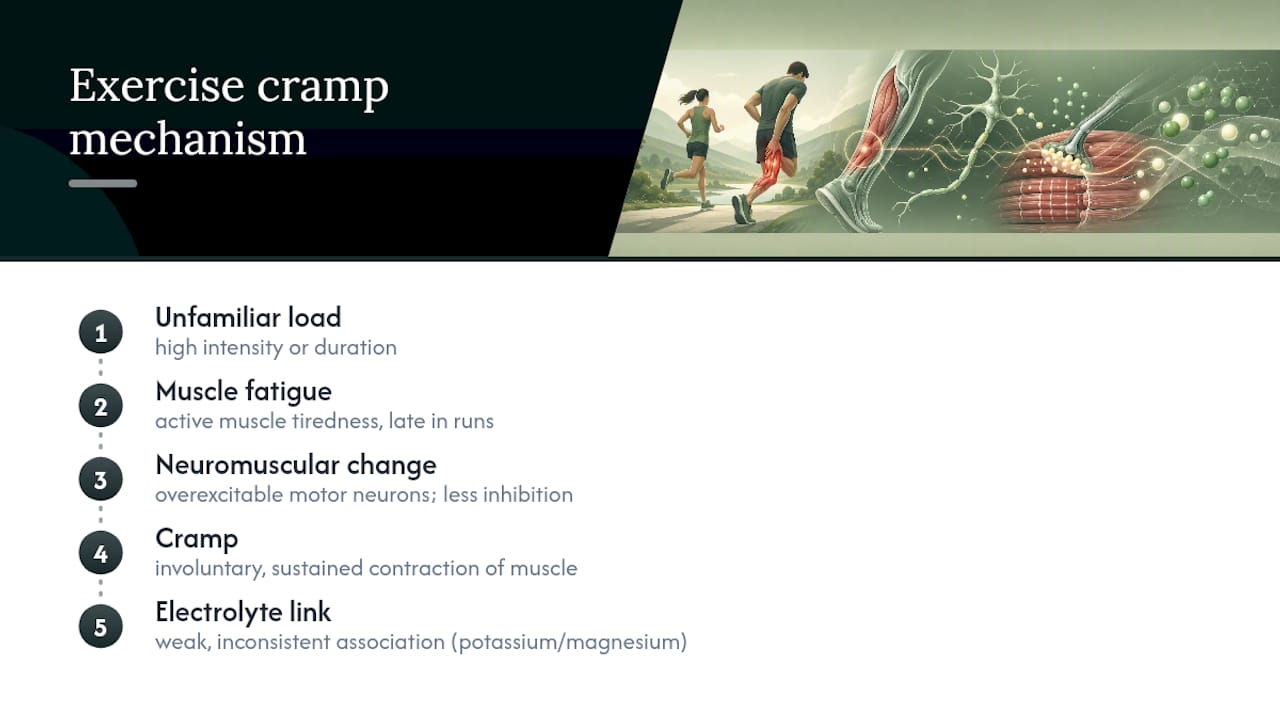
The electrolyte hypothesis hasn’t been abandoned, but it’s weaker than most runners assume. Some athletes who cramp do show higher post-race potassium, and there’s limited evidence linking magnesium levels to cramp incidence too, according to a meta-analysis in Muscle & Nerve. But these associations likely reflect broader physiological responses to hard effort and heat, not proof that low magnesium causes the cramp itself.
There’s also a practical wrinkle: serum magnesium is a poor marker of what’s actually happening inside your cells. A normal blood test doesn’t rule out functional deficiency, and an abnormal one doesn’t confirm it either.
What the trials actually measured (and where they fall short)
It’s worth looking closer at what these studies did and didn’t test, because the gaps explain a lot about why “magnesium for cramps” advice is so inconsistent online.
The Cochrane review pooled trial data primarily from older adults experiencing rest or nocturnal cramps, not athletes mid-exercise. Within that population, confidence intervals around magnesium’s effect crossed the line of no benefit, meaning the reviewers couldn’t rule out that magnesium does nothing at all for this group. Pregnancy-related cramp trials, sometimes cited as evidence magnesium works, showed inconsistent results across studies and used different doses, forms, and outcome measures, making them hard to compare, let alone generalise to a 10K runner on a Tuesday evening.
The athlete-specific reviews have their own limitations. Sample sizes tend to be small. Study durations vary from a few days of loading to several weeks. Some measured self-reported cramp frequency, others measured serum magnesium changes, and few measured both alongside actual performance outcomes. That heterogeneity makes it difficult to draw one clean conclusion.
What the reviews do agree on:
- No trial has tested magnesium against a placebo specifically for EAMC during running.
- Existing positive results come from unrelated populations (nocturnal cramps, pregnancy) that don’t map cleanly onto exercise physiology.
- Where athlete studies detect a signal, it usually involves sleep quality or subjective recovery, not cramp reduction itself.
- Elevated post-race potassium or magnesium in crampers is an association, not evidence of cause.
That last point matters. If magnesium supplementation reliably prevented cramps by correcting a deficiency, you’d expect trials to show it. Instead, the pattern researchers keep finding is that fatigue and neuromuscular control explain far more of the variance than mineral status does. That’s not a reason to ignore magnesium entirely. It’s a reason to stop expecting it to do a job the evidence doesn’t support.
When trying magnesium actually makes sense
Magnesium is worth considering if you have signs consistent with a genuine dietary shortfall: a diet low in wholegrains, nuts, and leafy greens, or a medical history involving conditions that affect absorption, such as colitis or long-term diuretic use. In these cases, correcting a real deficiency can improve muscle function generally, even if the direct anti-cramp effect during a run is unproven.
Be cautious about extrapolating from other populations. Pregnancy-related cramp studies and older-adult nocturnal cramp trials get cited constantly in supplement marketing, but neither reflects the physiology of a fatigued muscle mid-race. Different mechanism, different population, different applicability.
If you’re on medication for kidney function, heart rhythm, or blood pressure, check with a GP before starting a supplement. This matters if you’re taking calcium channel blockers such as diltiazem, since magnesium can interact with how these drugs affect the body, or if you have colitis, since flare-ups can affect mineral absorption and gut tolerance to supplemental magnesium. Testing is reasonable if cramping is frequent, severe, or paired with other symptoms like muscle weakness or irregular heartbeat, but go through a GP rather than guessing from a home test kit.
How to use magnesium safely if you decide to try it
If you’ve ruled out other causes and want to test whether magnesium helps, here’s how to do it properly rather than just buying whatever’s cheapest at the supermarket.
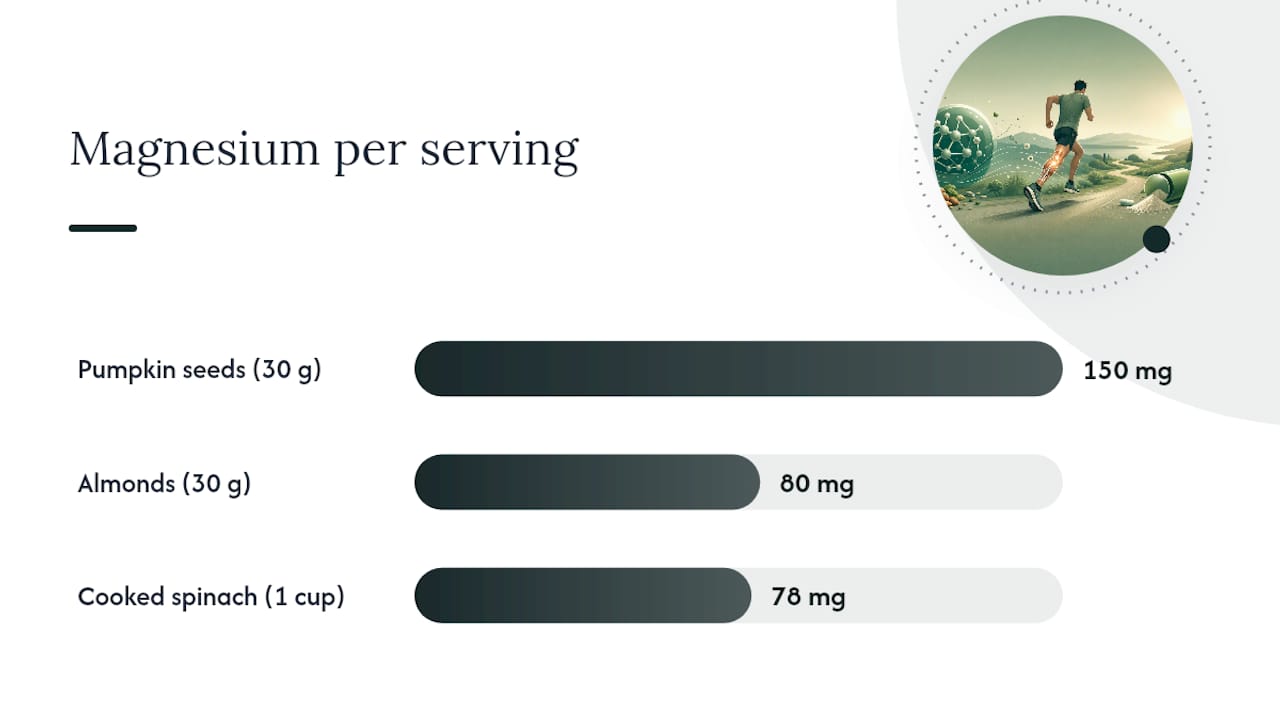
Start with food. Pumpkin seeds (roughly 150mg per 30g serving), almonds (around 80mg per 30g), spinach (about 78mg per cooked cup), and wholegrain oats all contribute meaningfully to daily intake. Getting closer to the recommended intake through diet first means you’re not relying on a pill to fix a plate problem.
- Choose a well-absorbed form. Magnesium bisglycinate (also called glycinate) is chelated, meaning it’s bound to an amino acid, which generally improves absorption and reduces the gut upset associated with cheaper forms like magnesium oxide. Citrate sits somewhere in between: reasonably absorbed but more likely to have a laxative effect at higher doses. Chelated magnesium forms tend to suit runners better precisely because gut tolerance matters when you’re training regularly.
- Start low and time it for the evening. A modest dose taken in the evening supports both the practical safety limits and the secondary benefit many runners actually notice, better sleep and recovery, rather than any acute cramp-stopping effect.
- Give it several weeks, not several days. If magnesium is correcting a real deficiency, expect gradual improvement over two to four weeks, not overnight relief.
- Keep a simple cramp diary. Note frequency, timing, and severity before and after starting, so you’re tracking a real signal rather than a hopeful guess.
Pro Tip: Log your cramps alongside your training load for a fortnight before changing anything. If cramps cluster after your hardest or longest sessions rather than randomly, that’s a fatigue pattern, not a magnesium one, and it changes what you should fix first.
Side effects are generally mild at sensible doses, mainly loose stools with higher amounts or with oxide forms. Modest supplementation is generally safe in healthy adults with normal kidney function, but if you’re on regular medication or have any kidney concerns, speak to a GP before starting.
What actually reduces cramp risk (try these first)
Given that fatigue and neuromuscular control drive most exercise cramps, the highest-probability fixes target those directly, not your mineral intake.
- Manage training load carefully. Sudden jumps in distance, pace, or hill volume are classic cramp triggers; progress by roughly 10% a week rather than doubling your longest run overnight.
- Add lower-limb strength work. Calf raises, hamstring curls, and single-leg stability drills two to three times weekly build the endurance that delays the fatigue point where cramps set in.
- Rethink hydration and salt. In hot conditions or heavy-sweat sessions, sodium-containing drinks can reduce cramp susceptibility for some runners, though results vary by individual sweat rate.
- Have an in-race plan. Gentle stretching, briefly shortening your stride, or walking for thirty seconds often interrupts a cramp faster than anything you’d carry in a pocket. Pickle juice has drawn attention for a rapid neural reflex effect rather than any electrolyte correction, but the effect is short-lived and inconsistent.
Training-focused prevention beats supplement-first thinking because it targets the mechanism the evidence actually supports.
Where magnesium fits in a sensible runner’s routine
Runcomplete builds its approach around what the evidence actually shows, not what sells more capsules. Magnesium bisglycinate suits runners managing a genuine dietary gap or looking for recovery and sleep support, not a guaranteed cramp cure. If you want more detail on how magnesium and electrolytes interact with cramp risk, or when muscle twitching signals something worth checking with a GP, those are covered in Runcomplete’s own electrolyte and cramp guidance and its piece on magnesium and muscle twitching.
— Tim
Ready by Runcomplete: a straightforward option, not a miracle cure
If you’ve read this far and decided a magnesium supplement is worth trying, alongside the training and hydration fixes that carry stronger evidence, Runcomplete’s approach is built for exactly that decision. Ready is a magnesium bisglycinate formula designed for runners seeking recovery and sleep support rather than targeting elite athletes or gym-focused consumers.

That distinction shapes the product. Bisglycinate is a form of magnesium that is often chosen for gentler absorption and better gut tolerance, and the capsules do not contain fillers. Ready is available as a one-off purchase at £34.99 or through a Subscribe & Save plan if you’d rather not reorder manually every month. Orders are backed by a 30-day guarantee, allowing customers to try the product with confidence.
Ready suits runners dealing with mild dietary insufficiency, disrupted sleep after long sessions, or general recovery support rather than as a substitute for addressing training load or hydration first. If you’re on regular medication or have kidney concerns, check with a GP before adding any supplement. For everyone else, it’s a simple evening addition worth trying alongside the training fixes covered above. Take a look at Ready and see whether it fits your routine.
This article is general information, not a substitute for advice from a qualified doctor. Consult a qualified healthcare professional about your own circumstances before acting on anything here.
Sources
- Magnesium for skeletal muscle cramps? Cochrane review summary with commentary — PMC
- Cause of exercise-associated muscle cramps (EAMC): altered neuromuscular control, dehydration or electrolyte depletion? — British Journal of Sports Medicine
- The effect of magnesium supplementation on exercise-related muscle cramp, recovery, performance and sleep in athletes: A systematic review — University of the Sunshine Coast
FAQ
Is magnesium safe to take with lamotrigine?
Magnesium doesn’t have a well-documented major interaction with lamotrigine, but any supplement added alongside epilepsy medication should be cleared with a GP first, since individual dosing and absorption can vary. Never adjust or add a supplement around seizure medication without medical guidance.
Can I take magnesium if I have colitis?
Possibly, but caution is warranted. Colitis can affect how minerals are absorbed and how your gut tolerates supplements, and magnesium in higher doses can cause diarrhoea, which may worsen flare symptoms, so check with a GP before starting.
What are signs a runner might need more magnesium?
Common signs discussed in relation to magnesium status include muscle twitching, fatigue, irregular heartbeat, and, in some cases, disrupted sleep, though none of these confirm deficiency on their own. If you notice several together, a GP can arrange proper testing rather than relying on symptoms alone.
Can I take magnesium supplements with diltiazem?
Magnesium can interact with calcium channel blockers like diltiazem, so this combination needs a GP or pharmacist’s input rather than a self-directed decision. Don’t start a magnesium supplement alongside heart or blood pressure medication without checking first.
Does Ready by Runcomplete stop cramps?
Ready is formulated to support recovery, sleep, and general magnesium adequacy for runners, not as a guaranteed cramp treatment, since no supplement currently has that evidence behind it. It’s priced at £34.99 as a one-off purchase, with a subscription option available for regular use.

