
Most runners do best keeping total magnesium intake (food plus supplement) somewhere around 300 to 400 mg a day, building on the NHS baseline of 300 mg for men and 270 mg for women. A conservative supplemental starting point is 100 to 200 mg of elemental magnesium, with some athlete studies going up to 300 to 500 mg combined. Stay under 400 mg from supplements alone, since the NHS flags that amount as the point where diarrhoea commonly kicks in, and check with a clinician if you’re unsure.
TL;DR:
- Most runners should aim for a total daily magnesium intake of 300 to 400 mg, combining food and supplements, with supplements starting at 100 to 150 mg.
- Supplementing up to 300 mg is generally safe for trained runners, but exceeding 400 mg from supplements alone increases the risk of diarrhea and should be avoided without medical advice.
- Magnesium bisglycinate is the optimal form for absorption and gut tolerance, making it preferred for recovery and sleep support over cheaper, poorly absorbed options like oxide.
- High-volume runners, those with restricted diets, or individuals with gut issues and older runners are more likely to benefit from supplementation due to increased loss or absorption challenges.
- Taking magnesium 30 to 60 minutes before bed, or post-training with meals, maximizes its benefits for sleep quality and muscle recovery without risking stomach upset.
Table of Contents
- How much magnesium do runners need?
- Who actually needs a magnesium supplement?
- Which magnesium form works best for runners?
- When should you take magnesium for the best results?
- Which foods provide the most magnesium?
- What are the safety limits and warning signs?
- What does a realistic dosing plan look like?
- Who’s behind this guidance?
- Why modest, consistent dosing beats chasing big numbers
- Make evening dosing simple with Ready
- Where this guidance comes from
- Sources
- FAQ
How much magnesium do runners need?
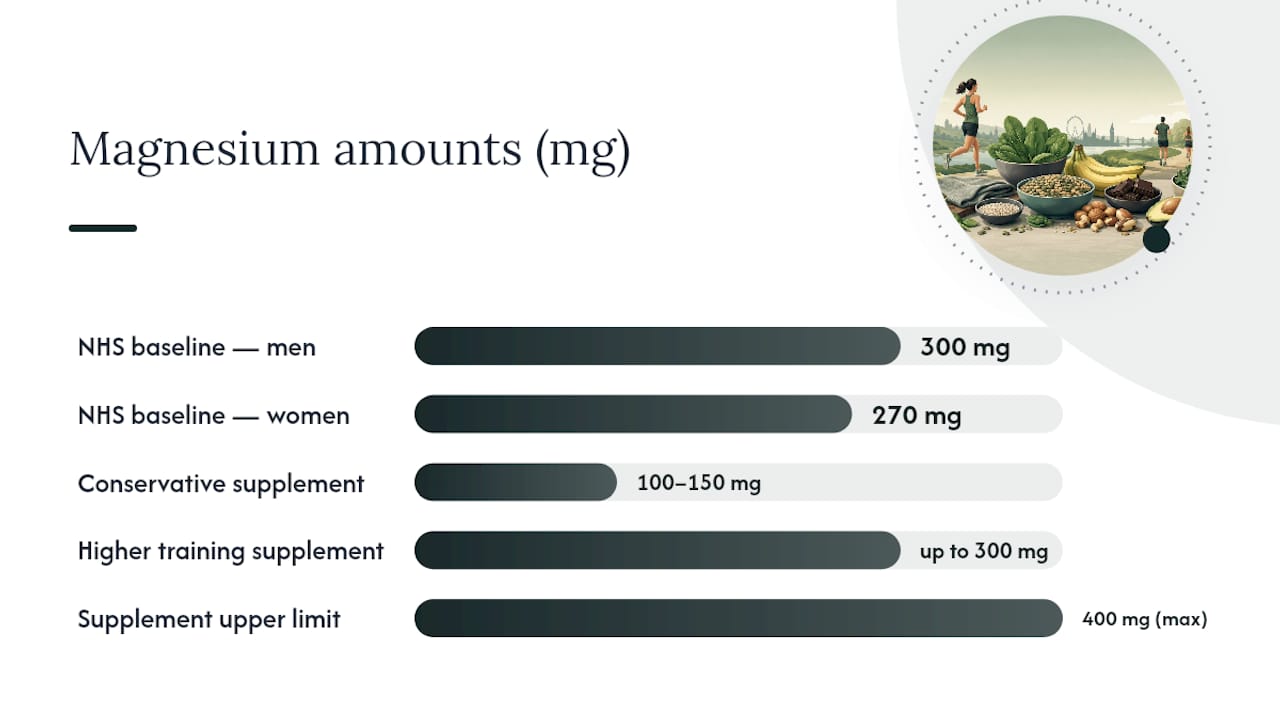
The NHS sets the baseline: 300 mg a day for men, 270 mg for women aged 19 to 64, achievable through diet alone for most people. Runners burn through more, though. A systematic review of magnesium and exercise recovery found supplementation in bioavailable forms reduced muscle soreness at 24 to 48 hours post-exercise, with many trials using combined intakes (food plus supplement) landing in the 300 to 500 mg range.
The tricky part is label reading. Magnesium compounds list total compound weight, not the amount your body actually absorbs. Check the “elemental magnesium” figure on the panel rather than the total compound weight.
Sensible starting points:
- Conservative baseline: 100 to 150 mg supplemental elemental magnesium daily, on top of dietary intake.
- Higher training load: up to 300 mg supplemental, split across two doses.
- Never exceed: 400 mg from supplements alone without medical guidance.
Who actually needs a magnesium supplement?
Not every runner needs to supplement. Some profiles carry genuinely higher risk of falling short, while others are probably fine on food alone.
- High-volume trainees logging 60+ km a week lose more magnesium through sweat and urine, particularly in warm conditions or during marathon block peaks.
- Restrictive dieters, including vegans and anyone running a calorie deficit, often struggle to hit dietary targets without deliberate planning.
- Runners with gut issues (IBS, coeliac disease, or anyone on long-term antacids) may absorb less magnesium regardless of intake.
- Older runners, since absorption naturally declines with age even when intake looks adequate on paper.
If you’re unsure which camp you’re in, try a simple seven-day food log comparing your intake against the NHS figures. Persistent cramping, poor sleep, or fatigue despite a decent diet are reasonable triggers to ask a GP or dietitian about a blood test.
Which magnesium form works best for runners?
Not all magnesium is equal, and the cheapest option on the shelf is usually the least useful one. Magnesium oxide has poor absorption despite carrying the biggest milligram numbers on the label, and it’s the form most likely to send you sprinting to the toilet rather than the finish line.
- Bisglycinate (glycinate): well absorbed, gentle on the gut, the practical choice for daily recovery use.
- Citrate: reasonably absorbed but has a mild laxative effect at higher doses, useful only if that’s actually the goal.
- Oxide: cheap, poorly absorbed, and the form most associated with stomach upset.
For runners specifically chasing sleep and recovery, bisglycinate outperforms oxide on tolerance largely because it’s chelated to an amino acid, which appears to ease gut absorption compared with cheaper salts.
Pro Tip: Check the label for “elemental magnesium” in brackets next to the compound name. If it only lists “magnesium oxide 500 mg” with no elemental breakdown, assume it’s a low-quality product and look elsewhere.
When should you take magnesium for the best results?
Timing changes what magnesium does for you. Take it 30 to 60 minutes before bed if sleep quality and nervous system recovery are the priority, since magnesium supports the processes involved in winding down. Pairing a dose with your post-training recovery meal can support muscle repair on hard days.
- Evening dose: 30 to 60 minutes before sleep, ideally with a light snack.
- Post-training dose: alongside your usual recovery meal.
- Split larger doses: two smaller doses absorb better than one large one and reduce the chance of loose stools.
- Race week: don’t introduce anything new. Chronic magnesium status built over weeks matters more than a last-minute dose.
Which foods provide the most magnesium?
Food should always be the first lever, not the supplement aisle. The BBC’s rundown of dietary magnesium sources points to leafy greens, nuts, seeds and wholegrains as reliable everyday contributors, alongside legumes and dark chocolate.
- A handful of almonds or cashews (roughly 80 mg per 30g serving).
- A portion of cooked spinach or other dark leafy greens (around 80 mg per 100g).
- Wholegrain bread or brown rice with most meals (adds 20 to 40 mg per serving).
- A square or two of dark chocolate (70%+) most evenings (roughly 50 mg per 20g).
Stack those together across a normal day and you can realistically land somewhere between 150 and 250 mg from food alone, before any supplement enters the picture. A quick seven-day log against the NHS targets tells you whether you’re already close or genuinely short.
What are the safety limits and warning signs?
The NHS is explicit here: supplements delivering more than 400 mg a day commonly cause diarrhoea, and that’s the ceiling worth respecting regardless of how well your training is going.
- Keep supplemental intake within 100 to 300 mg for most runners, reserving the top end for higher training loads.
- Anyone with kidney disease should speak to a doctor before supplementing, since impaired kidneys struggle to clear excess magnesium.
- Check interactions if you take certain antibiotics, blood pressure medication, or bisphosphonates, as magnesium can affect how these are absorbed.
- Loose stools, cramping, or nausea are signs to cut the dose immediately rather than pushing through.
If symptoms persist after reducing the dose, stop the supplement and get medical advice rather than guessing.
What does a realistic dosing plan look like?
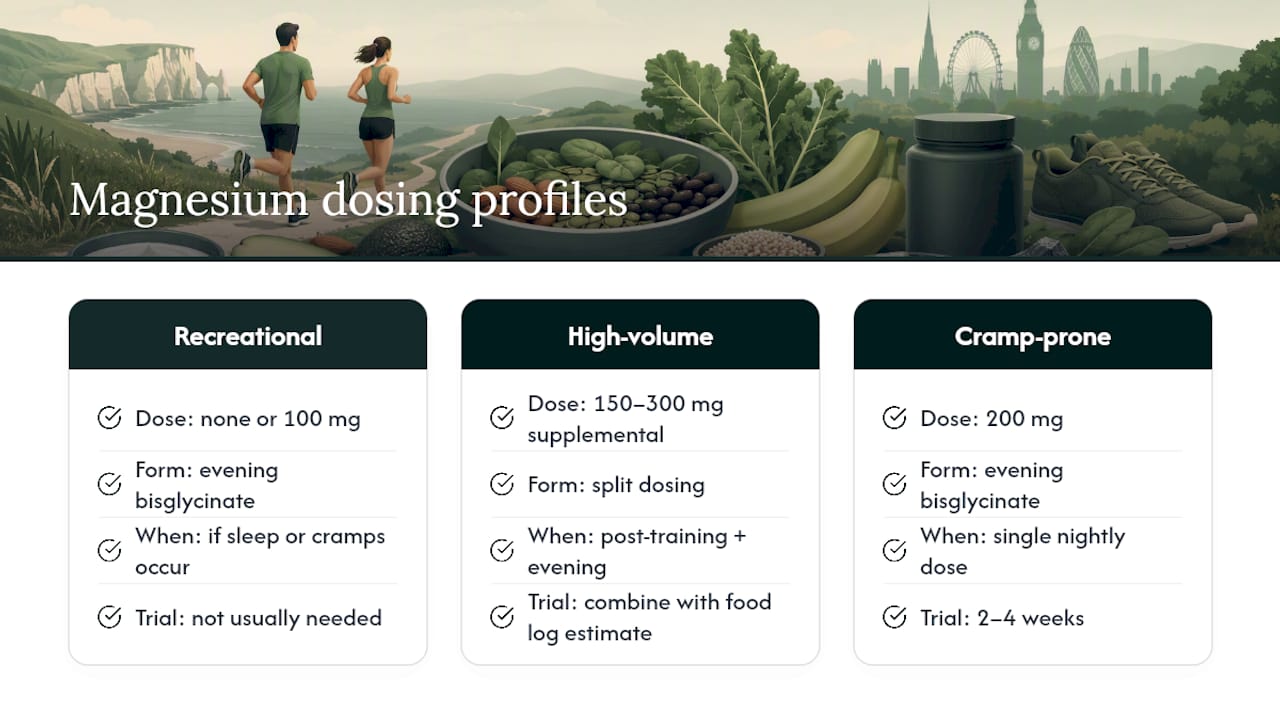
The recreational runner with a balanced diet: probably needs nothing extra, but a modest 100 mg evening bisglycinate can help if sleep is patchy or cramps show up occasionally.
The high-volume or marathon trainee: combine a dietary estimate from your food log with 150 to 300 mg supplemental, split between a post-training dose and an evening dose.
The cramp-prone or poor-sleeper: trial a single 200 mg evening bisglycinate dose for two to four weeks and track sleep quality and cramp frequency before adjusting. Benefits here tend to build gradually rather than appear overnight, so give it the full trial period before deciding it isn’t working.
Who’s behind this guidance?
This guide is written by Tim for Runcomplete’s running and recovery blog. Runcomplete specialises in magnesium bisglycinate formulated specifically for runners, and its own practitioner-informed dosing notes recommend 100 to 150 mg per dose as a well-tolerated, practical target for everyday training.
Why modest, consistent dosing beats chasing big numbers
Steady, boring dosing across several weeks does more for cramps and sleep than any single big dose ever will. Get the diet right first, keep supplements modest and consistent, and speak to a clinician if anything feels off.
— Tim
Make evening dosing simple with Ready
Runcomplete built Ready specifically for runners who don’t want to guess at forms or count elemental milligrams every night. It’s a chelated magnesium bisglycinate capsule, made in the UK, free from fillers, and suitable for vegetarians and vegans, designed around the practical 100 to 150 mg per dose range covered above.

Bisglycinate suits runners precisely because it’s well tolerated at the doses that matter for sleep and recovery, without the gut upset that oxide-based products often bring. Ready is available as a one-off purchase at £34.99, or through the Subscribe & Save plan for anyone who’d rather not reorder each month, both backed by a 30-day guarantee. If tonight’s the night you want to test an evening dose, check out Ready on the Runcomplete site and see how it fits your routine.
Where this guidance comes from
- NHS vitamins and minerals guidance: RDIs and safety limits.
- Systematic review, PMC: soreness reduction evidence.
- BBC Food: dietary source breakdown.
- Temple de la Fissure: independent form comparisons.
This article is general information, not a substitute for advice from a qualified doctor. Consult a qualified healthcare professional about your own circumstances before acting on anything here.
Sources
- Vitamins and minerals - Others | NHS
- Systematic review on magnesium and exercise recovery (PMC)
- Why magnesium is trending – and what it actually does | BBC Food
FAQ
How much magnesium should runners take daily?
Most runners do well aiming for total intake, food plus supplement, around 300 to 400 mg a day, close to the NHS recommended intakes of 300 mg for men and 270 mg for women. A supplemental dose of 100 to 200 mg elemental magnesium is a sensible starting point for most.
What is the best magnesium form for runners?
Bisglycinate (also called magnesium glycinate) offers the best combination of absorption and gut tolerance, making it the preferred choice for daily recovery use. Oxide is cheaper but poorly absorbed and more likely to cause stomach upset.
Can too much magnesium be harmful?
Yes. The NHS warns that supplemental doses above roughly 400 mg a day commonly cause diarrhoea, and higher amounts can be riskier for anyone with kidney problems. Stick to 100 to 300 mg supplemental for most training loads and speak to a doctor if you have any underlying health conditions.
When should I take magnesium for better sleep?
Take it 30 to 60 minutes before bed, ideally with a light snack, to support the nervous system’s wind down process. Splitting a larger dose between post-training and evening can also improve absorption and reduce the chance of an upset stomach.
How much does Runcomplete’s Ready cost?
Ready — Magnesium for Runners is priced at £34.99 as a one-off purchase, with a Subscribe & Save option also available on the Runcomplete site. Both options come with a 30-day guarantee.

