
Magnesium deficiency can trigger genuine neuromuscular symptoms, including twitching, but it’s rarely the reason behind an occasional flickering eyelid or calf twitch. Most benign twitching comes from caffeine, poor sleep, stress or overexertion, not electrolyte imbalance. Try lifestyle fixes first. If twitching persists for weeks, spreads, or comes with weakness or other symptoms, that’s your signal to speak to a GP about testing.
TL;DR:
- Most benign muscle twitches are caused by lifestyle factors such as caffeine, stress, poor sleep, dehydration, or overexertion, not magnesium deficiency.
- Magnesium supplementation has limited evidence for preventing cramps and is not a reliable fix for routine muscle twitches in healthy adults.
- People at risk of low magnesium typically have gastrointestinal, kidney, or medication-related conditions that impair absorption or increase loss, not dietary deficiency.
- Blood tests may not detect cellular magnesium deficiency, as most magnesium resides inside cells and bones, making symptoms and clinical context more important.
- Basic lifestyle adjustments like reducing caffeine, improving hydration, and ensuring good sleep are the first steps before considering magnesium supplements.
Table of Contents
- What causes muscle twitching, and when is it worth worrying about?
- What does the evidence actually say about magnesium and cramps or twitches?
- Who is actually at risk of low magnesium?
- Why a normal blood test doesn’t rule out low magnesium
- Safe, practical steps to address twitching
- What this means for runners specifically
- The gap between what magnesium promises and what it delivers
- Trying Runcomplete Ready if supplementation makes sense for you
- Sources
What causes muscle twitching, and when is it worth worrying about?
A fasciculation, the medical term for a muscle twitch, is a brief, involuntary contraction of a small bundle of muscle fibres. It’s usually focal (one spot, like an eyelid or calf), intermittent, and painless. That description covers the overwhelming majority of twitches people experience, and it maps almost exactly onto the everyday triggers most of us already recognise.
Common, benign causes include:
- Too much caffeine, particularly on an empty stomach
- Poor or insufficient sleep
- Psychological stress and anxiety
- Overexertion, including a hard training block or an unusually long run
- Dehydration
- Certain medications, including some diuretics and asthma inhalers
MedlinePlus lists exactly these factors as the usual suspects, and notes that persistent twitching is one of the reasons a clinician might check for electrolyte imbalances. Electrolyte issues, magnesium included, are a real but distinctly minor slice of the twitching picture. Far more people twitch because they had three espressos and four hours’ sleep than because their magnesium is low.
The twitches that deserve proper medical attention look different: progressive weakness, muscle wasting, twitching that spreads across multiple body regions, or twitching accompanied by systemic symptoms like unexplained weight loss. Isolated, painless twitches in an otherwise well person are almost never a sign of serious neurological disease.
Pro Tip: Keep a two-week log of when twitches happen. If they cluster after long runs, poor sleep, or a heavy coffee day, you’ve probably found your trigger without needing a single blood test.
What does the evidence actually say about magnesium and cramps or twitches?
The trial evidence for magnesium supplementation is a lot thinner than the supplement aisle would suggest. A Cochrane review of magnesium for skeletal muscle cramps found little clinically important benefit for idiopathic nocturnal leg cramps in older adults, mixed results in pregnancy, and no randomised trial evidence at all for exercise-associated cramps. That’s a notably weaker evidence base than most product marketing implies.
Moderate-quality evidence in older adults shows no clinically meaningful reduction in cramp frequency or severity with oral magnesium, and pregnancy trials produced inconsistent results.
It’s worth separating cramps from twitches here, because they’re not the same event and the research doesn’t treat them interchangeably. A cramp is a sustained, painful, involuntary muscle contraction. A fasciculation is a brief, usually painless flicker in a small group of fibres. Most of the magnesium trials studied cramps, not twitching, so even where a modest benefit exists for cramps, it cannot be assumed to carry across to benign twitches.
Clinical guidance is clearer on where magnesium genuinely matters: neuromuscular symptoms including twitching, tremor and spasm typically appear once serum magnesium drops below 0.5 mmol/L, though some patients become symptomatic in the 0.5 to 0.7 mmol/L range, according to hypomagnesaemia guidance from York Hospitals NHS Trust. That’s a specific, measurable threshold, not a vague association.
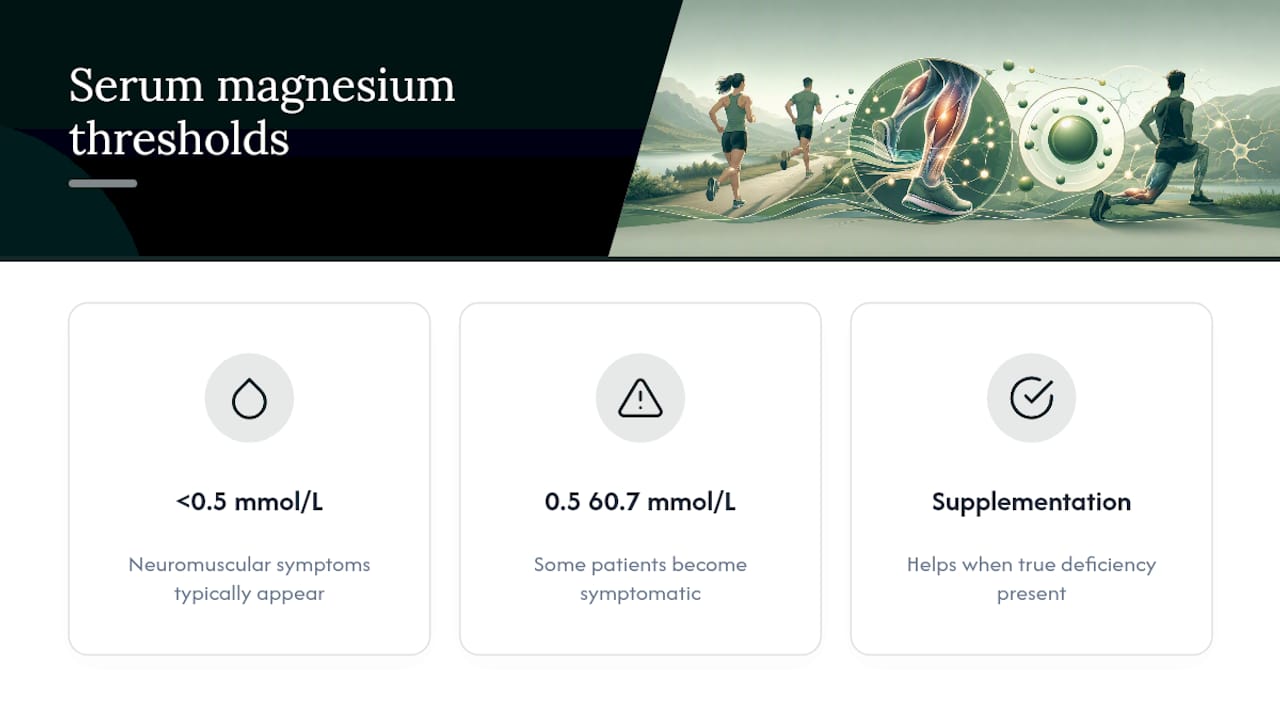
Put together, the honest interpretation is this: magnesium supplementation helps people who are actually deficient or in particular clinical contexts, such as pregnancy-related cramping under medical supervision. It is not a reliable fix for the common, benign twitch that most healthy adults experience from time to time.
Who is actually at risk of low magnesium?
Most people who eat reasonably varied diets don’t run genuinely low on magnesium. Deficiency clusters in specific groups, and if you don’t fall into one of these categories, magnesium is an unlikely explanation for your twitching.
- Malabsorption conditions – coeliac disease and inflammatory bowel disease both reduce how much magnesium the gut absorbs.
- Chronic diarrhoea – ongoing gut losses deplete magnesium faster than diet can replace it.
- Long-term proton pump inhibitor (PPI) use – acid-reducing medications taken for months or years are a recognised cause of low magnesium.
- Loop and thiazide diuretics – these increase magnesium loss through the kidneys.
- Chronic alcohol use – affects both intake and renal handling of magnesium.
- Uncontrolled diabetes – high blood glucose increases urinary magnesium loss.
- Older age – absorption tends to decline and multiple risk factors often overlap.
Clinicians rarely test magnesium in isolation. Hypomagnesaemia commonly coexists with low potassium and low calcium, according to the York Hospitals NHS Trust guidance, so a GP investigating persistent twitching will usually check all three together rather than magnesium alone.
The practical decision point is straightforward: if you’re in one of these risk groups and twitching is persistent, or if you notice red-flag symptoms such as weakness or muscle wasting, book a GP appointment rather than self-treating with supplements indefinitely.
Why a normal blood test doesn’t rule out low magnesium
Serum magnesium tests measure the magnesium floating in your blood, but roughly 99% of the body’s magnesium sits inside cells and bone, not in circulation. That mismatch means a blood test can come back “normal” while someone is still functionally deficient at the cellular level, a limitation described in clinical research on magnesium testing and intracellular stores.
Clinicians therefore work from published thresholds rather than a single healthy/unhealthy cut-off:
| Serum magnesium level | Clinical significance |
|---|---|
| Above 0.7 mmol/L | Generally considered adequate |
| 0.5–0.7 mmol/L | Symptoms can occur even here, especially with risk factors |
| Below 0.5 mmol/L | Symptomatic hypomagnesaemia typically manifests |
A borderline result doesn’t mean anything is wrong. Doctors interpret magnesium alongside potassium, calcium and the full clinical picture, and may treat empirically in someone with strong symptoms and a plausible risk factor even when the number sits at the edge of “normal.”
Safe, practical steps to address twitching
Start with the changes that cost nothing and carry no risk. Cut back caffeine, particularly in the afternoon and evening. Prioritise sleep consistency over sleep supplements. Rehydrate properly, especially after a long or hot run. If you’ve just come off a heavy training block, a short period of reduced load often settles twitching on its own, since most muscle twitching resolves with basic lifestyle adjustments rather than any supplement.
Food remains the first-line source of magnesium for most people:
- Pumpkin seeds and almonds (a small handful covers a meaningful share of daily intake)
- Spinach and other leafy greens
- Black beans and other legumes
- Dark chocolate (70% cocoa or higher)
- Wholegrain bread and brown rice
If diet alone isn’t practical, supplement forms vary considerably in tolerability. Magnesium oxide is cheap but poorly absorbed and the most likely to cause diarrhoea. Magnesium citrate absorbs better but can still loosen the bowels at higher doses. Magnesium bisglycinate (also called glycinate) is generally the gentlest on the gut, which is why it’s a common choice for daily use. A Cochrane review commentary on magnesium salt forms confirms oral magnesium is generally safe, with diarrhoea as the main dose-limiting side effect; injectable magnesium is reserved for acute clinical settings and isn’t relevant to everyday supplementation. For more detail on dosing bisglycinate specifically, see this magnesium glycinate dosage guide.
If you’re on PPIs, diuretics, or have kidney disease, speak to your GP before supplementing, since these conditions change both your risk and how your body handles extra magnesium.
Pro Tip: Give any dietary or supplement change three to four weeks before judging it. If twitching hasn’t improved by then, that’s a better prompt for testing than another month of guessing.
What this means for runners specifically
Training load changes magnesium demand in ways a desk job doesn’t. Heavy sweating increases mineral losses, and hard training blocks raise the body’s turnover of magnesium involved in muscle contraction and relaxation. That’s part of why tight calves after running and post-run twitching feel so common among people who’ve just increased mileage.
For most runners, dietary adjustment plus better recovery habits should come first. Short-term supplementation makes more sense during heavy training blocks, hot-weather racing, or when diet genuinely falls short. This is the gap Runcomplete’s Ready was built for: magnesium bisglycinate for tolerability, made in the UK, backed by a 30-day guarantee, aimed specifically at everyday runners rather than elite athletes chasing marginal gains.
The gap between what magnesium promises and what it delivers
The supplement industry has done a genuinely good job of making magnesium sound like a universal fix for anything muscular. It isn’t, and the trial evidence backs that scepticism up more than it backs the marketing claims.
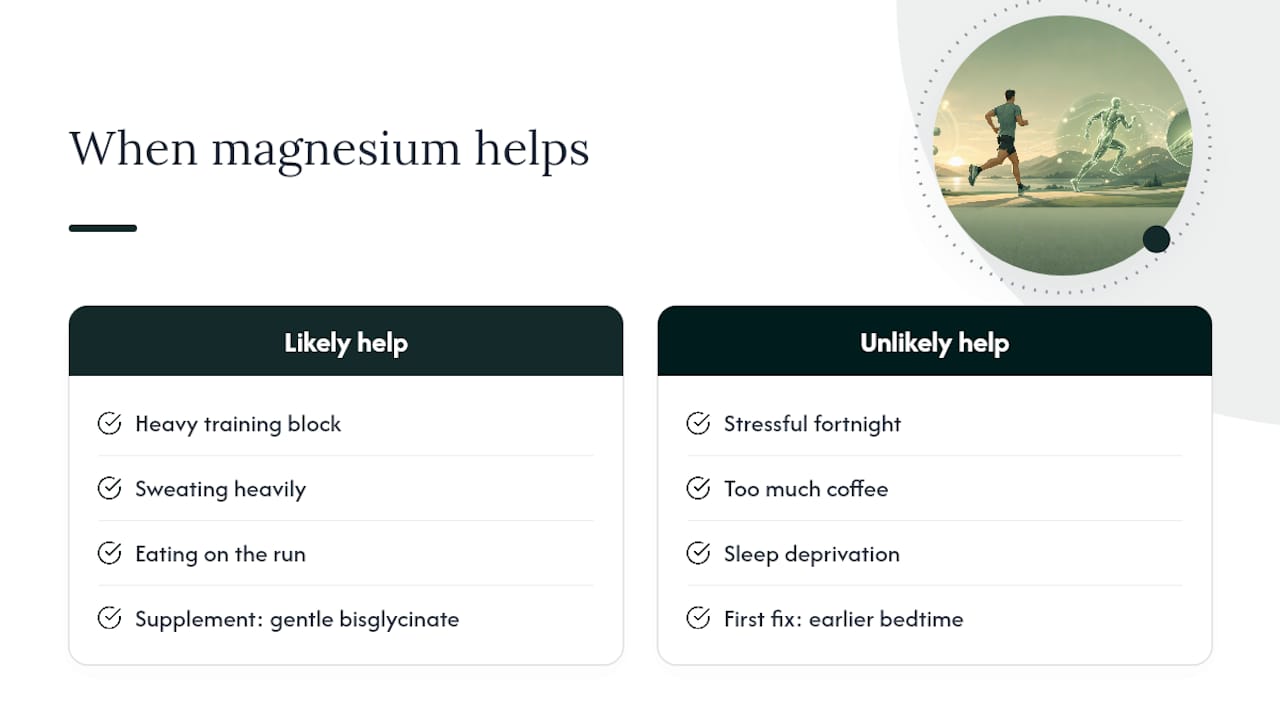
Where conventional advice falls short is in skipping straight to supplementation without asking the more useful question first: is this twitch actually a magnesium problem, or is it a sleep, caffeine, and training-load problem wearing a magnesium costume? Most of the time, it’s the latter.
That doesn’t make magnesium irrelevant. It makes it situational. If you’re a runner grinding through a heavy block, sweating heavily, and eating on the run, a gentle bisglycinate supplement is a sensible, low-risk addition. If you’re twitching because you’ve had a stressful fortnight and too much coffee, no supplement will out-perform an earlier bedtime. Prioritise the free fixes first, reserve testing for persistent symptoms with real risk factors, and treat supplementation as support, not a cure.
— Tim
Trying Runcomplete Ready if supplementation makes sense for you
If you’ve worked through the lifestyle checklist and still think a supplement is the right next step, Runcomplete Ready is worth a look. It’s built around magnesium bisglycinate specifically because that form tends to sit more comfortably in the gut than oxide or citrate, which matters if you’re already dealing with a sensitive stomach from training.

Every batch is UK-made, and it’s backed by a 30-day guarantee, so you’re not committing blind. It’s designed for the everyday runner managing tight calves, disrupted sleep, and recovery demands, not dosed for elite athletes chasing marginal percentages. If you’re on diuretics, PPIs, or have kidney disease, check with your GP before starting, since Ready supports recovery rather than replacing medical care for a genuine deficiency. Head to the nutrition and supplement guide to see how it fits into a broader recovery routine and get started.
This article is general information, not a substitute for advice from a qualified doctor. Consult a qualified healthcare professional about your own circumstances before acting on anything here.
Sources
- Clinical guidance: Hypomagnesaemia (York Hospitals NHS Trust)
- Magnesium for skeletal muscle cramps: Cochrane review summary and commentary (PMC7025716)
- Muscle twitching (MedlinePlus)

