
Most sore quads after running are delayed-onset muscle soreness, or DOMS, the ache from tiny muscle fibre damage caused by running downhill, sprinting, or simply doing more than your legs are used to. It peaks at 24 to 48 hours and usually fades within three to five days. If the pain is sharp, sits on one exact spot, or gets worse rather than better, stop running and get it checked.
TL;DR:
- Increasing weekly mileage by more than 10% or combining hill repeats with speed sessions significantly worsens quad soreness due to insufficient muscle adaptation.
- Proper running form, especially avoiding overstriding and landing heavily, reduces eccentric load and minimizes muscle fiber tears that cause soreness.
- Evidence suggests magnesium bisglycinate may help decrease perceived soreness when taken at 300 to 500mg daily, but it does not improve performance directly.
- Recovery strategies like gentle movement, ice in the first day, foam rolling, and gradually easing intensity are crucial within the first 72 hours after hard runs.
- Persistent or worsening pain beyond a week indicates injury requiring medical evaluation, not typical delayed-onset muscle soreness.
Table of Contents
- What causes quad soreness after running
- Is it normal soreness or an injury?
- How to relieve sore quads fast
- What the evidence says about nutrition, sleep and magnesium
- How to stop sore quads returning
- When to stop running and see a clinician
- A realistic view on quad soreness
- Where magnesium bisglycinate fits into recovery
- Sources
What causes quad soreness after running
Your quads take the brunt of eccentric loading, the lengthening contraction that happens every time your foot lands and your knee bends to absorb the impact. Downhill sections and interval sessions load the muscle this way far more than flat, steady running does, which is why a hilly race or a hard tempo session leaves your thighs wrecked while an easy jog barely registers. That eccentric stress causes microscopic tears in the muscle fibres, and the resulting inflammation is what you feel as soreness a day or two later.
Training errors make it worse. Jumping your weekly mileage up too fast, or stacking hill reps and speed sessions into the same week, gives your quads a shock they haven’t adapted to.
Running form plays a role too. Overstriding, landing with your foot too far ahead of your body, increases the braking force your quads have to absorb on every step. Weak glutes and hamstrings often push runners into “quad dominance”, where the front of the thigh does work the posterior chain should be sharing.
Common triggers worth knowing:
- Downhill running or hilly routes with sustained eccentric braking
- A sudden jump in weekly mileage or session intensity
- Overstriding, landing heavily with the foot ahead of the hips
- Weak hamstrings and glutes forcing the quads to overcompensate
- Occasionally, something other than DOMS: a muscle strain, tendon irritation, or a bone stress reaction
Is it normal soreness or an injury?
DOMS builds gradually, usually showing up the morning after a run rather than during it, and it tends to affect both legs fairly evenly. A strain feels different: the pain is often immediate or sharp, localised to one specific point, and frequently only on one side.
Gentle movement is the simplest test. DOMS eases as you warm up and move around; an injury usually gets worse with activity, not better. Watch the timeline too, since soreness that lingers well past five days or intensifies rather than fades is not typical DOMS.
Signs to take seriously:
- Sharp, stabbing pain in one exact spot rather than a general ache
- Pain that started suddenly during the run, not the next morning
- Swelling, bruising, or visible asymmetry between legs
- Pain that worsens with gentle movement instead of easing
- Any soreness still present, or getting worse, beyond seven days
How to relieve sore quads fast
The first 72 hours matter most for comfort and for stopping a minor niggle turning into something worse.
- Move, don’t rest completely. A 15 to 20 minute walk or an easy spin on the bike the day after a hard run increases blood flow to the muscle and takes the edge off stiffness far more than sitting still.
- Ice in the first 24 hours if swelling is present, then switch to heat. A warm bath or heat pack from day two onwards helps relax tight tissue once acute inflammation has settled.
- Foam roll in short bursts. Two to three minutes per muscle group is enough, according to physiotherapist guidance; longer sessions don’t add benefit and can leave you more tender.
- Drop the intensity, not the movement. Skip hill reps and speedwork until the soreness has genuinely eased, but keep easy running or cross-training going.
- Sequence your first three days: Day 1, walk and stretch gently. Day 2, easy cycling or swimming plus foam rolling. Day 3, a short, slow jog if the soreness has clearly reduced.
Pro Tip: Foam roll before bed rather than first thing in the morning. Muscles are more pliable after a day of movement, and it sets you up for a more comfortable night’s sleep.
What the evidence says about nutrition, sleep and magnesium
Recovery is largely a nutrition and sleep problem, not just a stretching one. Aim for 20 to 30g of protein within a couple of hours of a hard run to support muscle repair, and don’t under eat afterwards. Replacing fluid and sodium lost through sweat matters more on hot or long runs than most casual runners assume.
Magnesium has the most interesting evidence of any single nutrient here. A downhill running trial found that 500mg a day for a week reduced perceived soreness and the inflammatory marker IL-6 in the 24 to 72 hours afterwards, compared with a low-magnesium control. A broader systematic review of the evidence found a similar pattern across four eligible studies covering 73 participants in total, at doses of 300 to 500mg a day, though the trials were small and the researchers called for larger studies before drawing firm conclusions.
- Food first: leafy greens, nuts, seeds and wholegrains are all solid magnesium sources.
- If supplementing, magnesium bisglycinate is gentler on the stomach than cheaper forms like oxide.
- Check with a pharmacist or GP if you take other medication, since magnesium can interact with some.
None of the trials measured a performance boost, only reduced soreness, so treat magnesium as a comfort aid alongside training and food, not a substitute for either.
How to stop sore quads returning
Prevention comes down to four habits, and none of them require a coach or a gym membership you’ll never use.
- Respect the 10% rule loosely. Increasing weekly mileage by more than roughly 10% at a time is one of the most common routes to excess soreness and injury. Add distance or hills gradually, never both in the same week.
- Strength train twice a week. Squats, step-ups, and slow, controlled lunges build the eccentric strength that protects your quads on descents. Two sessions of 20 to 30 minutes, working to a moderate effort rather than failure, is enough for most casual runners.
- Fix your form on descents. Shorten your stride, lift your cadence slightly, and lean a touch from the ankle rather than braking with straight legs. It cuts the impact force your quads have to soak up.
- Rotate shoes and space out hard sessions. Alternating between two pairs of trainers changes the load pattern slightly, and giving 48 hours between quad-heavy sessions gives the muscle time to actually repair.
When to stop running and see a clinician
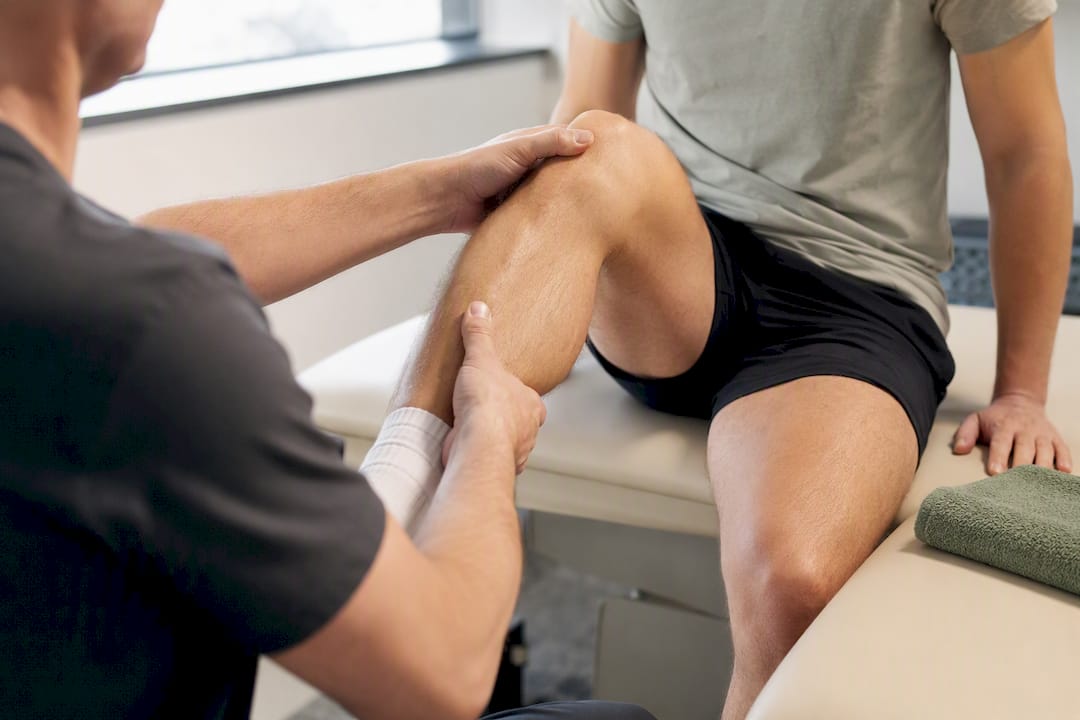
Stop immediately if you feel a pop at the moment of injury, see significant swelling or bruising, or can’t bear weight on the leg. Those are classic strain signs, not soreness. Pain that persists beyond seven days, or gets worse rather than better, also needs assessment. A physiotherapist or sports doctor will usually check strength, range of motion, and tenderness, then build a short rehab plan if there’s genuine damage rather than DOMS.
A realistic view on quad soreness
Sore quads after a hard session aren’t a sign something’s gone wrong. They’re the expected cost of asking your legs to do something new, whether that’s a hillier route or a faster pace than usual, and they’ll happen again the next time you push a boundary. That’s not a failure of training, it’s how adaptation works.
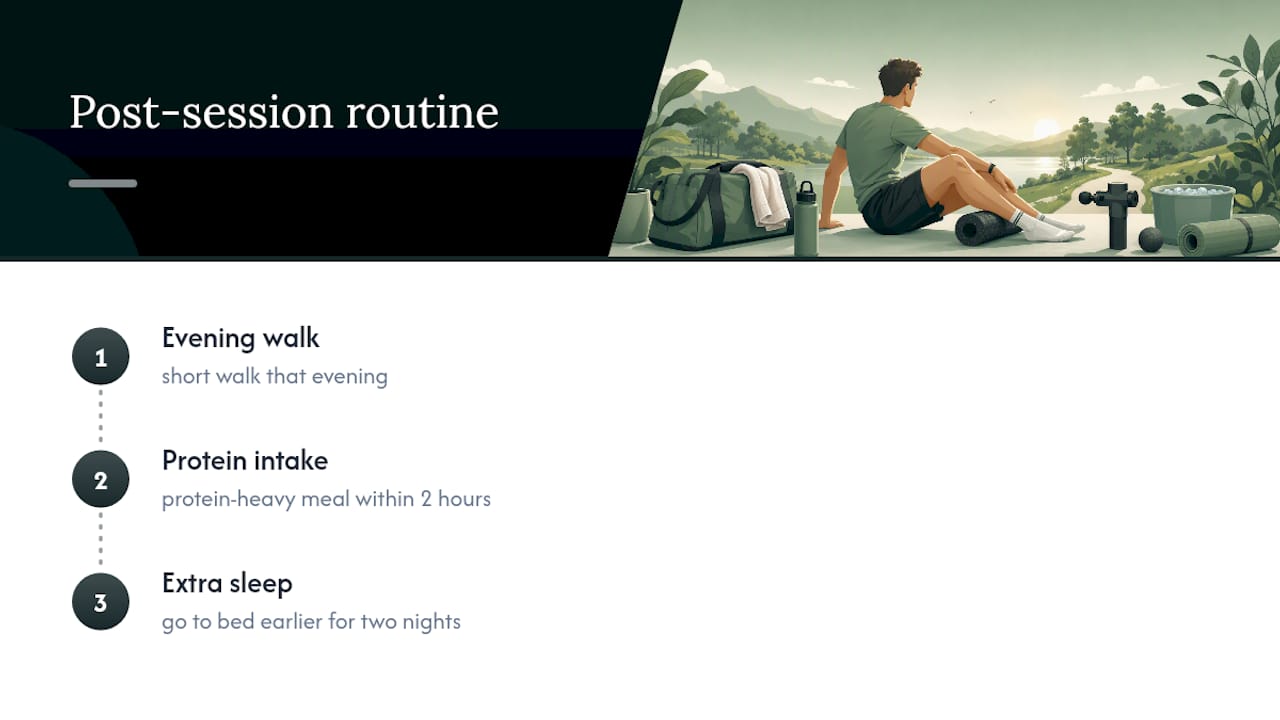
My own routine after anything brutal is simple: a short walk that evening, something protein heavy within a couple of hours, and getting to bed earlier than usual for the next two nights. Sleep does more for muscle repair than any single product on the shelf. For more detail on the magnesium research specifically, Runcomplete’s guide to magnesium and DOMS goes deeper than space allows here.
— Tim
Where magnesium bisglycinate fits into recovery
If you’re weighing up whether a supplement is worth adding to your recovery routine, magnesium bisglycinate is worth understanding on its own terms. It’s a chelated form of magnesium bound to the amino acid glycine, which tends to sit more comfortably in the stomach than cheaper forms and is one reason some runners choose it specifically around training. Some magnesium bisglycinate supplements are built specifically for recovery and sleep support for everyday runners, rather than elite athletes chasing marginal performance gains.
The evidence is genuinely encouraging but not a guarantee. Small trials show reduced perceived soreness at doses of 300 to 500mg a day; none show a magic fix. Start at the lower end of that range, check with a pharmacist if you’re on other medication, and give it a week or two before judging the effect. Some supplements are made without unnecessary fillers, suitable for vegetarians and vegans, and come with a satisfaction guarantee. If you’re building your recovery habits from scratch, Runcomplete’s nutrition guide for beginner runners is a sensible place to start before you add anything else to the mix.
Sources
- One-week of magnesium supplementation lowers IL-6, muscle soreness and increases post exercise blood glucose in response to downhill running
- Systematic review on magnesium supplementation and muscle soreness
- How do I fix sore quads after running?
- How to recover from leg soreness during peak marathon training

