
Waking up with heavy legs isn't a badge of honour. It's a sign your routine is missing a vital step. You've likely felt that leaden feeling in your calves the morning after a solid session. It makes the thought of your next run feel like a chore rather than a choice. We understand that you aren't training for an Olympic podium; you're training for life. That’s why we’ve built this practical post run recovery checklist to help you wake up feeling fresh and keep your running streak alive.
You don't need a pair of $799 compression boots to see real results. We promise a straightforward approach that fits into a busy schedule. You'll learn how to nail your protein intake within that critical 30 to 60 minute window and why 7 to 9 hours of quality sleep remains your most powerful tool. We'll strip away the complex jargon and focus on the essentials. From the "golden hour" of nutrition to the restorative power of magnesium, these steps ensure your habit remains sustainable. Let's get your legs back under you.
Key Takeaways
- Stop heavy legs by mastering the "golden hour" and avoiding an abrupt stop after your run.
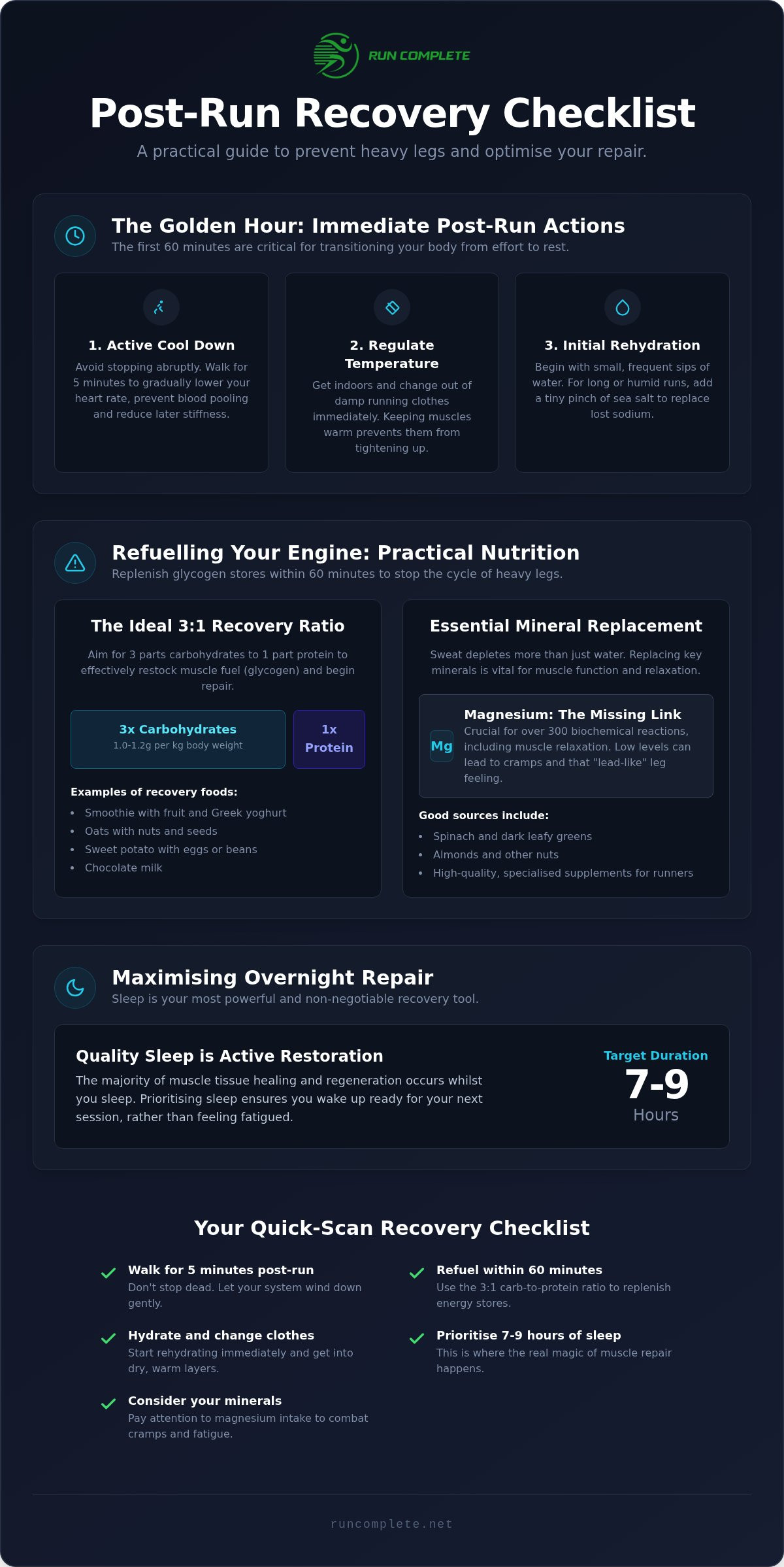
- Refuel effectively with a simple 3:1 ratio of carbohydrates to protein to replenish your energy stores.
- Use this practical post run recovery checklist to turn passive rest into active restoration for your muscles.
- Optimise your overnight repair window where the majority of muscle tissue healing occurs while you sleep.
- Track your consistency with easy morning metrics to ensure you're ready for the next session.
The Golden Hour: Immediate Post-Run Actions
Most recovery guides focus on the days following a marathon. If you are an everyday runner balancing a job and a family, you don't have three days to spend on the sofa. You need to be ready for work in an hour and ready for your next run in two days. The first 30 minutes after you finish are the most vital part of your post run recovery checklist. This window is about transitioning your body from high effort to a state of rest without a system shock.
Don't stop dead at your front door. It is tempting to hit "stop" on your watch and immediately sit down, but this often leads to blood pooling in your legs. This can cause dizziness and unnecessary stiffness later. Instead, keep moving. A simple five-minute walk allows your heart rate to decline gradually. It keeps your circulation active, which helps flush out metabolic waste and can reduce the severity of Delayed Onset Muscle Soreness (DOMS) that usually hits 24 hours later.
Temperature regulation is equally important, especially in the damp British climate. You might feel like you are glowing when you finish, but your core temperature will plummet once the sweat starts to cool. Get indoors quickly. Peel off damp layers and get into dry clothes immediately. Cold muscles tighten up; keeping them warm in these first few minutes prevents that "locked-in" feeling in your calves and lower back.
Cooling Down Without the Fuss
You don't need a complex yoga routine to cool down effectively. Keep your movements dynamic and functional. Whilst you are on your five-minute walk, focus on opening up your hips. Take slightly longer strides than usual. Give your legs a gentle shake out to release immediate tension in the quads and hamstrings. The goal is to feel loose, not to push your flexibility to its limits whilst your muscles are fatigued.
Initial Rehydration Strategy
The "Golden Hour" for rehydration starts the moment you finish. Don't make the mistake of gulping down a litre of water in one go; your body won't absorb it efficiently. Start with small, frequent sips. You need to replace the fluids lost through sweat to maintain blood volume and support nutrient delivery to your muscles. If it was a particularly humid morning or a long session, adding a tiny pinch of sea salt to your water can help replace lost sodium. This simple addition to your post run recovery checklist helps prevent the headaches and lethargy that often follow evening runs.
Refuelling Your Engine: Practical Nutrition
Once you have finished your cool-down walk, your focus must shift to internal repair. Think of your body like a battery that has just been drained. To stop the cycle of heavy legs, you need to recharge effectively. The next 60 minutes are vital for replenishing glycogen stores. This is the fuel your muscles use to function. If you skip this step in your post run recovery checklist, you are essentially starting your next run on empty.
Science suggests aiming for a 3:1 ratio of carbohydrates to protein. Research from the Academy of Nutrition and Dietetics confirms that post-workout nutrition is most effective when consumed shortly after exercise. You should aim for 1.0 to 1.2 grams of carbohydrates per kilogram of body weight to restock those energy stores. Pair this with 1.4 to 1.6 grams of protein per kilogram of body weight across your day to help repair muscle fibres. For many hobbyists, liquid nutrition like a smoothie is easier to stomach than a heavy meal immediately after a session.
What to Eat for Running Fatigue
Focus on anti-inflammatory whole foods that support long-term health. Complex carbohydrates like oats, brown rice, or sweet potatoes provide a steady release of energy. Combine these with lean proteins such as Greek yoghurt, eggs, or plant-based alternatives. If you often feel wiped out after your sessions, it helps to understand what to eat for running fatigue specifically. Choosing the right fuel keeps your blood sugar stable and stops that mid-afternoon crash.
Mineral Replacement for Heavy Legs
Sweat takes more than just water from your system. It drains essential minerals that your muscles need to relax and contract properly. Potassium and sodium are often the focus, but magnesium is the missing link for most everyday runners. It is responsible for over 300 biochemical reactions, including muscle relaxation and nerve function. When your magnesium levels are low, your legs feel like lead and cramps become more frequent.
Replacing these minerals is a non-negotiable part of a solid post run recovery checklist. Whilst whole foods like spinach and almonds help, they often aren't enough to counteract the depletion from regular training. This is why many runners find that a specialised supplement makes the difference. You might consider using a high-quality magnesium for runners to ensure your levels stay topped up. This simple addition helps quieten the nervous system and prepares your body for the most important recovery tool of all: sleep.
Managing Muscle Soreness and Heavy Legs
Your legs feel like lead. Every step on the stairs feels like a struggle. This is usually the result of micro-tears in the muscle fibres and a build-up of fluid. While some experts suggest three days of total rest, this often makes stiffness worse for the hobbyist runner. Total stillness allows the muscles to shorten and tighten. A better approach for your post run recovery checklist is active recovery. Gentle movement keeps the blood flowing without adding more stress to the system.
Foam rolling is a brilliant tool for targeted tension release. Don't just roll aimlessly. Focus on the areas that feel the tightest. Spend 30 to 60 seconds on each "hot spot" to help break up adhesions in the fascia. If you spend your day sitting at a desk, your circulation can stagnate. Elevation is a simple fix. Lie on the floor with your legs up against a wall for ten minutes. This helps drain fluid from your lower limbs and reduces that swollen, heavy sensation. For those looking for a broader medical perspective, Mayo Clinic's post-race recovery guide suggests similar multi-phase steps to manage this physical load.
Compression socks are another practical addition. They aren't just for long-haul flights. Wearing them during the workday after a morning run can improve venous return. This keeps your legs feeling "light" even when you've put in the miles. It's a low-effort way to maintain your habit without the morning-after dread.
Mobility Over Static Stretching
Avoid aggressive static stretching immediately after a run. Your muscles are tired and potentially damaged. Yanking on them can cause more harm than good. Instead, choose gentle, yoga-inspired mobility. Focus on the calves, hamstrings, and glutes. Use slow, controlled movements to take the joints through their natural range of motion. This encourages flexibility whilst respecting the body's need to heal.
The Role of Magnesium in Muscle Repair
Magnesium is essential for regulating muscle contractions. When your levels are low, your muscles struggle to fully relax. This leads to the classic "heavy leg" feeling and occasional night cramps. It acts as a natural calcium blocker, helping your muscles reset after the repeated firing of a run. To understand the science behind specific forms of the mineral, read more about magnesium bisglycinate for runners. Choosing the right form ensures you get the most out of your post run recovery checklist without digestive upset.
Maximising Overnight Repair for Better Sleep
Sleep is not just passive downtime. It is the most active phase of your post run recovery checklist. Most runners don't realise that roughly 90% of muscle tissue repair occurs whilst you are asleep. If you aren't clocking 7 to 9 hours of quality rest, you are essentially undoing the hard work you put in on the pavement. For the everyday runner, sleep is the ultimate performance enhancer. It is the time when your body adapts to the stress of exercise and builds back stronger.
Running late in the evening can be a double-edged sword. While it fits a busy schedule, the physical stress spikes your cortisol levels. High cortisol makes it difficult for your brain to switch off. This leads to a restless night and heavy legs the next morning. You need a dedicated wind-down routine to signal to your nervous system that the work is done. Lowering the lights and stepping away from screens helps. However, your internal chemistry often needs more direct support to transition from a high-energy state to deep sleep. This is where mineral support becomes a non-negotiable part of your evening.
Why Magnesium Bisglycinate is Different
Many runners reach for cheap magnesium oxides found on supermarket shelves. These often cause digestive issues and have poor absorption rates. Magnesium bisglycinate is different. It is bonded to the amino acid glycine. This allows the mineral to pass through the gut easily without causing a laxative effect. This specific bond makes it far more effective for physical restoration than other forms. Magnesium bisglycinate is the preferred form for nocturnal muscle repair because it supports both physical muscle relaxation and a calm mind.
Overnight Leg Recovery with Ready
We designed Ready specifically to bridge the gap between a busy day and a restorative night. It focuses on that critical overnight window where your body does its best work. Taking Ready approximately 30 minutes before bed helps quieten the "twitchy" feeling in your calves that often follows a hard session. It is a simple, fuss-free addition to your routine that yields massive results for your consistency. If you want to explore more ways to optimise your rest, check out our guide on natural sleep aids for runners.
Consistency is built on readiness. By prioritising your sleep, you ensure you aren't just dragging yourself through your next session. You can order Ready today to start waking up with fresh legs instead of leaden ones. It is the final, most important step in ensuring you can run again tomorrow.
Consistency: The Final Step in the Checklist
Consistency is the real secret to running. It isn't about one massive session or a single personal best. It's about being able to lace up your trainers again in two days without dread. The final part of your post run recovery checklist actually happens the morning after your run. This is when you decide if your recovery strategy worked. Check your resting heart rate before you get out of bed. If it's significantly higher than your normal average, your body is still under stress. Listen to that data. It's your body's way of asking for an extra hour of rest.
Assess your muscle soreness on a scale of 1 to 10. A score of 3 or 4 is a green light for your next session. A score of 7 or 8 means you need more time. Everyday runners often fall into the trap of "pushing through" because they feel guilty about missing a run. This mindset usually leads to injury or long-term burnout. If your legs feel like lead, don't be afraid to swap a scheduled run for a brisk walk. A 20-minute walk keeps the habit alive. It encourages blood flow without damaging your muscle tissue further. Consistency is about staying healthy for the long term. It isn't about winning a trophy this weekend. It's about being able to run for years to come.
The "Ready to Run" Self-Assessment
Ask yourself three specific questions before your next session. Are your legs just heavy, or is there actual pain in the joints? Did you sleep through the night, or did you toss and turn with "restless legs"? Finally, is your energy level sufficient for a busy workday? If you feel wiped out before you even start your job, your body is telling you it needs more time. This self-assessment is as important as the miles you run. It prevents the mental fatigue that stops most hobbyists from sticking to a plan. It turns a "failed" run into a "successful" recovery day.
Building a Sustainable Habit
Make your recovery as automatic as your run. Keep your post run recovery checklist visible. Stick it on the fridge or keep it in your gym bag. Simple, repeatable habits lead to long-term success. You don't need to be an elite athlete to benefit from a structured approach. You just need to be prepared. Focus on the basics: cooling down, refuelling, and prioritising your rest. For more advice on supporting your body through every mile, check out our Best Supplements for Runners guide. It helps you find the options that actually work for everyday training. Consistency is the goal. Recovery is how you get there.
Run Stronger Tomorrow
Your next run starts the moment this one ends. Recovery isn't a luxury. It is the fuel for your habit. By following this post run recovery checklist, you've moved from passive rest to active restoration. You've mastered the golden hour. You've refuelled with purpose. Most importantly, you've prioritised the overnight repair window where the real healing happens.
Consistency is built on waking up ready. You don't need a professional team to feel fresh. You just need the right minerals and a simple routine. We've stripped away the fillers. We focus on what works for the everyday runner. Ready is for those who value long-term health and a sustainable streak.
Take the final step in your routine tonight. Optimise your overnight recovery with Ready — Magnesium for Runners. We offer free UK delivery and a 30-day money-back guarantee. There are no unnecessary fillers; just pure support for your legs. Keep the habit alive. We'll see you on the pavement.
Frequently Asked Questions
How long should a post run recovery routine take?
A basic routine takes about 15 to 20 minutes to complete. Spend five minutes walking to lower your heart rate gradually. Follow this with five minutes of targeted foam rolling and ten minutes for rehydration and a recovery snack. This short time investment is enough to stop your legs from seizing up. It fits easily into a lunch break or a busy evening schedule without feeling like a chore.
Is it better to stretch or foam roll after a run?
Foam rolling is generally better than static stretching immediately after a run. It targets specific knots in the fascia without the risk of overstretching tired muscle fibres. Static stretching on cold, fatigued muscles can sometimes lead to minor strains. Save the deep, long-hold stretches for your dedicated mobility days. This approach keeps your muscles supple without adding unnecessary stress to your system right after a session.
Why do my legs feel so heavy the day after running?
Heavy legs are usually caused by a combination of muscle micro-tears, fluid retention, and mineral depletion. When you run, you lose essential minerals like magnesium through your sweat. This depletion makes it harder for your muscles to relax properly. Including mineral replacement in your post run recovery checklist helps clear this leaden feeling. It ensures your body has the raw materials it needs to flush out waste and rebuild.
When is the best time to take magnesium for running recovery?
The best time to take magnesium for recovery is 30 minutes before you go to bed. This timing aligns with your body's natural repair cycle that peaks during deep sleep. It helps your muscles relax and your nervous system settle just as you enter your most restorative phase. Taking it too early in the day might be less effective for tackling the specific muscle tightness that ruins your sleep.
Should I take a cold or hot shower after running?
A lukewarm or tepid shower is the most practical choice for most hobbyists. Very hot water can actually increase inflammation and swelling in tired joints. While ice baths are popular with professionals, they aren't necessary for someone running three or four times a week. A moderate temperature helps your body return to its baseline state without causing a shock to your circulatory system or skin.
Can I run every day if I follow a recovery checklist?
You can run frequently, but running every day is rarely sustainable for the average person. A complete post run recovery checklist should always include at least one or two full rest days each week. These breaks are when your fitness actually improves as your tissues rebuild stronger. Constant training without a pause leads to diminishing returns and eventual burnout. Focus on the quality of your recovery to keep your streak alive.
Does magnesium bisglycinate help with restless legs at night?
Magnesium bisglycinate is specifically helpful for calming restless legs and evening muscle twitches. Because it is bonded to glycine, it is absorbed more efficiently and is gentler on the stomach than cheaper oxides. It helps quieten the nervous system, which stops that "twitchy" sensation that prevents deep sleep after late sessions. This makes it an essential tool for runners who struggle to switch off after an evening run.
What is the most important part of post-run recovery?
High-quality sleep is the single most important part of any recovery routine. No amount of expensive gear or complex stretching can replace 7 to 9 hours of rest. This is the only window where your body performs 90% of its structural repair and balances your hormones. If you nail your sleep, every other part of your checklist becomes more effective. Prioritise your bedroom environment to ensure your hard work on the road pays off.

