
If your calf seizes up mid-run, stop or slow down and hold a gentle static calf stretch for a short period. Most mid-run cramps are exercise-associated muscle cramps caused by local muscle fatigue, not dehydration, so the long-term fix is building calf and posterior chain strength and managing how hard and fast you train, not just drinking more water.
TL;DR:
- Most calf cramps during running are caused by neuromuscular fatigue from overuse or sudden increases in training load, not dehydration or electrolyte imbalances.
- Immediate relief involves stopping, stretching, and gentle massage, while cooldown routines can help prevent cramps by supporting muscle relaxation after runs.
- Building calf strength gradually through eccentric exercises over several months and avoiding sharp increases in volume or intensity reduces cramp risk.
- Magnesium and potassium supplements lack strong evidence as mid-run cramp cures, though magnesium may assist recovery and sleep quality.
- When cramps persist despite training adjustments, symptoms like swelling or numbness warrant urgent medical evaluation to rule out serious conditions such as blood clots.
Table of Contents
- What causes calf cramps when running?
- How do you stop a calf cramp during a run?
- How can you prevent calf cramps while running?
- Do magnesium or potassium actually stop cramps?
- When should you see a doctor about calf cramps?
- How do you recover a calf muscle after a cramp?
- Is it a cramp, a strain, or something more serious?
- Do warm-ups and cool-downs actually prevent calf cramps?
- Does running technique affect calf cramps?
- What triggers calf cramps most often in runners?
- What does an evidence-first approach to calf cramps actually mean?
- Try Ready alongside your training changes
- Sources
What causes calf cramps when running?
An exercise-associated muscle cramp, or EAMC, is an involuntary, painful contraction of the calf that hits during or straight after a run. It is not the same thing as a muscle strain or a nutrient deficiency. The dominant explanation now points to neuromuscular fatigue: as a muscle tires, the balance between the nerve signals that excite it (via muscle spindles) and the ones that calm it down (via Golgi tendon organs) tips towards excitation. The muscle fires when it shouldn’t, and it doesn’t let go.
Several things push a calf towards that tipping point:
- Local muscle overuse, particularly in calves that are not accustomed to the volume or intensity you’re asking of them.
- Running with a shortened calf position for long periods, which forefoot or midfoot strikers sometimes experience more than heel strikers.
- A sudden jump in training load, pace, or distance without time to adapt.
- A history of cramping. If you’ve cramped before, prospective cohort data links previous cramps to a higher risk of it happening again.
- Heat and heavy sweating, which act as modifiers that can bring fatigue on faster rather than causing cramp on their own.
Here’s the bit that surprises most runners: large studies of marathon and Ironman fields have repeatedly found only weak or inconsistent links between blood electrolyte levels and cramping. Runners who cramp and runners who don’t often show very similar sodium and potassium readings. Dehydration and electrolyte loss can make fatigue arrive sooner, but they’re rarely the root cause on their own, which is why the potassium versus magnesium debate misses the point for most people.
How do you stop a calf cramp during a run?
When a calf locks up mid-stride, the sequence that works is mechanical, not chemical.
- Stop or slow immediately. Continuing to push through a mild cramp often makes it worse. If it’s minor, shortening your stride and easing your pace can sometimes be enough to let it pass.
- Hold a static calf stretch for a short period. Stand facing a wall or tree, place the cramping foot behind you with the heel down, and lean forward gently until you feel a stretch, not pain. If you’re not near anything to lean on, sit down and pull your toes back towards your shin with your hand. Stretching is the most consistently supported immediate treatment for this kind of cramp, and it likely works by calming the same nerve pathway that caused the cramp, not just by loosening tissue.
- Add gentle massage once the spasm eases. Kneading the belly of the calf muscle, or simply standing with weight through the foot and toes lifted, can help settle residual tightness.
- Consider a small carbohydrate-electrolyte drink on longer, hotter runs. Some trials suggest these drinks raise the threshold before a muscle cramps compared with plain water after heavy sweating, though the effect is modest and not guaranteed for everyone.
Pro Tip: Never force a stretch through sharp pain. A cramp responds to a firm, sustained hold; wrenching the muscle into a deeper stretch risks a strain on top of the cramp you’re already dealing with.
How can you prevent calf cramps while running?
Because most calf cramps trace back to local fatigue rather than a fluid deficit, prevention works best when it targets the muscle’s resilience and the demands you place on it, not just what’s in your bottle.
Build calf strength progressively. Start with double-leg calf raises for two to three sets of 12 to 15 reps, once a week, then move to single-leg raises as they get easier. Add slow eccentric lowering, three to four seconds on the way down, which seems to build tolerance to the kind of repetitive loading that triggers fatigue-related cramping. Give this three months before a goal race rather than starting it the week of.
Manage training load sensibly. A sharp jump in weekly mileage or a hard session tacked onto a big week is one of the most common triggers reported by runners who cramp repeatedly. Keep pace honest relative to your current fitness. If you’re chasing a pace you haven’t trained for, your calves fatigue faster than the rest of you notices.
- Increase volume or intensity gradually rather than in large jumps.
- Notice early warning signs: unusual calf tightness in the final third of a run, or cramping that starts later and later each week as fitness improves, then suddenly earlier again, often signals overreach.
- Match long-run pace to actual training paces, not race-day ambition.
Get fuelling and hydration right without overcorrecting. Plain water is fine for most sessions under an hour. On longer or hotter runs, a carbohydrate-electrolyte drink is a sensible addition, but excessive plain water intake to “prevent cramps” can dilute sodium levels and cause other problems.
Check your shoes and gait, but change slowly. A shoe with a very different heel-to-toe drop, or a sudden switch to a minimalist model, changes calf loading fast. Trial changes over several weeks, not overnight.
Prioritise recovery. Sleep, adequate carbohydrate and protein intake, and foam rolling the calves after hard sessions all support the same goal: keeping the muscle’s fatigue threshold higher for longer.
Pro Tip: If you cramp at a predictable point in a run, say always around 8km, that’s not bad luck. It’s your calf telling you the fatigue threshold sits right there. Build strength and adjust pacing before that point specifically.
Do magnesium or potassium actually stop cramps?
Runners searching for cramps magnesium or potassium answers usually want a simple fix, and the honest answer is more nuanced than either mineral alone.
- Cochrane-level evidence and high-quality trials find no consistent, clinically meaningful benefit of oral magnesium for preventing muscle cramps in healthy people who aren’t deficient.
- A broader systematic review found no randomised controlled trials at all testing magnesium specifically for exercise-associated cramps; the trial evidence that does exist, in older adults and pregnant women, shows no meaningful effect in the former and mixed results in the latter, neither of which generalises well to a fit runner on a training run.
- Potassium’s evidence base for exercise cramps specifically is thinner still, and large cohort studies haven’t found it to reliably predict who cramps and who doesn’t.
So when it comes to magnesium vs potassium for cramps, neither has robust trial support as a mid-run cramp cure. Where magnesium does show promise is elsewhere: as support for sleep quality and general muscle recovery after hard training, which is a different job entirely from stopping a cramp mid-stride. If you suspect a genuine deficiency, a supervised trial or a check with your GP makes more sense than guessing. A gentle, well-absorbed form such as magnesium bisglycinate is worth trialling for four to six weeks alongside your training changes, tracking sleep and recovery rather than expecting it to switch off cramps outright.
When should you see a doctor about calf cramps?
Most calf cramps in runners are benign and respond to training changes. See a GP or sports clinician if you notice:
- Cramps alongside persistent calf weakness, numbness, or tingling.
- Swelling, redness, or warmth in one calf, particularly with pain that doesn’t fit the usual cramp pattern, which needs urgent assessment to rule out a blood clot.
- Cramping that’s worsening despite sensible training adjustments over several weeks.
- Use of diuretics or other medications known to affect fluid and electrolyte balance.
Before your appointment, note how often cramps happen, what triggers them, your recent training load, and any medications. That detail speeds up diagnosis considerably.
How do you recover a calf muscle after a cramp?
Once the spasm has passed, the muscle is often left tender and slightly guarded, similar to how it feels after an unusually hard session. Gentle self-massage helps here. Using your thumbs or a massage ball, work along the length of the calf from ankle to knee with moderate pressure, spending longer on any spot that feels unusually tight or ropey rather than rushing through the whole muscle.
Foam rolling is a reasonable follow-up once the acute soreness has eased, typically a few hours later or the next day. Roll slowly, pausing on tender spots for 20 to 30 seconds rather than rolling back and forth quickly, which tends to aggravate rather than release tight tissue.
Light movement in the following 24 hours, walking, easy cycling, or a very gentle jog, keeps blood flow through the muscle without loading it the way a hard run would. Avoid stacking another intense session on top of a calf that’s still tender. Doing so is one of the more common ways a simple cramp turns into something that lingers for a week or two.
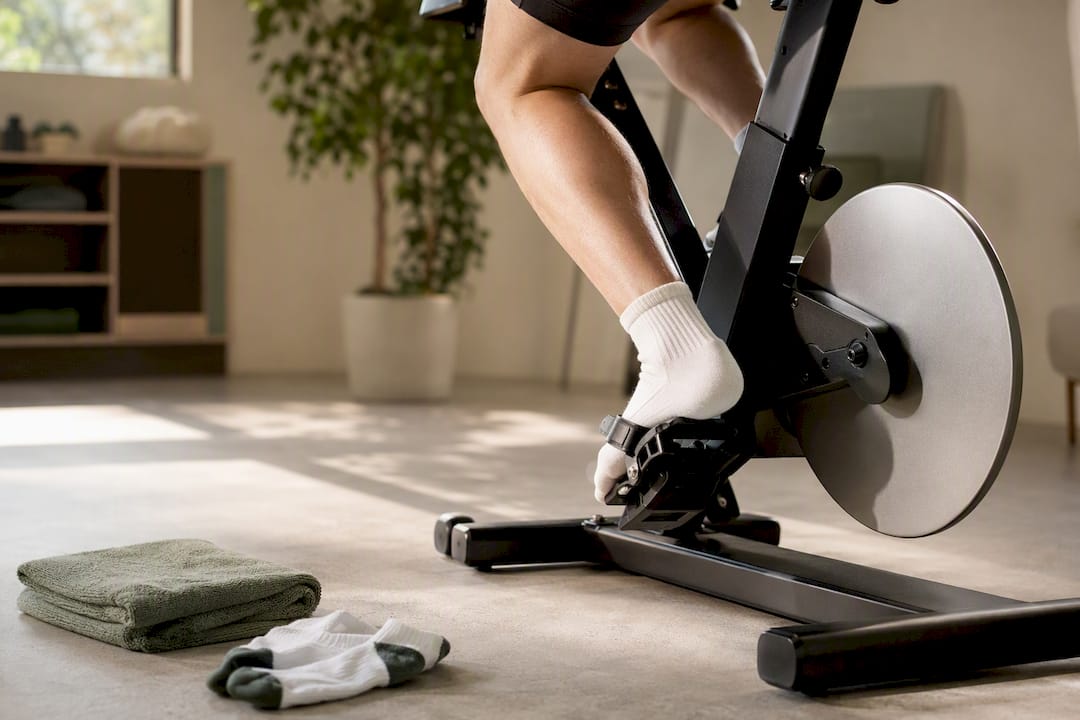
Heat can help in the first day or so if the muscle feels stiff and achy rather than acutely inflamed; ice is more useful if there’s any swelling or a suspicion the cramp masked a minor strain. If tenderness persists beyond three or four days, or if it’s localised to one specific point rather than spread through the muscle, that’s worth treating as a possible strain rather than a resolved cramp, and easing off running until it settles.
Is it a cramp, a strain, or something more serious?
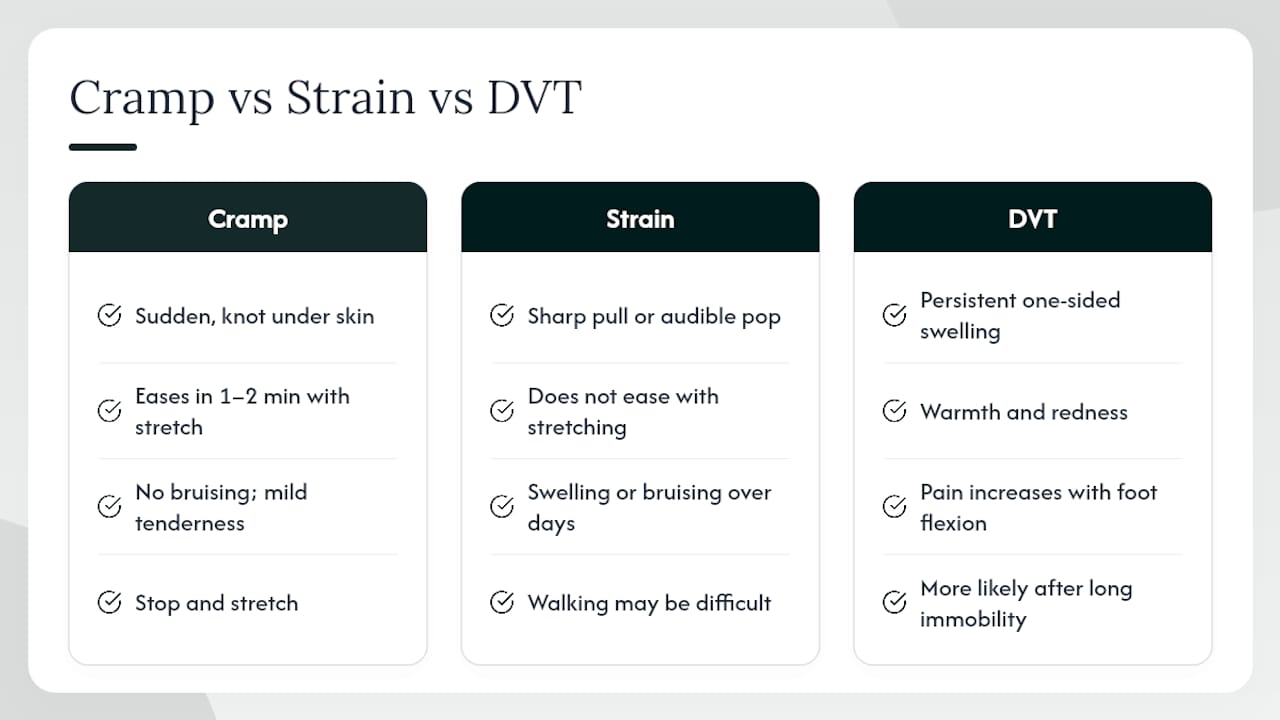
Cramps, strains, and deep vein thrombosis (DVT) can all cause calf pain, and telling them apart matters because the right response differs for each.
A cramp comes on suddenly, feels like a hard knot under the skin, and typically eases within a minute or two once you stop and stretch. There’s no bruising, and the pain resolves almost completely once the spasm passes, leaving only mild tenderness.
A calf strain feels different: sharper, often described as a “pull” or even an audible pop at the moment it happens, usually during a hard push-off or a sprint effort. Unlike a cramp, a strain doesn’t ease with stretching, it often worsens, and it’s frequently followed by swelling or bruising over the following day or two. Walking normally afterwards may be difficult.
DVT is the one that genuinely needs urgent attention. It presents as persistent swelling, warmth, and often redness in one calf, sometimes with pain that increases when you flex the foot upward, and it doesn’t behave like a cramp because it doesn’t resolve with stretching or rest. It’s more likely after long periods of immobility, such as a long flight, but it’s not exclusive to that scenario, and any unexplained one-sided calf swelling in a runner deserves a same-day medical assessment rather than a wait-and-see approach.
The practical rule: if stretching resolves it within a couple of minutes and there’s no swelling or bruising, it was a cramp. If it doesn’t ease, or looks or feels different from any cramp you’ve had before, get it checked.
Do warm-ups and cool-downs actually prevent calf cramps?
A proper warm-up doesn’t just feel like good practice, it directly addresses the neuromuscular fatigue mechanism behind most cramps. Starting a run cold, particularly a session with early pace or hills, asks the calf to work hard before it’s had a chance to gradually raise blood flow and readiness in the muscle. Five to ten minutes of easy jogging, followed by a few gentle dynamic movements like ankle circles and controlled calf raises, gives the muscle a smoother ramp into harder work rather than a sudden demand.
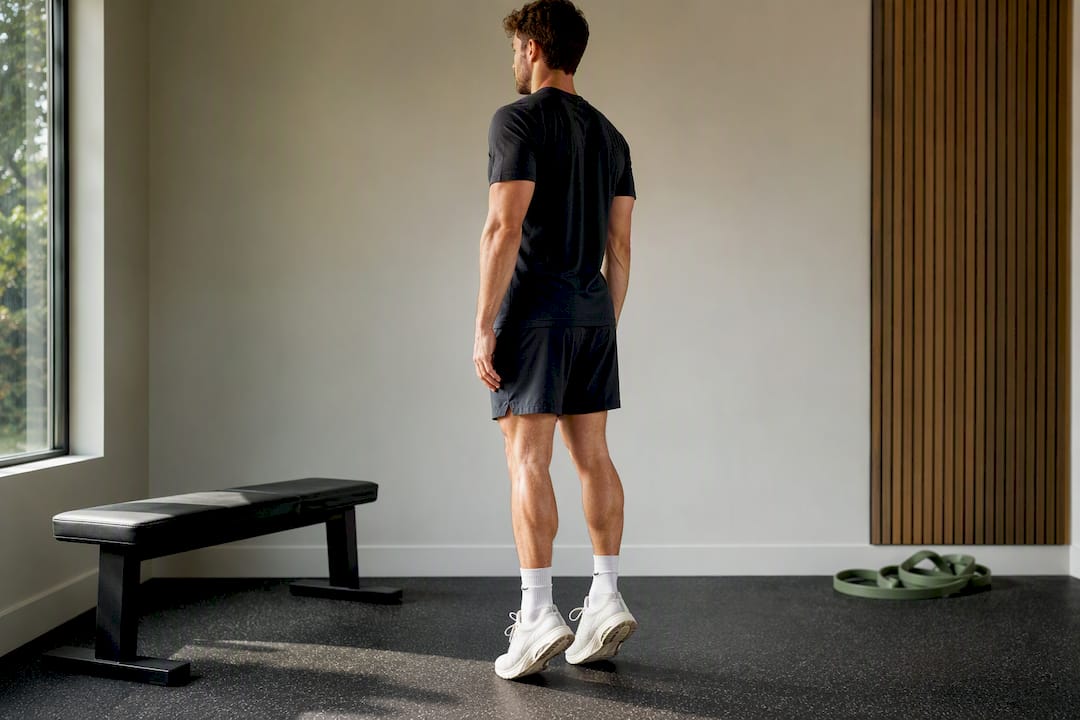
Cool-downs matter for a different reason. Stopping abruptly after a hard effort leaves the calf in a fatigued, shortened state without the chance to settle. A short walk or easy jog afterwards, followed by the same static calf stretch used for immediate relief, held for 30 to 60 seconds, helps bring the muscle back towards a more relaxed length before you’re static for the rest of the day.
Neither warm-ups nor cool-downs are a guarantee against cramping. If your training load has jumped sharply or you’re chasing an unfamiliar pace, no amount of dynamic ankle circles will fully offset that. But skipping them removes one of the few low-effort tools that genuinely supports the fatigue-management approach that underpins most other prevention advice here.
Does running technique affect calf cramps?
Running form has a real, if modest, influence on how much load your calves absorb per stride, and that matters because cramp risk tracks with local fatigue.
Forefoot and midfoot strikers tend to load the calf and Achilles more directly than heel strikers, who shift more work to the hip and knee. That’s not automatically a problem, plenty of efficient runners strike this way, but it does mean the calf is doing proportionally more work stride after stride, which can bring on fatigue sooner in a long run or a hard session.
Cadence plays a role too. A very low cadence with long, reaching strides often means more time spent with the calf in a stretched, loaded position at push-off, which increases the demand on that muscle group compared with a slightly quicker, shorter stride.
None of this means you need to overhaul your form. Sudden, large technique changes, switching strike pattern or cadence dramatically in one go, are themselves a known trigger for cramping and injury, because they load unfamiliar tissue faster than it can adapt. If you’re going to adjust anything, do it gradually over several weeks and treat it the same way you’d treat a mileage increase: small steps, given time to bed in.
What triggers calf cramps most often in runners?
A handful of triggers show up again and again across runners who cramp regularly, and most point back to the same underlying issue: asking the calf to do more than it’s currently prepared for.
- A sudden jump in intensity or distance. Going from steady 5km runs to a fast 10km, or adding hill repeats without building up to them, is one of the most reliable ways to trigger a cramp.
- Unfamiliar running surfaces. Trail running, cambered roads, or sand all change how the calf loads compared with flat tarmac, and a first long session on a new surface can bring on cramping that wouldn’t happen on familiar ground.
- Worn-out or ill-fitting footwear. Shoes that have lost their cushioning, or a fit that’s slightly too tight through the forefoot, can subtly alter calf loading over the course of a run.
- Racing or time-trialling at an unfamiliar pace. Pushing harder than your current training supports accelerates local fatigue well before the finish line.
- Heat and high sweat rates. These don’t cause cramps directly, but they speed up the fatigue process described earlier, making a borderline effort more likely to tip over.
Most of these triggers share a fix: progression. Change one variable at a time, whether that’s pace, surface, distance, or shoes, and give the calf a few weeks to adapt before stacking another change on top.
What does an evidence-first approach to calf cramps actually mean?
The conventional advice to drink more and eat a banana has stuck around because it’s simple, not because it works well. The evidence on EAMC points somewhere less convenient: towards consistent, unglamorous strength work and honest pacing. Most runners who cramp repeatedly haven’t got a hydration problem; they’ve got a calf that fatigues before the rest of their body does, often because it’s undertrained relative to the demands they’re placing on it.
Supplements have a role, just not the one most runners assume. Magnesium won’t stop a cramp on Tuesday’s tempo run, but supporting sleep and recovery week on week is a reasonable, evidence-consistent goal. Fix the training first. Let recovery support do its actual job.
— Tim
Try Ready alongside your training changes
Runcomplete makes Ready specifically for the recovery side of this equation, not as a cramp cure, but as support for sleep and muscle recovery between the sessions where the real prevention work happens: your strength training and pacing.
Ready is a magnesium bisglycinate capsule, made in the UK, without unnecessary fillers, and suitable for vegetarians and vegans. Bisglycinate is chosen specifically because it tends to sit more gently than cheaper magnesium forms, which matters if you’re taking it consistently rather than as an occasional fix. The sensible way to trial it is alongside the changes covered above, not instead of them: give it four to six weeks, track how you’re sleeping and how your legs feel the morning after a hard session, and judge it on that rather than on whether a single run went cramp-free.
Runcomplete backs Ready with a 30-day guarantee, and it’s available as a one-time purchase or a monthly subscription if you’d rather not think about reordering. If your training and pacing are already sorted and you’re looking for straightforward recovery support, visit Runcomplete to see whether Ready fits into your routine.
This article is general information, not a substitute for advice from a qualified doctor. Consult a qualified healthcare professional about your own circumstances before acting on anything here.
Sources
- Here’s what causes those calf cramps you get while running
- Magnesium for leg cramps?
- Magnesium for cramps: systematic review
- A narrative review of exercise-associated muscle cramps: Factors that contribute to neuromuscular fatigue and management implications

