
Melatonin works best when your problem is timing, jet lag, shift work, or a body clock that’s drifted out of sync. Magnesium, particularly the glycinate or bisglycinate form, suits tension, cramps, and anxious wakefulness better, especially if you train hard and suspect you’re running low. In the UK, melatonin is normally prescription-only, so check with a clinician first if you take other medication or have kidney disease.
TL;DR:
- Melatonin effectively addresses circadian rhythm issues like jet lag and shift work, especially when timed light exposure is combined with supplementation.
- Magnesium, particularly in glycinate or bisglycinate form, is better suited for tension, cramps, and an overactive nervous system caused by training or stress.
- The evidence supports short-term, targeted use of melatonin for age-related or circadian sleep problems, while magnesium benefits are mainly seen in deficient or high-loss groups such as athletes.
- Combining magnesium and melatonin is possible but should be approached cautiously, starting with individual trials and lower doses to avoid excessive drowsiness.
- In the UK, melatonin is prescription-only and has limited indications, whereas magnesium is easily accessible as a food supplement and often more practical for active adults.
Table of Contents
- How magnesium and melatonin work: mechanisms that matter for sleep
- Which sleep problem points to which supplement?
- What does the evidence actually show?
- Safety, interactions and UK availability
- Choosing form, dose and timing: a practical walkthrough
- Can you take magnesium and melatonin together?
- When self-care isn’t enough: signs you need a GP
- RunComplete’s take on magnesium for runners and active sleepers
- The overlooked problem with how people compare these two
- Why Runcomplete’s Ready is worth trying first
- Sources
How magnesium and melatonin work: mechanisms that matter for sleep
These two supplements don’t compete for the same job. They solve completely different problems, which is exactly why so many people try one, feel underwhelmed, and assume neither works.
Magnesium supports GABAergic activity in the brain, the same inhibitory system that calms an overactive nervous system, and it reduces neuromuscular excitability, which is why it’s associated with fewer cramps and less muscle twitching at night. It may also help lower cortisol output, the stress hormone that keeps your mind racing at 2am. Melatonin does something entirely different: it’s the hormone your pineal gland releases to signal that night has arrived, acting on MT1 and MT2 receptors to shift your circadian clock rather than sedate you directly.
That distinction shapes what each one can realistically fix:
- Struggling to fall asleep because your body clock thinks it’s still afternoon (jet lag, night shifts)? That’s a melatonin problem.
- Lying awake with a tense jaw, restless legs, or a mind that won’t switch off? That leans towards magnesium.
- Waking with calf cramps after a long run or heavy training week? Also a magnesium signal, not a circadian one.
Confusing these two mechanisms is the single most common reason people give up on a supplement that was never suited to their actual issue.
Which sleep problem points to which supplement?
Matching the right supplement to the right symptom saves you weeks of trial and error. Here’s a practical breakdown by problem type.
- Circadian disruption (jet lag, shift work, delayed sleep phase syndrome): melatonin is the better-supported option here, often alongside timed light exposure to help reset your internal clock. This is where the evidence is strongest and the mechanism most directly relevant.
- Racing mind, physical tension, or nocturnal cramps: magnesium tends to fit better, especially if you’re an endurance athlete or heavy trainer. Sweat losses during prolonged exercise can push magnesium intake below what your body needs, and supplementation shows the clearest benefit in people who are genuinely deficient rather than those with adequate stores.
- Older adults and chronic insomnia: this is where self-treating gets risky. Melatonin has a limited role in primary chronic insomnia that isn’t linked to a circadian problem, and older adults often have other factors at play, polypharmacy, sleep apnoea, or pain, that neither supplement addresses. A GP referral is more useful than another bottle from the chemist.
If you’re an active adult who trains regularly and finds sleep patchy after hard sessions, magnesium is the more logical starting point. If your sleep problem is really about when you sleep rather than how well, melatonin fits the mechanism better. A magnesium and theanine combination is also worth knowing about if tension and an overactive mind are your main obstacles, since theanine works on a different relaxation pathway alongside magnesium.
What does the evidence actually show?
The research picture is uneven, and it’s worth being honest about that rather than pretending both supplements have equally strong backing.
Melatonin has the more consistent evidence base for circadian-rhythm problems and short-term use. NHS guidance and the EMA’s product information for Circadin, a modified-release melatonin licensed for short-term insomnia treatment in adults over 55, both set out clear indications and dosing based on trial data. This is a supplement with a defined lane, and within that lane it performs reliably.
Magnesium’s evidence is messier. Trials show mixed results, and benefits appear more plausible in specific groups: older adults, people with confirmed low magnesium status, and athletes with higher losses through sweat. A PubMed review covering recent trials found some studies report small improvements in sleep metrics while others find nothing statistically meaningful, largely because study populations, doses, and magnesium forms vary so much between trials.
One clinical trial testing a combined magnesium, melatonin and vitamin B complex found improvements across several sleep measures in people with insomnia. The trial’s population was specific and the sample relatively small, so it’s a promising signal rather than a green light to assume combination products work for everyone.
Three things worth keeping in mind when you read supplement marketing:
- Magnesium’s strongest results cluster around deficient or high-loss populations, not the general public.
- Melatonin’s licensed use in Europe centres on short-term and age-related insomnia, not general sleeplessness.
- Combination trials are encouraging but too few and too narrow to generalise confidently.
None of this means either supplement is useless. It means the label “for sleep” hides two very different evidence profiles underneath it.
Safety, interactions and UK availability
Both supplements are generally well tolerated, but “generally” isn’t the same as “always,” and a few interactions are worth knowing before you buy anything.
Common side effects and things to watch for:
- Magnesium: loose stools or stomach upset at higher doses, particularly with oxide or citrate forms; rare but serious risk in people with reduced kidney function, since impaired kidneys can’t clear excess magnesium efficiently.
- Melatonin: grogginess the next morning, headache, or vivid dreams; occasionally low mood or irritability in sensitive individuals.
- Drug interactions to check: magnesium can reduce absorption of certain antibiotics and bind with some medications if taken too close together; melatonin can interact with anticoagulants, anticonvulsants, and lamotrigine specifically, where combined use needs a prescriber’s input.
Pro Tip: If you’re on any regular prescription medication, don’t assume “natural” means “no interaction.” Ask your pharmacist to check specifically, it takes two minutes and avoids a genuinely risky combination.
In the UK, melatonin sits in a different category to magnesium entirely. It’s normally available only on prescription, and courses for primary insomnia typically run for a limited period rather than indefinitely. Circadin, the licensed modified-release version, is prescribed short-term and reviewed by a GP rather than something you pick up over the counter. Magnesium, by contrast, is freely available as a food supplement, which is partly why it’s the more practical first step for most people without needing a GP appointment first.
Choosing form, dose and timing: a practical walkthrough
Getting the form right matters almost as much as deciding which supplement to try in the first place.
For magnesium, glycinate or bisglycinate forms are generally preferred for sleep because they’re absorbed well and cause far less gastrointestinal upset than magnesium oxide, which is cheap but poorly absorbed and more likely to cause loose stools. Citrate sits in between: reasonable absorption but still more of a laxative effect than glycinate.
A sensible approach looks like this:
- Start with a modest dose of magnesium glycinate or bisglycinate and take it consistently for two to three weeks before judging results, rather than expecting an overnight change.
- Keep total magnesium intake within recognised supplement limits to avoid digestive side effects, and don’t stack multiple magnesium products without checking combined totals.
- If trying melatonin (and you have a valid prescription route), start at the lower end, commonly 2 to 3mg, taken around one to two hours before your intended bedtime for phase-shifting purposes rather than immediately before lights out.
- Pair either supplement with consistent light exposure in the morning and reduced screen brightness in the evening. Supplements support sleep hygiene; they don’t replace it.
For timing specifics on glycinate, taking it 30 to 60 minutes before bed tends to work better than dosing right at lights-out, since absorption and the relaxation effect both take a little time to build.
Can you take magnesium and melatonin together?
Small trials combining magnesium, melatonin, and B vitamins have shown modest improvements in some sleep measures, but the study populations were narrow and the results don’t generalise easily to everyone. For most healthy adults there’s no major pharmacological clash between the two, but that’s not the same as a green light to stack full doses of both without thought.
A sensible approach if you want to try combining them:
- Trial one supplement at a time first, so you actually know what’s working.
- Check your medication list and kidney function before adding magnesium at meaningful doses.
- If combining, use a lower melatonin dose than you might take alone, since the two can compound drowsiness.
When self-care isn’t enough: signs you need a GP
Insomnia lasting more than three months, loud snoring with breathing pauses, or severe daytime sleepiness are signals that go beyond what any supplement will fix, and they warrant a proper conversation with a GP.
Before your appointment, bring a short sleep diary, your current medication list, and a note of what you’ve already tried. If melatonin looks appropriate for your situation, your GP can talk through the UK prescription pathway and appropriate duration directly.
RunComplete’s take on magnesium for runners and active sleepers
Runcomplete built its flagship product, Ready, around magnesium bisglycinate specifically because of how it’s absorbed and tolerated. Bisglycinate binds magnesium to the amino acid glycine, which appears to explain both its better gut tolerance compared with oxide and its added calming effect, since glycine itself has a mild role in promoting relaxation.
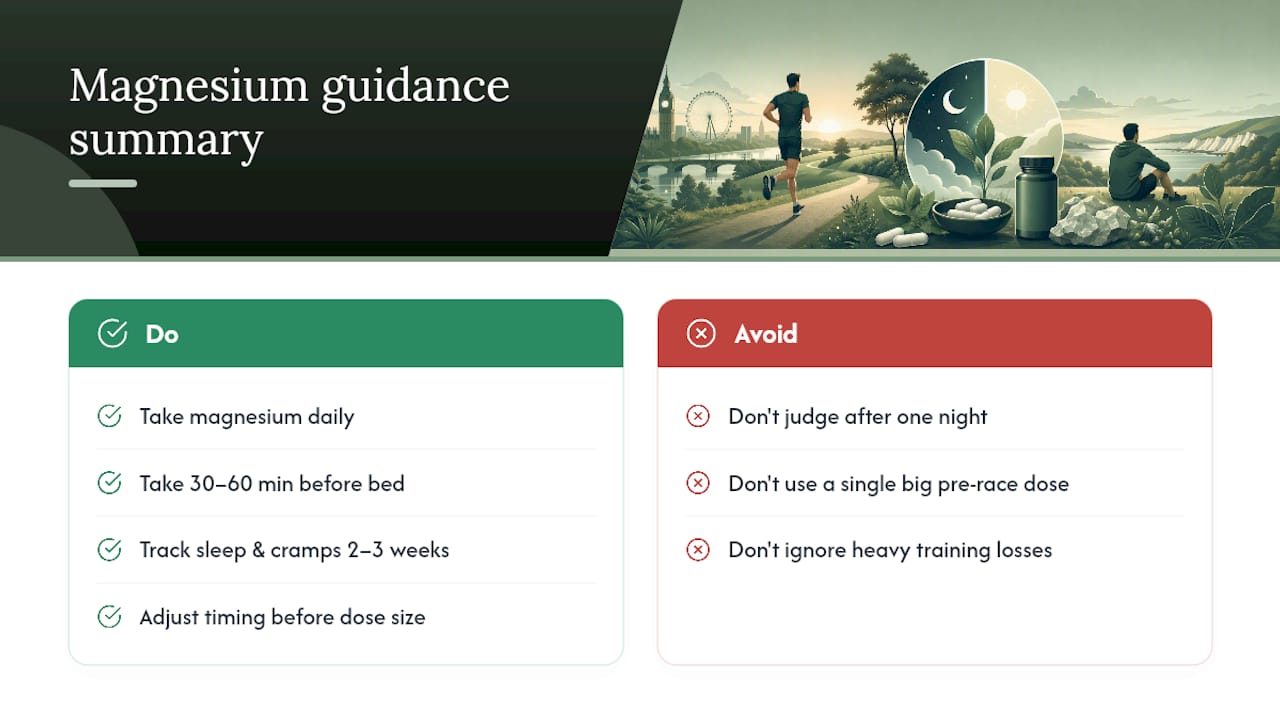
For runners, the practical lesson isn’t about a single big dose before a race. It’s about consistency, taking magnesium daily, ideally in the 30 to 60 minute window before bed, so your body maintains steadier levels rather than swinging between deficit and excess. Heavy training weeks increase magnesium losses through sweat, which is one reason casual and hobbyist runners often notice more restless nights or cramping during high-mileage blocks than during easy weeks.
Our advice to customers is simple: track how you feel over two to three weeks rather than judging after one night, note whether cramps ease and whether you’re waking less through the night, and adjust timing before adjusting dose. A glycinate-specific sleep guide covers this in more depth if you want the full picture on dosing and monitoring.
The overlooked problem with how people compare these two
Most sleep content treats magnesium and melatonin as competitors, as if you’re meant to pick a winner. That framing is backwards. They’re tools for different jobs, and the conventional advice, “try melatonin first because it’s the well-known sleep supplement,” often sends people with tension-driven or exercise-related sleep problems down the wrong path entirely.
The evidence actually supports a more useful starting question: is your problem when you sleep, or how well you sleep once you’re there? Timing problems point towards melatonin, and in the UK that means a conversation with your GP rather than a shelf purchase. Quality problems, tension, cramping, an overactive nervous system after training, point towards magnesium, which you can access immediately and adjust without a prescription.
If I had to prioritise one thing for the average active adult reading this, it’s stop treating magnesium as an afterthought supplement. For people training regularly, it’s frequently the more relevant fix, and it’s the one you can start improving tonight.
— Tim
Why Runcomplete’s Ready is worth trying first
If your sleep problem looks more like tension, cramping, or a mind that won’t switch off after training than a circadian mismatch, magnesium is the sensible place to start, and Ready was built specifically for that.

Ready uses magnesium bisglycinate, chosen for better absorption and considerably gentler digestion than cheaper oxide-based products, with no unnecessary fillers added. It’s UK-made, suits vegetarians and vegans, and comes with a 30-day guarantee so you’re not committing blind. It suits everyday runners and active adults dealing with post-training restlessness or cramping far better than a generic multivitamin aisle pick, since it’s formulated around what recovery-focused sleep actually needs. If you’re on regular medication or have kidney disease, check with a clinician before starting, magnesium is generally well tolerated but isn’t automatically right for every medical situation. Ready to try it consistently for a few weeks? Visit the Runcomplete shop to get started, or browse the full range of bisglycinate options if you want to compare formats first.
This article is general information, not a substitute for advice from a qualified doctor. Consult a qualified healthcare professional about your own circumstances before acting on anything here.
Sources
- About melatonin - NHS
- The effects of magnesium–melatonin–vitamin B complex supplementation in treatment of insomnia (PMC)
- Melatonin vs. Magnesium: Which Works Best for Sleep?
- Magnesium — Office of Dietary Supplements (NIH)

