
Elemental magnesium does not break down. The mineral itself is chemically stable, but the tablet, capsule or powder built around it is not: excipients, coatings and moisture can degrade a finished supplement well before the metal itself would ever change. An expired magnesium product is unlikely to make you unwell, but it may no longer deliver the dose printed on the label. Discard anything showing clumping, an odd smell or discolouration. Store what remains sealed, cool, dry and away from direct light.
TL;DR:
- Magnesium supplement potency declines significantly within 6 to 12 months after the expiry date, especially for hygroscopic salts like glycinate.
- Proper storage in a cool, dry, dark place with the original container and desiccant extends shelf life by reducing moisture exposure.
- Re-sealing bottles immediately, avoiding bathroom or kitchen storage, and using sealed packages like blister packs prevent moisture-related degradation.
- Signs of spoilage include clumping, discoloration, mould, a sour smell, or sticky texture, which warrant discarding even if within the expiry period.
- Refrain from refrigerating unless explicitly instructed, as temperature fluctuations and condensation accelerate supplement deterioration.
Table of Contents
- How long do magnesium supplements last?
- What makes magnesium stability vary: moisture, excipients and packaging
- Where should you store magnesium for the longest shelf life?
- Signs your magnesium has gone off
- Is expired magnesium safe, and how should you dispose of it?
- How Runcomplete approaches magnesium formulation and storage
- What actually matters with magnesium storage
- Get magnesium that is built for consistent, everyday recovery
- Sources
- FAQ
How long do magnesium supplements last?
Most magnesium tablets and capsules carry a shelf life of several years unopened, printed as a “best before” or expiry date on the packaging. That figure comes from real stability testing, not a guess. A Summary of Product Characteristics for a magnesium chewable tablet lists an unopened shelf life of three years, alongside a separate instruction: once opened, use within two months and keep the container tightly closed to protect the contents from moisture.
That second figure matters more than most people realise. The unopened date tells you how long the product sits safely in a warehouse or on a shelf. The “in-use” period tells you how long it lasts once air and moisture start reaching it every time you twist the cap. Treat both as separate deadlines, not one.
Pro Tip: Write the date you opened a bottle on the label itself with a marker. The printed expiry date only covers the sealed product, and most people forget exactly when they cracked it open.
Shelf life also depends heavily on format:
- Tablets and capsules tend to last longest, often two to three years unopened, because the solid form limits contact with air and moisture.
- Powders are more exposed once the seal is broken, since every scoop lets in humidity.
- Gummies are the most moisture-sensitive format on the market. Their sugar and gelatine base attracts water, which shortens realistic shelf life compared with a dry tablet.
- Liquid magnesium has the shortest window of all, typically measured in weeks to a few months after opening rather than years.
The magnesium salt itself makes a measurable difference too. A peer-reviewed stability study of tablets containing different magnesium compounds found that while all tested products held up well within their labelled validity period, the decline after expiry varied by compound. Magnesium citrate showed a greater drop in declared magnesium content at 6 to 12 months post-expiry than magnesium orotate did. That is direct evidence that not every magnesium salt ages at the same rate, even under identical storage conditions.
Minerals generally fare better than vitamins over time. Mineral salts are chemically simpler and more stable than many organic vitamin compounds, according to a consumer health review of supplement stability, though the same source stresses that form and storage conditions still drive most of the real-world variation.
What makes magnesium stability vary: moisture, excipients and packaging
Some magnesium salts are hygroscopic, meaning they pull moisture straight out of the surrounding air. Magnesium glycinate is one of them. Technical supplier guidance on magnesium glycinate notes that this water uptake is exactly why packaging and finished-product testing matter so much for glycinate formulations: absorbed moisture is what causes capsules to clump, powders to cake, and tablets to soften.
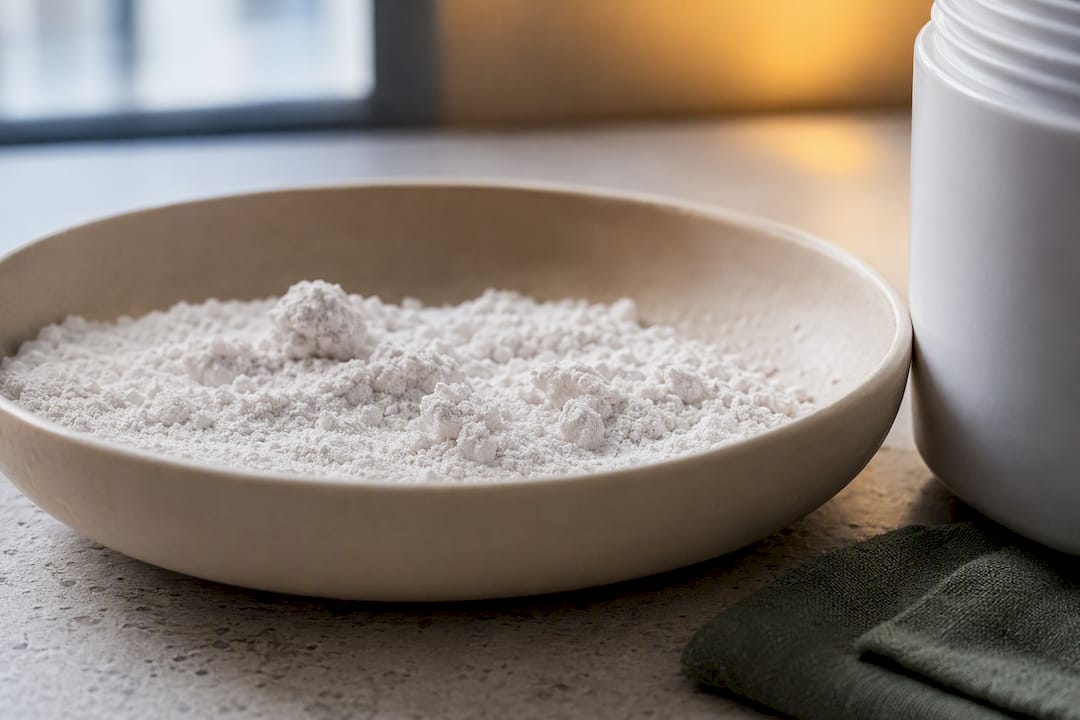
Excipients, the inert ingredients bound into every tablet, play a bigger role in shelf life than most buyers assume. Binders hold a tablet’s shape; film coatings act as a moisture barrier; and in gummies, the sugar base itself is the problem, since sugar draws in ambient humidity the way salt does on a damp kitchen worktop. A well-coated tablet in a well-sealed bottle can dramatically outlast a poorly packed one containing the identical dose of magnesium.
Packaging choices explain a lot of the difference between two products with the same salt and the same label claim:
- Bottles with a desiccant sachet built in resist moisture far better than bottles without one.
- Blister packs isolate each dose from the air until the moment you use it, which is why many pharmacy-grade tablets ship this way rather than loose in a jar.
- Single-dose sachets for powders limit exposure to one serving at a time instead of leaving an entire tub open to the room.
Temperature adds another layer. Chemical degradation broadly follows the logic behind the Arrhenius equation: reaction rates roughly double for every 10°C rise in temperature. That is a simplified rule of thumb rather than a lab-grade prediction for every compound, but it explains why a bathroom cabinet, warmed by showers and steam, or a shelf above a cooker, is one of the worst places in the house to keep any supplement.
Pro Tip: If your kitchen or bathroom is the most convenient storage spot, move supplements to a bedroom drawer or hallway cupboard instead. Convenience is not worth the humidity swing.
Where should you store magnesium for the longest shelf life?
Getting storage right is mostly about denying moisture, heat and light anywhere near the bottle. Follow these steps:
- Keep the original container. Manufacturers choose that packaging, whether it is an amber bottle, a foil blister or a tub with a desiccant, for a reason specific to that product.
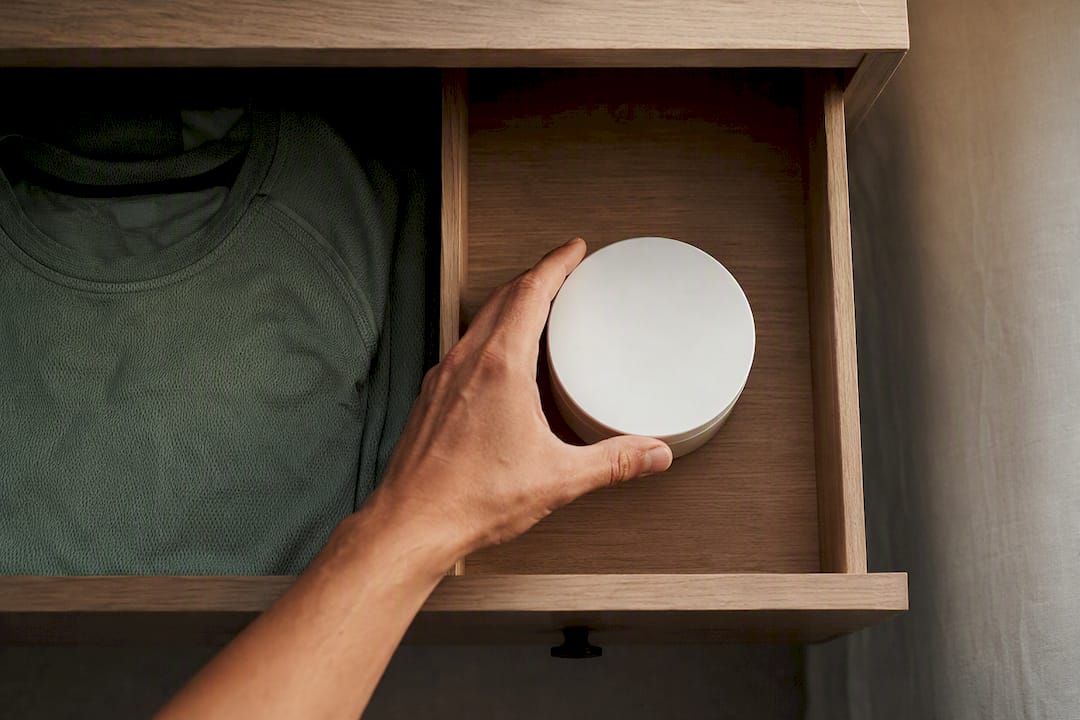
- Store somewhere cool and dry, ideally a cupboard or drawer that never gets warm, rather than a bathroom cabinet or a shelf beside an oven.
- Close the cap or reseal the pouch immediately after every use. Leaving a bottle open on the worktop while you eat breakfast lets humidity in with every passing minute.
- Keep any desiccant sachet in the bottle. It is doing a job, not just filling space.
- Avoid direct sunlight, which can degrade certain excipients and coatings faster than manufacturers account for in standard shelf-life testing.
Refrigeration is rarely necessary. Most magnesium tablets, capsules and powders are formulated to be stable at normal room temperature, and only a handful of specialist liquid or reconstituted products carry a fridge instruction on the label. If the packaging does not say to refrigerate it, putting it in the fridge adds condensation risk every time you take it out, which can do more harm than good.
Buying habits matter as much as storage. Purchase an amount you will realistically use within the “in-use” window rather than stockpiling a year’s supply of an opened tub, a principle the British Dietetic Association backs when it recommends buying from reputable pharmacies and chemists and checking labels for both expiry date and dosage.
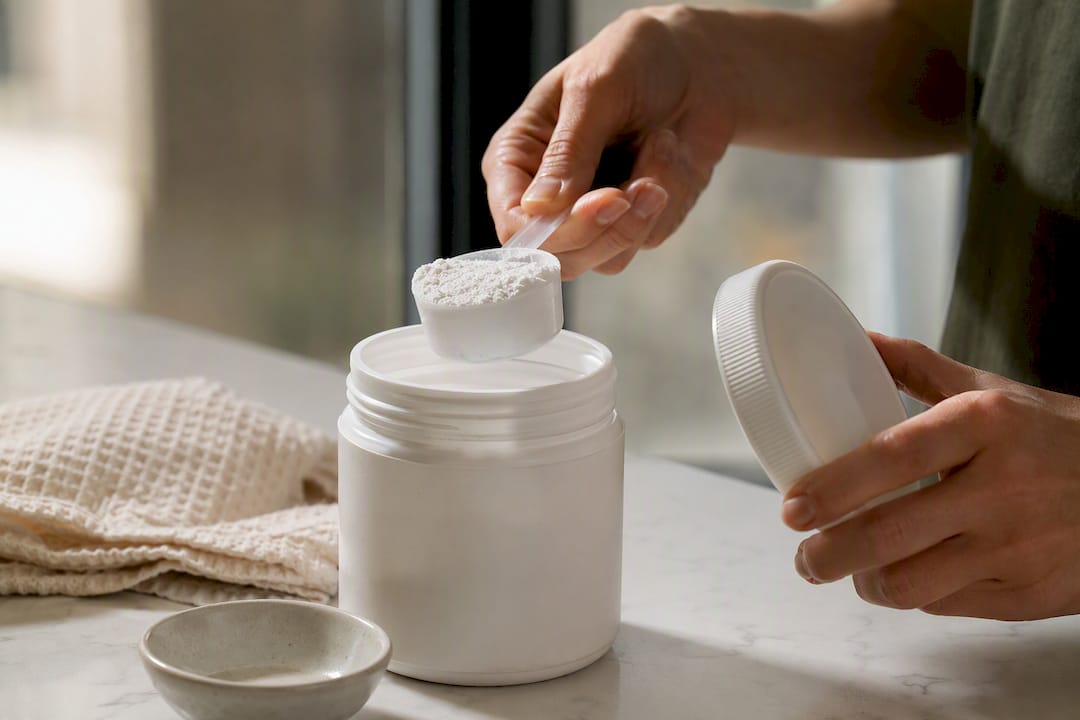
If you buy magnesium in bulk powder form, handle it carefully: use a dry scoop every time, never a damp spoon, and reseal the container within seconds rather than leaving it open while you measure a dose.
Signs your magnesium has gone off
A supplement past its best rarely announces itself dramatically, but a few signs are worth checking before you take a dose:
- Clumping or caking in a powder or inside a capsule, a sign moisture has already got in.
- Colour changes, including tablets turning noticeably darker or developing spots.
- Visible mould, which means the product is finished regardless of the date on the label.
- An unusual or sour smell compared with when you first opened it.
- Sticky or gummy texture in tablets that used to feel dry and firm.
Start with the basics: check the printed expiry date and any “use within X months of opening” instruction, and note whether a desiccant sachet still feels dry and rigid rather than soft. If everything looks and smells normal and the product is only a little past its date, a single dose is unlikely to cause harm. If you see mould, dampness, or a broken seal on the bottle, throw the product out regardless of what the date says. No storage advice overrides visible spoilage.
Is expired magnesium safe, and how should you dispose of it?
Potency is the real risk, not toxicity. Magnesium is tightly regulated by the body, and a review of magnesium bioavailability confirms that homeostatic control, not the supplement’s age, governs how the mineral behaves once absorbed. The practical concern with an expired product is that it may deliver less magnesium than the label states, which matters far more if you are relying on it for a specific clinical reason.
Follow UK guidance on supplement use generally. Official food supplements guidance is clear that supplements are meant to top up a normal diet, not replace medical treatment, and recommends speaking to a healthcare professional before taking high-dose minerals, particularly during pregnancy or alongside existing medication.
For disposal:
- Return unused or expired supplements to a pharmacy take-back scheme where your local pharmacy offers one.
- Use your household hazardous waste facility for larger quantities.
- Avoid flushing tablets or capsules down the toilet or sink.
- Check your local council’s specific guidance, since collection schemes vary by area.
If magnesium plays a critical role in managing a health condition, talk to a professional before relying on anything close to its expiry date.
How Runcomplete approaches magnesium formulation and storage
Runcomplete built its flagship product, Ready, around magnesium bisglycinate specifically because glycinate tends to sit more comfortably with regular use than harsher salts, while still needing the same respect for moisture that any hygroscopic compound demands. That is not a detail Runcomplete treats as an afterthought.
A few things shape how such companies handle this:
- Capsules are made with no unnecessary fillers added to the formulation.
- Some orders may carry a 30-day guarantee, so a product that arrives or performs below expectation is not necessarily a dead end for the customer.
- Runcomplete publishes supporting guidance, including detail on dosage and purity checks, so runners are not left guessing about how to use or judge a bottle.
If you have a storage question specific to an order, the customer service team might be able to address it directly rather than leaving you to interpret generic label instructions.
What actually matters with magnesium storage
Most advice on this topic gets the emphasis wrong. It focuses heavily on the printed expiry date, as though that single number is the whole story, and barely mentions the “after opening” window that pharmaceutical labelling takes seriously. The unopened date on a sealed bottle is almost irrelevant to how you actually use the product day to day. What determines whether your magnesium still works in month eight is what happens after you break the seal: how often the cap sits open, how much humidity the room carries, whether a desiccant sachet is doing its job.
The salt-specific stability data deserves more attention too. Citrate and orotate did not degrade at the same rate after expiry in controlled testing, yet most consumer guidance treats “magnesium” as one uniform product. It is not. If you are buying a hygroscopic form like glycinate, moisture control is not a nice-to-have. It is the single biggest lever you have over how long that bottle stays genuinely potent.
— Tim
Get magnesium that is built for consistent, everyday recovery
Some companies make magnesium bisglycinate formulated for people who want steady recovery support without decoding pharmaceutical stability data every time they open a bottle.

Everyday running does not need elite-athlete supplement stacks or complicated storage rituals. Some products are formulated without unnecessary fillers and may be backed by a 30-day guarantee, so if they do not suit your routine, you are not stuck with them. For anyone who has just worked through the storage advice above and wants a product that is straightforward to keep fresh and simple to take after long runs, Ready fits that need directly. Have a look at how it fits into a wider running nutrition routine and decide whether a monthly subscription or a one-time order suits your training better.
This article is general information, not a substitute for advice from a qualified doctor. Consult a qualified healthcare professional about your own circumstances before acting on anything here.
Sources
- Magnesium 4mmol Chewable Tablets - Summary of Product Characteristics (SmPC) - (emc) | 11577
- Food supplements guidance
- Assessment of physical and chemical stability of different magnesium compounds in tablets (research article)
- Magnesium glycinate stability and shelf life: water content, storage, and finished-product testing
- Do vitamins expire? | Medical News Today
FAQ
How long can you take magnesium after the expiration date?
A small dose shortly after the printed date is unlikely to cause harm if there are no signs of spoilage, but potency may already be lower. Stability testing shows measurable declines in declared magnesium content within 6 to 12 months of expiry, so treat the date as a genuine cut-off rather than a rough guideline.
Should magnesium be stored in the fridge?
No, not unless the label specifically instructs it. Most tablets, capsules and powders are formulated for stable room-temperature storage, and refrigeration can introduce condensation each time the container is opened.
How do you know if your magnesium is off?
Look for clumping, colour changes, mould, an unusual smell, or a sticky texture in tablets that used to feel dry. Any one of these signs means the product should be discarded regardless of the date on the label.
How long will magnesium last?
Unopened tablets and capsules typically last two to three years, based on figures from products like the magnesium chewable tablet SmPC. Once opened, most manufacturers recommend using the product within about two months, though gummies and powders tend to degrade faster than solid tablets.

