
Rehydration with sodium and a carbohydrate plus protein snack cover most of what an easy run demands, while tart cherry, omega-3s, and magnesium bisglycinate earn their place during heavier training blocks. Creatine helps if you’re stacking hard sessions close together. BCAAs and most antioxidant pills sit lower on the priority list. Whatever you choose, treat it as backup to food, check it against any medication you take, and scale the whole approach to how hard you actually ran.
TL;DR:
- Rehydration with sodium and consumption of 1g carbohydrate per kilogram of body weight are essential after long or intense runs, especially in hot conditions.
- Supplementing with tart cherry and omega-3s provides the most substantial evidence for reducing soreness and inflammation when taken consistently during heavy training blocks.
- Protein intake of 20 to 40 grams per session supports muscle repair, particularly when paired with carbohydrate for glycogen replenishment if training continues within 24 hours.
- Creatine is beneficial during back-to-back sessions or marathon build-ups to aid glycogen resynthesis and reduce muscle damage, not for single, easy runs.
- Magnesium bisglycinate improves subjective recovery, sleep quality, and soreness feelings, making it a practical supplement for daily use, especially at night.
Table of Contents
- What should you take after a run? A practical checklist
- What does the evidence actually say about these supplements?
- How to time and dose post run supplements for real recovery
- Safety, interactions, and staying food-first
- Runcomplete’s practical approach to post run supplements
- What should you actually try first?
- Try Ready: magnesium bisglycinate built for runners, not gym-goers
- Sources
- FAQ
What should you take after a run? A practical checklist
Most runners overcomplicate this. The order of operations after a run is simple: rehydrate, replace sodium if you’ve sweated heavily, then get carbohydrate and protein into your next meal or snack within a couple of hours. Supplements slot in around that structure, not instead of it.
Start with the basics every time, regardless of session type:
- Weigh yourself before and after longer or hotter runs, then rehydrate with fluid containing sodium rather than plain water alone.
- Eat roughly 1g of carbohydrate per kilogram of bodyweight if the run was long or hard and you’re training again soon.
- Pair that with 20 to 30g of protein, whether from a shake, chocolate milk, Greek yoghurt, or a proper meal.
- Swap in an electrolyte drink specifically when you’ve sweated through your kit or run in heat.
Layer supplements on top depending on what the session demanded:
- Heavy sweat loss (hot weather, long distance): an electrolyte drink with sodium, alongside your usual rehydration.
- Training again within 24 hours: a whey protein shake or a mixed carbohydrate and protein drink straight after, so glycogen and muscle repair both get a head start.
- A heavy training block or race build-up: tart cherry concentrate and omega-3s, taken consistently rather than once, since both work cumulatively rather than as a single dose.
- Most evenings, especially after harder training: magnesium bisglycinate, taken at night to support sleep and ease the leg heaviness that builds up over a training week.
Three quick real-world routines show how this fits together. After an easy 5K, that’s just water with a pinch of salt if it was warm, and your normal next meal. After a long Sunday run, that’s a proper rehydration drink, a carbohydrate and protein shake within the hour, and magnesium before bed. During a marathon build with back-to-back hard days, that’s the same routine plus daily tart cherry or omega-3, because the cumulative fatigue is the thing you’re managing, not any single run.
Pro Tip: Change one thing at a time. If you add magnesium, an electrolyte drink, and a new protein shake in the same week, you’ll have no idea which one actually improved your sleep or eased your soreness.
What does the evidence actually say about these supplements?
Evidence quality varies enormously across this category, and that’s worth knowing before you spend money. Some compounds have genuine research behind them. Others are riding on marketing more than data.
Tart cherry and omega-3: the strongest evidence in the category
A narrative review of compounds studied for post-exercise recovery singles out tart cherry and omega-3 fatty acids as having the most substantial supportive research among everything examined, particularly for reduced soreness and improved muscle function after hard sessions.

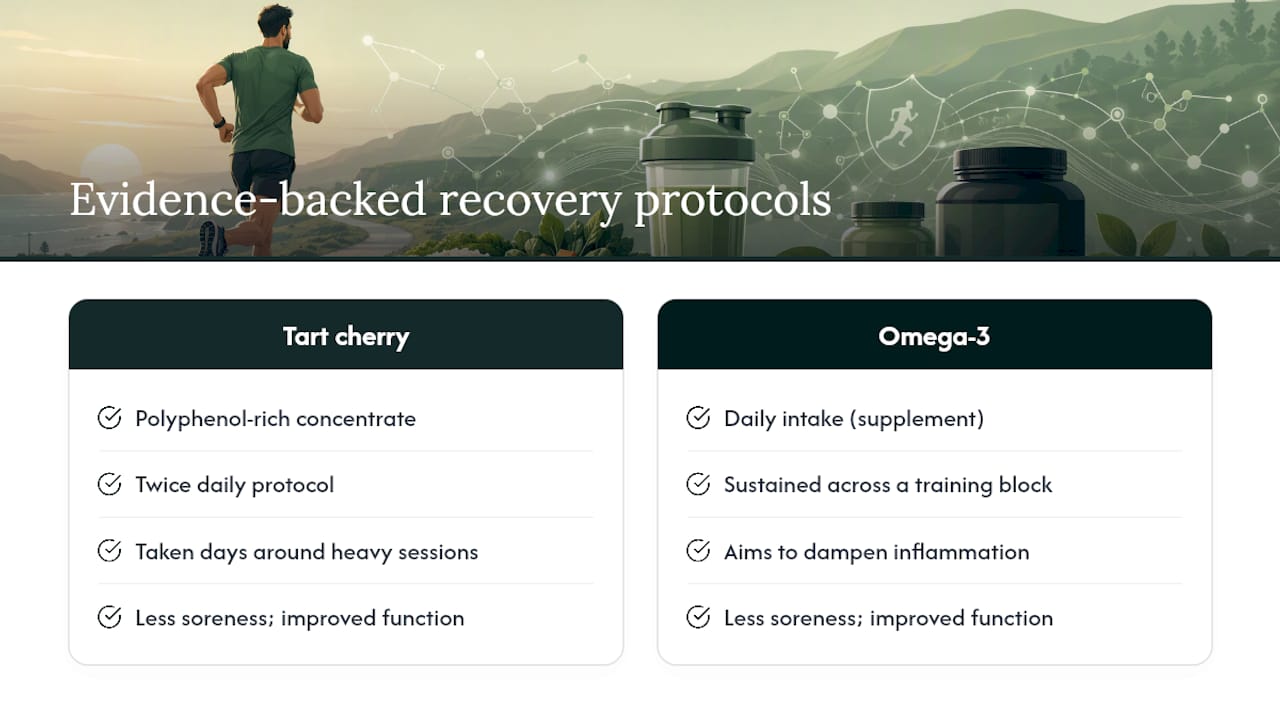
The protocols that actually show benefit tend to use a polyphenol-rich tart cherry concentrate taken twice daily for several days around the heavy training, not a single dose the morning after a race. Low-dose, single-shot use is unlikely to replicate what the studies found. Omega-3s work on a similar logic: daily intake sustained over a training block, aimed at dampening exercise-induced inflammation, rather than an occasional capsule.
Protein: still the workhorse of repair
Protein does the unglamorous but essential job of rebuilding muscle tissue after the microscopic damage a run causes. The 4R framework for post-exercise recovery, rehydrate, refuel, repair, rest, recommends 20 to 40g of protein for the repair phase, alongside carbohydrate for glycogen resynthesis when you’re training again soon.
Co-ingesting carbohydrate with that protein matters more than most runners realise. If you’re not running again for two or three days, a normal meal handles this fine. If you’re back out tomorrow, the combination speeds up glycogen restocking meaningfully compared with protein alone.
Creatine: not just a strength-training supplement
Creatine’s reputation lives in gyms, but there’s a case for it in endurance training too, specifically around glycogen resynthesis and reduced muscle damage across repeated sessions. It won’t do much for a single Tuesday evening jog. Where it earns its place is in training blocks with back-to-back hard days or during marathon build-ups, where the cumulative recovery demand is real.
Most protocols use either a loading phase (a higher dose for five to seven days) or a steady maintenance dose of around 3 to 5g daily. Loading gets you to saturation faster; maintenance gets you there more slowly with less gastrointestinal fuss for some people.
Magnesium bisglycinate: the sleep and soreness angle
This is where the evidence gets genuinely interesting for everyday runners rather than elite athletes chasing marginal gains. Research on magnesium bisglycinate supplementation found it reduced subjective muscle soreness and improved how recovered people felt following intense exercise. Soreness ratings at 24 to 48 hours post-exercise came out lower in supplemented groups.
Objective measures, things like measured muscle force output, showed more variability across studies than the subjective ratings did. That’s a meaningful distinction. Magnesium bisglycinate looks stronger on “how did you feel” than on “how did you perform on a force plate”, and for a runner planning their week around whether their legs feel ready to go again, subjective recovery is arguably the more relevant metric anyway. Bisglycinate as a form also tends to sit better in the gut than magnesium oxide or citrate, which matters if you’re taking it consistently rather than occasionally. Runcomplete’s own guide to magnesium bisglycinate for recovery and sleep breaks down why the bisglycinate form specifically gets chosen over cheaper alternatives.
A note on the evidence: magnesium’s benefit here is consistent across the subjective measures runners actually care about, sleep quality, next-day soreness, sense of recovery, even where the harder performance data is more mixed.
BCAAs: situational, not superior
BCAAs get a lot of attention, but the evidence for them beating whole protein is genuinely mixed. One controlled trial on runners covering 21km found a BCAA-containing electrolyte beverage reduced muscle soreness at 24 hours compared with no rehydration at all, with smaller increases in creatine kinase, a marker of muscle damage, in the BCAA group.
That’s a real result, but it’s a comparison against doing nothing, not against a proper protein source. For most runners, a whole protein source or a full essential amino acid profile, which includes BCAAs alongside everything else muscle repair needs, is the more sensible default. BCAAs in isolation make sense mainly during long runs when you want fluid, electrolytes, and some amino acids in one drink, not as a stand-alone recovery strategy.
Curcumin and polyphenols: promising, but dosing is inconsistent
Curcumin shows up often in recovery supplement stacks, and short-term protocols using 200 to 1,000mg of bioavailable curcumin daily around exercise have shown improvements in oxidative stress markers and inhibited certain inflammatory markers at specific doses.
The caveat is real: protocols vary a lot between studies, optimal dosing isn’t settled, and rare cases of liver toxicity have been reported with curcumin supplementation. This isn’t a reason to avoid it outright, but it is a reason to stick to reputable, tested products and not stack multiple high-dose anti-inflammatory supplements simultaneously.
Vitamin D, vitamin C, and electrolytes: situational, not routine
Electrolytes matter when you’ve sweated heavily, and not much beyond that. Vitamin D matters if you’re deficient, which is common enough in runners training through darker months, but supplementing it “for recovery” when you’re not deficient does little. Vitamin C and other single-antioxidant supplements deserve particular caution: high-dose antioxidant use can actually blunt the training adaptations you’re trying to build, by interfering with the same oxidative signalling that drives fitness gains. Occasional, food-based antioxidant intake is fine. Routine high-dose supplementation around every session is not obviously a good idea.
How to time and dose post run supplements for real recovery
Getting the timing right matters more for some sessions than others, and knowing the difference saves you from obsessing over a Tuesday evening 5K the way you should over a marathon long run.
1. Rehydrate first, and rehydrate properly. Weigh yourself before and after significant runs. Replace 125 to 150% of the fluid you lost over the following four hours, using a drink that contains sodium rather than water alone, since sodium helps you actually retain the fluid instead of flushing straight through.
2. Refuel with carbohydrate when it matters. If you’re training again within 24 hours, aim for roughly 1 to 1.2g of carbohydrate per kilogram of bodyweight. If your next run is two or three days away, your normal meals will restock glycogen without any special timing.
3. Repair with protein, and add creatine if the block demands it. Twenty to 40g of protein supports muscle repair. Creatine becomes worth considering specifically when you’re stacking sessions, marathon training blocks, back-to-back long runs, race weeks with multiple efforts, rather than for isolated easy runs.
4. Rest with pre-sleep nutrition and magnesium. A slow-digesting protein like casein before bed, alongside magnesium bisglycinate, supports the overnight repair window. This is where a lot of the subjective “I felt wrecked all week” experience actually gets resolved or made worse.
The 30 to 120 minute window after a run genuinely matters when you’re training again soon or trying to maximise glycogen restocking for a race the next day. For an easy midweek run followed by two rest days, that urgency mostly disappears. Eating a normal meal within a few hours does the job just as well, and the old idea of a rigid 20 minute anabolic window is an overstatement of what the actual research on recovery timing supports.
Specific timing protocols worth knowing:
- Tart cherry: taken twice daily for several days leading into and through a heavy training block or race, not as a single post-run dose.
- Creatine: either a loading phase of a higher dose for five to seven days, or a steady 3 to 5g daily maintenance dose if you’d rather skip the loading fuss.
- Omega-3: daily intake sustained through a training block, aimed at cumulative anti-inflammatory effect rather than acute post-run relief.
- Magnesium bisglycinate: in the evening, ideally an hour or two before bed, to support sleep quality and next-day soreness.
For low appetite after a hard effort, liquid options tend to go down easier than solid food: a milk-based protein shake, a smoothie with fruit and yoghurt, or chocolate milk, which conveniently offers a reasonable carbohydrate to protein ratio already. Travelling for a race, pack a shaker and a single-serve protein sachet, since hotel breakfasts are notoriously inconsistent on protein content.
Pro Tip: If you’re not sure whether a run “counts” as needing the full protocol, use this rule: if you’re running again within 24 hours or it left your legs properly sore, treat it seriously. If it was an easy jog and tomorrow’s a rest day, a normal meal is genuinely enough.
Safety, interactions, and staying food-first
Supplements exist to fill gaps that whole food genuinely can’t meet in a busy week, not to replace real meals. A food-first approach remains the foundation runners should build on. A proper post-run meal, think grilled chicken with rice and vegetables, or salmon with sweet potato, delivers protein, carbohydrate, and micronutrients together in a form your body absorbs well. Supplements are the backup plan for the days that meal isn’t realistic.
That said, a handful of safety points deserve genuine attention rather than a passing mention:
- Curcumin carries rare reports of liver toxicity at higher doses, so stick to studied dose ranges and reputable brands rather than mega-dosing.
- High-dose omega-3 can increase bleeding risk, which matters if you’re on anticoagulant medication or having surgery soon.
- Vitamin D dosing needs care above certain thresholds; more isn’t automatically better, and excess accumulates in fat tissue over time.
- Magnesium tolerability varies by form. Bisglycinate tends to cause less gastrointestinal upset than oxide or citrate forms, but individual tolerance still varies.
If you take anticoagulants, immunosuppressants, or you’re pregnant, check with a GP or a sports nutritionist before adding any new supplement, not just the ones flagged above. This isn’t a box-ticking caveat: interactions between supplements and prescribed medication are a real and under-discussed risk, particularly with omega-3s and blood thinners.
When you do buy, favour products with third-party testing and transparent labelling that states exact doses per serving rather than vague blends. If a label doesn’t tell you how much of the active ingredient you’re actually getting, that’s a reasonable reason to look elsewhere.
Runcomplete’s practical approach to post run supplements
Runcomplete built its approach around one supplement, magnesium bisglycinate, rather than trying to cover every compound in this article. That’s a deliberate choice, not a limitation. Everyday runners juggling work, family, and training don’t need a cabinet full of powders. They need the one or two things most likely to move the needle on sleep, cramps, and how recovered they feel the next morning, and magnesium bisglycinate consistently shows up as one of those things in the research.
Runcomplete’s Ready product is built specifically for that everyday runner rather than the gym-focused or elite athlete market most sports supplement brands chase. It’s UK-made, free of unnecessary fillers, and suitable for vegetarians and vegans, sold as either a one-time purchase or a monthly subscription.
Being honest about the limits matters here too. Magnesium bisglycinate helps most with subjective recovery, sleep, soreness, cramping, and the evidence for it improving objective performance metrics is more mixed. If your recovery issues run deeper than that, persistent injury, extreme fatigue, unexplained weight change, that’s a conversation for a GP or sports physiotherapist, not a supplement.
What should you actually try first?
If I were starting from scratch, I’d ignore the supplement aisle entirely for the first few weeks. Fix hydration and get a proper protein and carbohydrate habit going after harder runs first, because that’s where most of the recoverable ground actually sits. Only once that’s solid would I add one thing: magnesium bisglycinate at night if sleep or evening leg heaviness is the complaint, or tart cherry and omega-3 if you’re deep in a heavy training block. Change one variable at a time, track your sleep and soreness for a couple of weeks, and resist the urge to add three new bottles to your shelf in the same week. You won’t learn anything if you do.
— Tim
Try Ready: magnesium bisglycinate built for runners, not gym-goers
Most magnesium supplements on the shelf were designed with weightlifters in mind, heavy doses aimed at strength recovery rather than the specific soreness, cramping, and disrupted sleep that comes from logging miles week after week. Ready is different: it’s a magnesium bisglycinate capsule built around what the evidence actually shows helps everyday runners, taken at night to support sleep quality and next-day recovery, with no fillers and no unnecessary extras.

It suits vegetarians and vegans, it’s UK-made, and it comes with a 30-day guarantee if it isn’t working for you. It won’t fix a training load problem or replace a proper post-run meal, and it’s not a performance enhancer in the way creatine or carbohydrate loading might be. What it’s built to do is take the edge off the soreness and sleep disruption that builds up across a training week, which for most casual runners is exactly the gap worth closing. If that’s the piece of your recovery routine that’s missing, the beginner-friendly nutrition guide is a good place to see how Ready fits alongside your everyday eating, or you can head straight to Runcomplete to start a one-time order or subscription.
Sources
- Nutritional compounds to improve post‑exercise recovery
- Nutritional strategies to improve post‑exercise recovery and subsequent performance (Springer Nature, 2025)
This article is general information, not a substitute for advice from a qualified doctor. Consult a qualified healthcare professional about your own circumstances before acting on anything here.
FAQ
What is the best supplement to take after running?
No single supplement outperforms the basics of rehydration and a carbohydrate plus protein snack, but among standalone options, tart cherry and omega-3s carry the strongest evidence for reducing soreness, while magnesium bisglycinate is well supported for sleep and perceived recovery.
What supplements should I take after running?
Prioritise rehydration with sodium and 20 to 30g of protein with carbohydrate first, then layer in tart cherry, omega-3, creatine, or magnesium bisglycinate depending on how intense your training block is, rather than using the same protocol after every run.
What is the 80% rule in running?
The 80% rule refers to training intensity distribution, roughly 80% of your running volume at an easy, conversational effort and 20% at moderate to hard intensity, which indirectly shapes recovery needs since only the harder 20% typically demands the fuller supplement protocol.
Why do runners eat Haribo?
Haribo and similar sweets are a quick, palatable source of fast-digesting carbohydrate, useful during long runs or immediately after for topping up glycogen when appetite for a full meal is low, though they offer no protein and shouldn’t replace a proper post-run snack.
Is magnesium bisglycinate better than other magnesium forms for runners?
Bisglycinate tends to be gentler on the digestive system than magnesium oxide or citrate, which matters for consistent nightly use, and it’s the form linked to improved subjective soreness and recovery feelings in current research.

