
Magnesium can take the edge off muscle soreness and support recovery between runs, but it will not heal the structural cause of shin splints. If your shins hurt on every run, the priority is cutting load and fixing biomechanics; a well-absorbed magnesium supplement, such as bisglycinate, is worth adding alongside that plan rather than instead of it.
TL;DR:
- Magnesium supplements like bisglycinate can help reduce muscle soreness but do not address the structural causes of shin splints, which require load management and biomechanics correction.
- Running increases magnesium demands by 10 to 20 percent due to sweat and metabolic turnover, making supplementation worthwhile if dietary intake is inadequate.
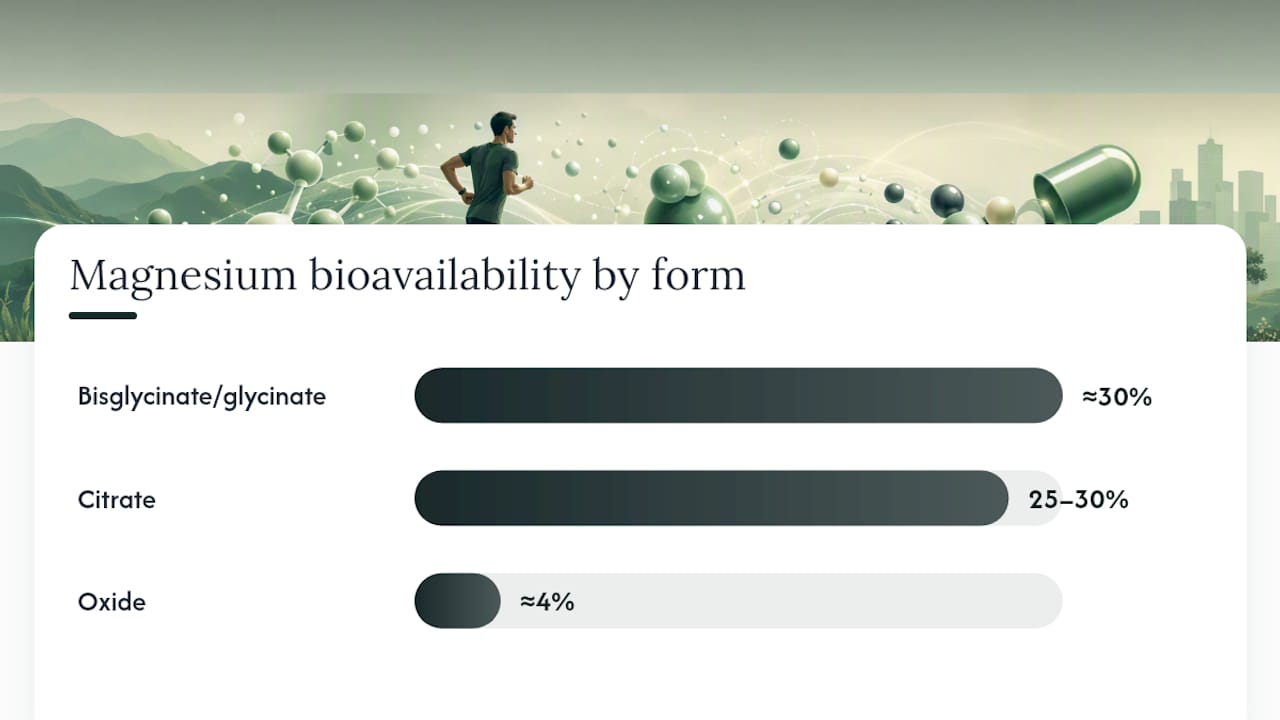
- Magnesium’s absorption varies significantly across different forms, with bisglycinate and citrate being around 30 percent bioavailable, unlike poorly absorbed oxide.
- Research shows magnesium can improve recovery markers and lessen delayed onset muscle soreness but has no evidence for treating tibial stress or preventing shin splints directly.
- Proper shin splint recovery involves reducing load, strengthening muscles, and gradually returning to running, with magnesium serving as supportive adjunct rather than a cure.
Table of Contents
- What magnesium shin splints claims actually mean
- Why magnesium matters to runner muscle and bone health
- What the research really shows about magnesium and shin pain
- Choosing the right magnesium form, dose and timing
- Building magnesium into an actual shin splint recovery plan
- Safety, interactions and when shin pain needs a clinician
- Where evidence meets everyday running
- A gentle magnesium option built for runners, not gym athletes
- Sources
What magnesium shin splints claims actually mean
Shin splints, known clinically as medial tibial stress syndrome (MTSS), is an overuse injury: repeated stress on the tibia and the tissue around it produces pain along the inner edge of the shin, typically worse during exercise and easing with rest, according to the Mayo Clinic. It is not a magnesium deficiency, and no supplement reverses the mechanical stress that caused it in the first place.
The usual triggers are entirely load-related:
- A sudden jump in weekly mileage or intensity, especially after time off
- Running on hard or cambered surfaces without adaptation
- Worn footwear or a biomechanical quirk, such as overpronation, that increases strain on the tibia
- Returning to training too fast after illness or injury
That’s why the phrase “magnesium shin splints” is a bit misleading as a search term. Magnesium can genuinely help the muscles around an overworked shin recover faster, and it may ease general soreness. It has no direct mechanism for repairing tibial bone stress, which is why treatment guidance from the NHS and orthopaedic clinicians centres on rest, load management, and rehabilitation rather than supplementation.
Why magnesium matters to runner muscle and bone health
Magnesium sits at the centre of how muscles work. It regulates calcium flow into and out of muscle fibres, which governs contraction and, crucially, relaxation. It’s also a cofactor in producing ATP, the molecule that fuels every stride. When that supply runs low, muscles cramp more easily and recover more slowly, and bone remodelling can also be affected, since magnesium plays a role in the mineral balance underpinning skeletal health.
Running itself seems to increase demand for magnesium. Physically active people may need 10 to 20% more magnesium than sedentary individuals, largely through losses in sweat and the sheer metabolic turnover of regular training. If your diet is already borderline (a lot of processed food, not much leafy greens or nuts), running regularly can tip you into a mild deficit without you noticing anything beyond persistent tiredness or twitchy calves.
Not all magnesium supplements deliver equally:
- Magnesium bisglycinate/glycinate: around 30% bioavailable, gentle on the stomach
- Magnesium citrate: similar absorption (roughly 25 to 30%), but more likely to cause a laxative effect at higher doses
- Magnesium oxide: cheap and common on shelves, but only around 4% bioavailable
That gap between 30% and 4% is the whole story behind why cheaper magnesium tablets so often disappoint people. You can swallow the same milligram number and absorb a fraction of it.
What the research really shows about magnesium and shin pain
The honest answer is: some benefit for soreness, no direct evidence for shin splints themselves. Systematic reviews have found that magnesium supplementation can reduce delayed onset muscle soreness and improve certain recovery markers in a number of trials, though results vary depending on the population, dose, and how soreness was measured. None of that research has tested magnesium as a treatment for MTSS specifically.
Cramps are a related but separate question. A Cochrane review found that magnesium doesn’t hold up as a reliable, universal preventer of exercise-induced muscle cramps, with training adjustments, hydration and sodium intake in hot conditions showing stronger evidence for that particular problem.
Here’s how to read that evidence set without overclaiming or underselling it:
- Reasonable to expect: less generalised muscle soreness, possibly better subjective recovery between runs
- Not reasonable to expect: magnesium fixing tibial stress, preventing MTSS outright, or reliably stopping every cramp
- Sensible use case: runners with a genuinely low dietary intake, or persistent DOMS despite adequate rest
Magnesium is a supporting player in recovery, not a treatment for a structural running injury. Treat it as one lever among several, not the lever.
The NHS’s own overview of vitamins and minerals reflects this framing: nutritional optimisation supports musculoskeletal health broadly, but it sits alongside, not instead of, activity modification and physiotherapy for a diagnosed injury like shin splints.
Choosing the right magnesium form, dose and timing
If you’re going to supplement, the form you choose matters more than most runners realise. Here’s what a sensible approach looks like:
- Pick bisglycinate or glycinate first. It absorbs at roughly the same rate as citrate but is far less likely to send you sprinting for the bathroom, which matters if you’re taking it daily.
- Use citrate as a fallback, not oxide. Oxide’s poor absorption means you’re mostly paying for a supplement that passes straight through you.
- Target a realistic total. Aim for a daily elemental magnesium intake from food and supplements combined within the range commonly used in trials examining recovery and soreness; starting with a moderate supplemental dose if your diet is inconsistent is reasonable.
- Settle on a routine and stick to it. Some research points to timing supplementation roughly two hours before activity, while other runners prefer an evening dose that doubles as part of a wind-down routine before sleep.
Pro Tip: Start low and give it two to three weeks before judging the effect. Magnesium isn’t a painkiller, so you’re looking for a gradual shift in soreness and sleep quality, not an overnight fix.
Watch how your gut responds in the first week; loose stools are the main sign you’ve gone too high or picked the wrong form.
Building magnesium into an actual shin splint recovery plan
Supplementation only earns its place once the basics are in order. If your shins are genuinely sore during runs, the sequence matters:
- Cut the load first. Drop mileage, swap some runs for swimming or cycling, and use ice or over-the-counter pain relief if needed, rather than trying to run through it.
- Fix what caused it. Get calf and hip strength work into your week, have your gait checked if you keep getting recurring shin trouble, and reconsider footwear or orthotics if a biomechanical issue keeps surfacing.
- Return gradually. Increase volume in small steps once you’re pain-free at rest and walking, not in one jump back to your old mileage.
- Slot magnesium in as support. Take it to help general soreness and recovery between sessions, not as the reason you skip the strength work.
A short mental checklist before you resume normal training: pain-free walking, pain-free easy jog, no morning tenderness, then build volume back up over two to three weeks rather than one.
Safety, interactions and when shin pain needs a clinician
Most people tolerate a moderate magnesium dose well, but a few things are worth knowing before you start:
- Loose stools are the most common side effect, particularly with citrate or higher doses of oxide.
- Kidney disease is a reason to avoid unsupervised supplementation. Your kidneys clear excess magnesium, and impaired function changes that safety margin.
- Certain medications interact with magnesium, including some diuretics and bisphosphonates, so check with a pharmacist or GP if you’re on regular medication.
- Stick to sensible totals rather than stacking multiple high-dose products at once.
Get shin pain assessed properly if you notice a specific point of tenderness you can press on, pain that worsens despite rest, difficulty putting weight on the leg, or pain at night. Those signs can point to a stress fracture rather than straightforward MTSS, and that needs imaging, not a supplement.
Where evidence meets everyday running
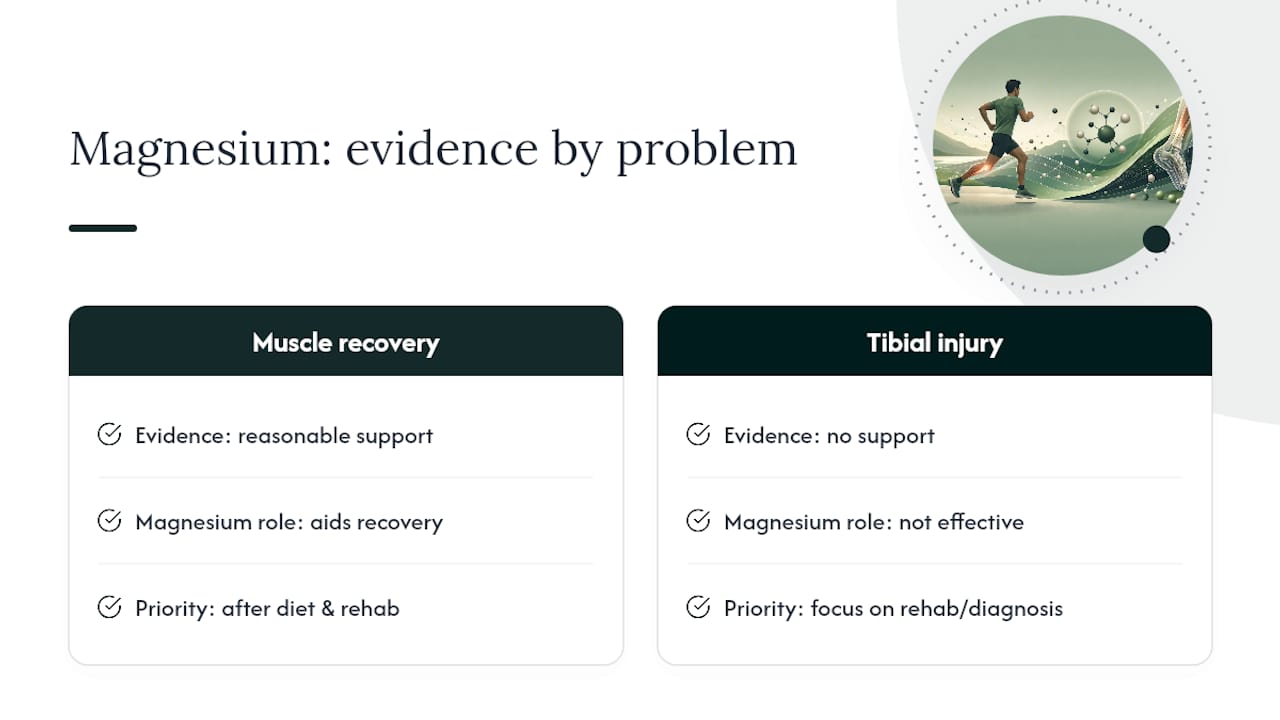
Most of the noise around “magnesium for shin splints” comes from conflating two separate problems: general muscle recovery, where magnesium has a reasonable evidence base, and structural tibial injury, where it doesn’t. Runcomplete’s content, including the pieces Tim has written on dosing and timing, tries to hold that line rather than blur it for the sake of a tidier sales pitch.
The focus on magnesium bisglycinate, with emphasis on getting the basics right and being upfront about what a supplement can and can’t do, reflects that same instinct: let people decide with proper information rather than hype. Diet and rehab come first. A tailored supplement is worth considering once those are already in place, not before.
— Tim
A gentle magnesium option built for runners, not gym athletes
Most magnesium products on the shelf are formulated for weightlifters chasing muscle mass, not for someone managing shin pain on a Tuesday evening run. Runcomplete built Ready specifically around magnesium bisglycinate, chosen for its stomach-friendly absorption profile rather than the cheaper oxide forms that dominate supermarket shelves.

It’s aimed at recreational runners who want a straightforward daily supplement to sit alongside their rehab work, not a miracle cure for an overuse injury. It is without fillers and suitable for vegetarians and vegans. If you’re not convinced after trying it, some products offer a satisfaction guarantee to provide a no-argument way out. Whether you prefer a one-off order or a monthly subscription that turns up before you run out, you can check Runcomplete’s magnesium bisglycinate for runners and decide if it fits your routine.
This article is general information, not a substitute for advice from a qualified doctor. Consult a qualified healthcare professional about your own circumstances before acting on anything here.
Sources
- Understanding and managing shin splints: Causes, remedies and prevention — Mayo Clinic
- Role of magnesium in skeletal muscle health and neuromuscular diseases — PMC
- Vitamins and minerals overview — NHS

